
AUTO
Volkswagen Sells the Osnabruck Plant to Clear a Board Fight
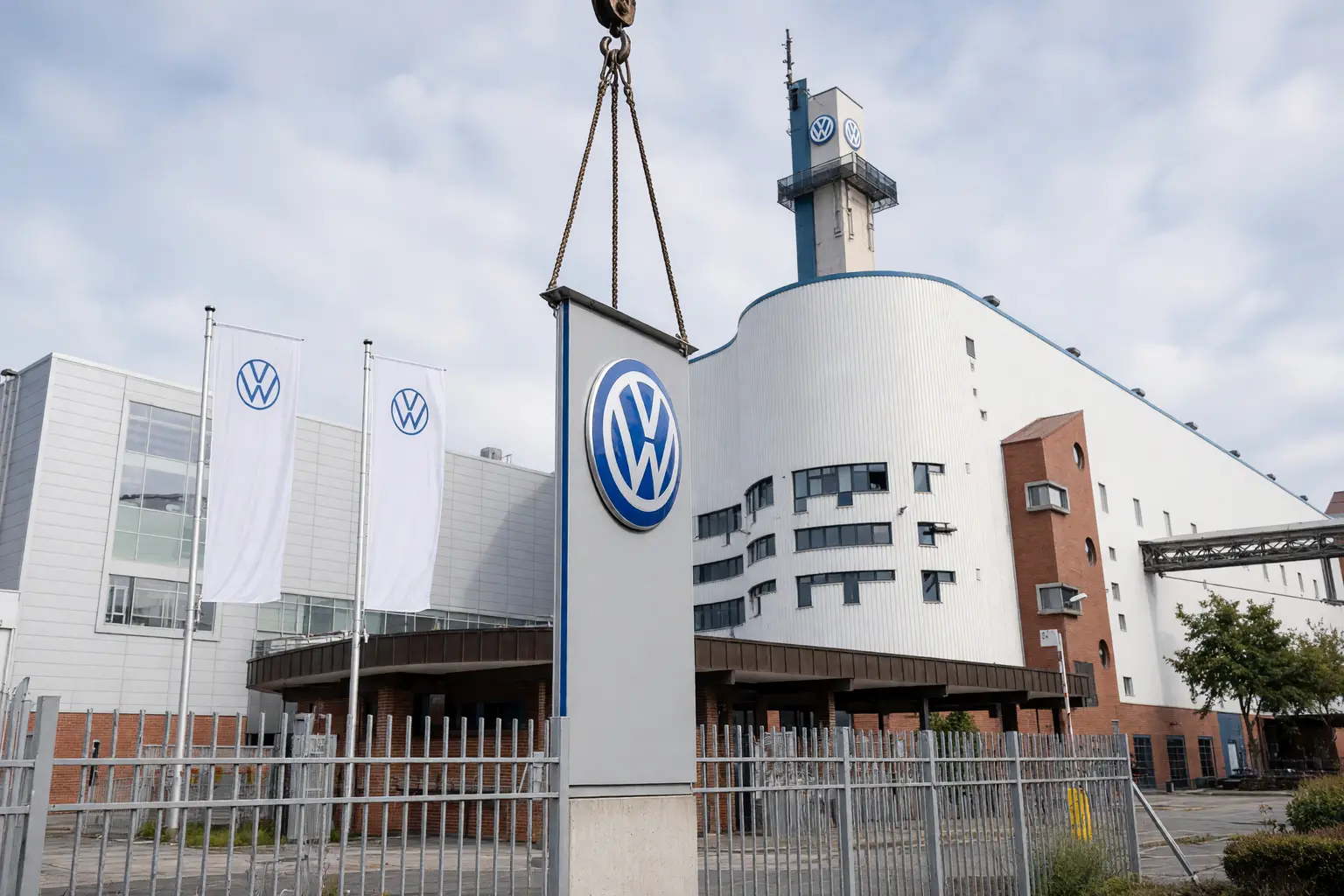
Volkswagen is selling Osnabruck to Aurelius Capital and Lower Saxony so Rafael can build air-defense gear outside a Qatari voting block.

Volkswagen agreed on September 7 to sell its Osnabrück car plant to a Tel Aviv investment firm and the state of Lower Saxony, which want air-defense work done there. Aurelius Capital would be the majority owner. Car output is due to stop in summer 2027.
The sale takes the factory off Volkswagen’s books. That keeps a Qatari voting block out of a project the carmaker could not house inside its own group.
Volkswagen Sells the Plant off Its Own Books
The carmaker, the State of Lower Saxony and Aurelius Capital settled key terms for selling Volkswagen Osnabrück GmbH. Aurelius would take the company as majority owner with the state as its partner. They want to turn the 125-year site, now a small-series car works, into a centre for security and defense work.
Rafael Advanced Defense Systems is the first industrial partner, not the buyer. Volkswagen said the opening “anchor project” is the potential manufacture of systems and components for air defense for Germany and Europe. Further partnerships are meant to follow under the new company. The purchase price was not disclosed.
Oliver Blume, chief executive of the Volkswagen Group, said the group still stands by the town. “With today’s agreement, we are taking an important step towards opening up a new industrial future for the site,” he said at the plant.
WHO OWNS VOLKSWAGEN, WHO WOULD OWN THE PLANT
| Party | At Volkswagen AG | At the Osnabrück plant |
|---|---|---|
| Porsche SE | 31.9% of equity, 53.3% of votes | None |
| State of Lower Saxony | 11.8% of equity, 20% of votes | Co-buyer with Aurelius |
| Qatar Investment Authority | About 10% of shares, 17% of votes, two board seats | None, once VW exits |
| Aurelius Capital | None | Majority owner |
| Rafael Advanced Defense Systems | None | Anchor industrial partner |
The table is the deal. Volkswagen leaves, so its third voting shareholder leaves with it. Lower Saxony stays, this time as a buyer rather than as a voice on the Wolfsburg board.
WHAT THE LETTER OF INTENT STILL LEAVES OPEN
- The price: No figure was published for the sale of Volkswagen Osnabrück GmbH.
- The product list: Official language covers air-defense systems and components, not a named missile type.
- The remaining jobs: More than 1,200 people have a named path; the rest of the core workforce does not, yet.
- The closing: Final contracts, board approvals and regulatory reviews still have to land.
Volkswagen will help with the handover and leave behind its industrial know-how, development skills and the buildings. Completion, it said, depends on those last papers and on regulators.
Qatar’s 17% Stake Forced the Sale Outside Volkswagen
The first plan was a Volkswagen-Rafael venture on the same site. That ran into opposition from the Qatar Investment Authority, which holds 17 percent of Volkswagen’s voting rights and two seats on the supervisory board. People close to the talks said the fund objected to a German carmaker putting Israeli air-defense work on its own balance sheet.
QIA did not issue a public statement on the plant. It did not have to. Two board seats and a 17 percent voting block are enough to stall a politically charged project inside a company that already needs supermajorities for some big moves under the Volkswagen law. Lower Saxony’s own 20 percent of the votes is the statutory blocking minority. Qatar is the next-largest voting holder after the state.
The signed structure answers that problem without a fight in the supervisory board. Volkswagen sells the whole subsidiary. Aurelius and Lower Saxony form the new owner. Only then does that owner work with Rafael. Defense work no longer sits inside a group whose third voting shareholder is Doha’s sovereign fund.
That is a legal bridge, not a conversion inside VW. German users walking through the papers on X reached the same reading: once the carmaker is out, Qatari directors have no remaining claim on what the halls make. The plant still stands in Osnabrück. The share register above it changes.
Aurelius Left Stealth in October 2025
Aurelius Capital is not the German private-equity house of a similar name. Volkswagen’s own notice describes an international investment firm based in Tel Aviv, with a focus on defense, cybersecurity, artificial intelligence and critical infrastructure, and a network of investors from security organisations.
The fund came out of stealth in October 2025. Co-founders Alon Lifshitz and Tomer Jacob, both partners at Hanaco Ventures, said they had raised about $50 million toward a $150 million target. Senior partners named at launch included Michael Rogers, a former director of the U.S. National Security Agency, Maj. Gen. (res.) Amir Eshel, a former commander of the Israeli Air Force, and Udi Lavi, a former deputy director of the Mossad. Lifshitz described the thesis then as shields, not swords.
Tomer Jacob, managing director, spoke in Osnabrück as the buyer. “Osnabrück brings with it something that cannot be built from scratch: many years of experience with demanding products, precise manufacturing processes and high quality, well-coordinated teams, and a strong tradition,” he said. A new fund does not have to pour a greenfield slab if a car plant is for sale. Rafael, for its part, inherits German engineers and a working factory instead of a vacant field.
How much of the purchase Aurelius funds itself, and how much comes through that investor network, was not stated. Majority control is. For a plant that has built cars for 125 years, that is the transfer that matters.
What the Factory Would Make After 2027
Volkswagen decided in 2024 to wind down vehicle production at Osnabrück in summer 2027. The halls now build the T-Roc Cabriolet, a small-series job that fits the site’s old role as a specialist shop. Defense work would replace that, in stages, project by project.
Lower Saxony, Aurelius and Rafael signed a joint statement of intent with Rafael on the same day as the Volkswagen sale terms. The first phase is meant to look at components for air-defense systems that already exist and are in service. People who described the earlier Volkswagen-Rafael talks said the German halls were lined up for support kit: heavy trucks that move batteries, launchers and power generators. The Tamir interceptor that Iron Dome fires was not the confirmed product for this site.
Rafael is already on German soil. It has worked there for more than 20 years through Dynamit Nobel Defence, EuroSpike and EuroTrophy GmbH. Osnabrück would add a large assembly footprint to that cluster, if the papers close.
WHAT THE NEW OWNERS SAY THE SITE IS FOR
- Air-defense hardware: Systems and components for Germany and Europe, in Rafael’s words fully produced in Germany.
- Support vehicles: Trucks, launchers and generators were the kit named in the talks that preceded the sale.
- Later tenants: Volkswagen said further industrial partnerships are meant to follow under the new company.
- German units already in place: Dynamit Nobel Defence, EuroSpike and EuroTrophy GmbH give Rafael a local base the plant would extend.
Yoav Tourgeman, Rafael’s president and chief executive, tied the factory to a wider German production goal rather than to a single export line.
Today we are building a long-term industrial relationship with our German partners with the idea that the technology will be fully produced in Germany, to protect Germany and Europe.
Yoav Tourgeman, President and CEO, Rafael Advanced Defense Systems
Germany has not announced a purchase of Iron Dome itself. The plant plan does not require one. Components built in Lower Saxony can serve European orders, German stockpiles, or both, once regulators and customers exist. Until those contracts are public, the halls are a bet on demand, not a filled order book.
More Than 1,200 Jobs Get a Named Path
The Osnabrück company employs about 1,800 people. Daniela Cavallo, chair of Volkswagen’s general and group works councils, put a number on what Monday actually secured. “More than 1,200 people now have a prospect for their future at their site,” she said. She also said the local workforce had spent two years pushing for that outcome, after a 2024 bargaining deal that bound the board to find a future for the location.
That leaves the rest of the core staff still in play. Christiane Benner, first chair of IG Metall and deputy chair of Volkswagen’s supervisory board, welcomed the opening and then drew a line under it. The step, she said, “does not absolve Volkswagen of its responsibility to create reliable future prospects for the remaining employees as well.”
Olaf Lies, minister-president of Lower Saxony, sold the same day as industrial policy. “Germany and Europe must strengthen their capabilities and become more independent,” he said. “Lower Saxony wants to help ensure that this creates value and secure employment.” The state is weeks from a local election cycle, and Osnabrück is a named factory town. The jobs number is also a campaign fact.
THE SITE’S PATH FROM COACHWORKS TO CARS
- 1901: Wilhelm Karmann takes over a coachworks in Osnabrück and starts a century of body-making.
- 1949: Karmann begins building for Volkswagen; over the next six decades it turns out about 2.5 million vehicles for the group.
- 2009: Karmann files for insolvency. Volkswagen buys the plant and, in 2011, restarts car output as Volkswagen Osnabrück GmbH.
- 2024: Volkswagen decides to end vehicle production at the site in summer 2027.
- September 3, 2026: The supervisory board approves Future Plan 2030, the group’s widest overhaul.
- September 7, 2026: Volkswagen, Lower Saxony and Aurelius sign sale terms; the state and Aurelius sign the Rafael letter of intent.
The Karmann years already trained the town in contract manufacturing. Special bodies, convertibles and short runs were the work. Air-defense launchers and generator sets are another kind of short run, with tighter quality rules. The skill overlap is real. The customer is new, and so is the owner.
The State That Already Holds 20% of the Votes
Lower Saxony is not an outside rescuer. It already holds 11.8 percent of Volkswagen’s equity and 20 percent of the votes, a blocking minority written into the Volkswagen law. The minister-president sits on the carmaker’s supervisory board. The same government is now buying a Volkswagen factory the carmaker has chosen to leave.
Lies said the state’s role would resemble its 2024 move on the Meyer Werft shipyard, where Lower Saxony took a stake to keep a yard alive. No comparable euro figure was given for Osnabrück. The pattern is the one that counts: when a big employer in the state looks finished, Hanover writes itself into the share register.
That double position is the quiet conflict in the file. As a Volkswagen shareholder, Lower Saxony has an interest in a clean exit from a plant the group no longer wants to fill with cars. As a regional government, it has an interest in the payroll that remains. Buying a minority of the new defense company lets it hold both. Aurelius supplies the majority capital and the defense-tech network. Rafael supplies the product. The state supplies political cover and, if needed, patient public money.
Rheinmetall and other European arms groups have already been taking idle vehicle plants and pointing them at military orders. Osnabrück is the first time Volkswagen has used that route, and it did so by selling rather than by becoming a defense contractor itself.
Future Plan 2030 Still Has Four Sites to Place
The Osnabrück papers landed four days after the supervisory board unanimously approved Future Plan 2030. The group wants to trim the model range by up to 50% and cut offer complexity by up to 75 percent. Seat choices, the company said, should fall from more than 2,300 variants to about 100. Production capacity is to settle near 9 million vehicles a year. The network had been built for about 12 million before Covid, and 2 million units of that overhang have already been removed, with more cuts still to come in China and Europe.
Management and unions last week also locked in about 50,000 further job cuts on top of 50,000 already planned. Volkswagen has warned that four other German plants may need to close or find new uses in the 2030s, as demand stays weak and Chinese electric models take share. Osnabrück is the first of those problems with a named buyer. It is not a template that copies cleanly. Few other sites will have a state shareholder ready to buy, a defense customer already in-country, and a foreign voting block that makes a direct deal harder than a sale.
FUTURE PLAN 2030 IN FOUR FIGURES
- Models: Range cut by up to 50 percent, aimed at the segments that still pay.
- Choice: Offer complexity cut by up to 75 percent, including seat variants from more than 2,300 to about 100.
- Capacity: Target of about 9 million vehicles a year, down from a pre-Covid base near 12 million.
- Jobs: About 50,000 further cuts, on top of 50,000 already agreed.
The demand side of the defense bet is easier to see in Berlin than in Wolfsburg. The Federal Government’s 2027 draft budget sets defense spending of over €109 billion, plus money from the Bundeswehr special fund. That is a procurement wave looking for factories. It is not, by itself, a contract for Osnabrück.
The letter of intent still has to become a sale, a company statute and a set of permits. Volkswagen said details on the work, the timetable and the jobs will come only when those results are solid. Until then the T-Roc line keeps moving, the new owners are on paper, and the Qatari seats in Wolfsburg are no longer in the way.

Fake IT Calls Steal Microsoft 365 Tokens Without Malware

Capcom Cashes Its Onimusha Bet at 1 Million Copies

Volkswagen Sells the Osnabruck Plant to Clear a Board Fight

Recalled Italian Guanciale Is Sitting in Restaurant Coolers

The Frame Pro’s $1,200 Labor Day Cut Needs a Soundbar

NSE Pre-Open Session Copies the August Closing Auction

Saksham Gaur Finds He Is His Own Company’s Client

Five Stocks to Buy Today Chase Thursday’s Market Highs

Kia Sorento Takes Aim at India’s Fortuner Class

The Rs 4.66 Lakh Crore IPO Queue Is Mostly Paper
-
 BUSINESS5 days ago
NSE Pre-Open Session Copies the August Closing Auction
-
 BUSINESS5 days ago
Saksham Gaur Finds He Is His Own Company’s Client
-
 BUSINESS5 days ago
Five Stocks to Buy Today Chase Thursday’s Market Highs
-
 AUTO5 days ago
Kia Sorento Takes Aim at India’s Fortuner Class
-
 BUSINESS5 days ago
The Rs 4.66 Lakh Crore IPO Queue Is Mostly Paper
-
 NEWS1 week ago
Apple’s Foldable iPhone Hinges on Samsung Display Supply
-

 BUSINESS5 days ago
Hyderabad 22-Carat Gold Jumps After a False Bargain
-

 GAMING1 week ago
Onimusha Way of the Sword Preload Hits a Windows 11 Wall