
BUSINESS
The Rs 4.66 Lakh Crore IPO Queue Is Mostly Paper
Prime Database’s Rs 4.66 lakh crore IPO queue is one-third guessed, PhonePe is paused, and SEBI’s extra time on observation letters ends on 30 September.

India’s IPO pipeline is carrying an estimated Rs 4.66 lakh crore across 238 companies, Prime Database finds, yet Rs 1,66,500 crore of that total is a flat Rs 1,500 crore guess for 111 issuers that have not named a size.
The names are real. The rupee headline is a paper mountain, and the secondary market still decides how much of it prices.
More Than a Third of the Queue Is a Guess
Prime Database splits the queue in two. Some 167 companies hold valid SEBI approvals, estimated at Rs 3,05,933 crore. Another 71 have filed offer documents and are waiting, estimated at Rs 1,59,680 crore. Added together the working total is Rs 4,65,613 crore, rounded in the note to Rs 4.66 lakh crore.
The disclosed slice is firmer. Approved companies that have named a size add up to Rs 2,00,933 crore. Pending companies that have named a size add Rs 98,180 crore. For the rest, Prime Database has used Rs 1,500 crore a name.
HOW THE RS 4.66 LAKH CRORE IS BUILT
| Slice | Companies | Amount (Rs crore) |
|---|---|---|
| Approved, size disclosed | 97 | 2,00,933 |
| Approved, size estimated at Rs 1,500 cr | 70 | 1,05,000 |
| Filed, awaiting nod, size disclosed | 30 | 98,180 |
| Filed, size estimated at Rs 1,500 cr | 41 | 61,500 |
| Full estimated queue | 238 | 4,65,613 |
That placeholder block is Rs 1,66,500 crore, or 36 per cent of the headline. Strip it out and the named books still run close to Rs 3 lakh crore, which is a large queue on any other year. It is not the figure on the chyrons.
Pranav Haldea, managing director of Prime Database, has already said the primary market follows the secondary market, that several issuers have cut issue size or valuations, and that several have deferred plans. A company on the list is not a company in the book.
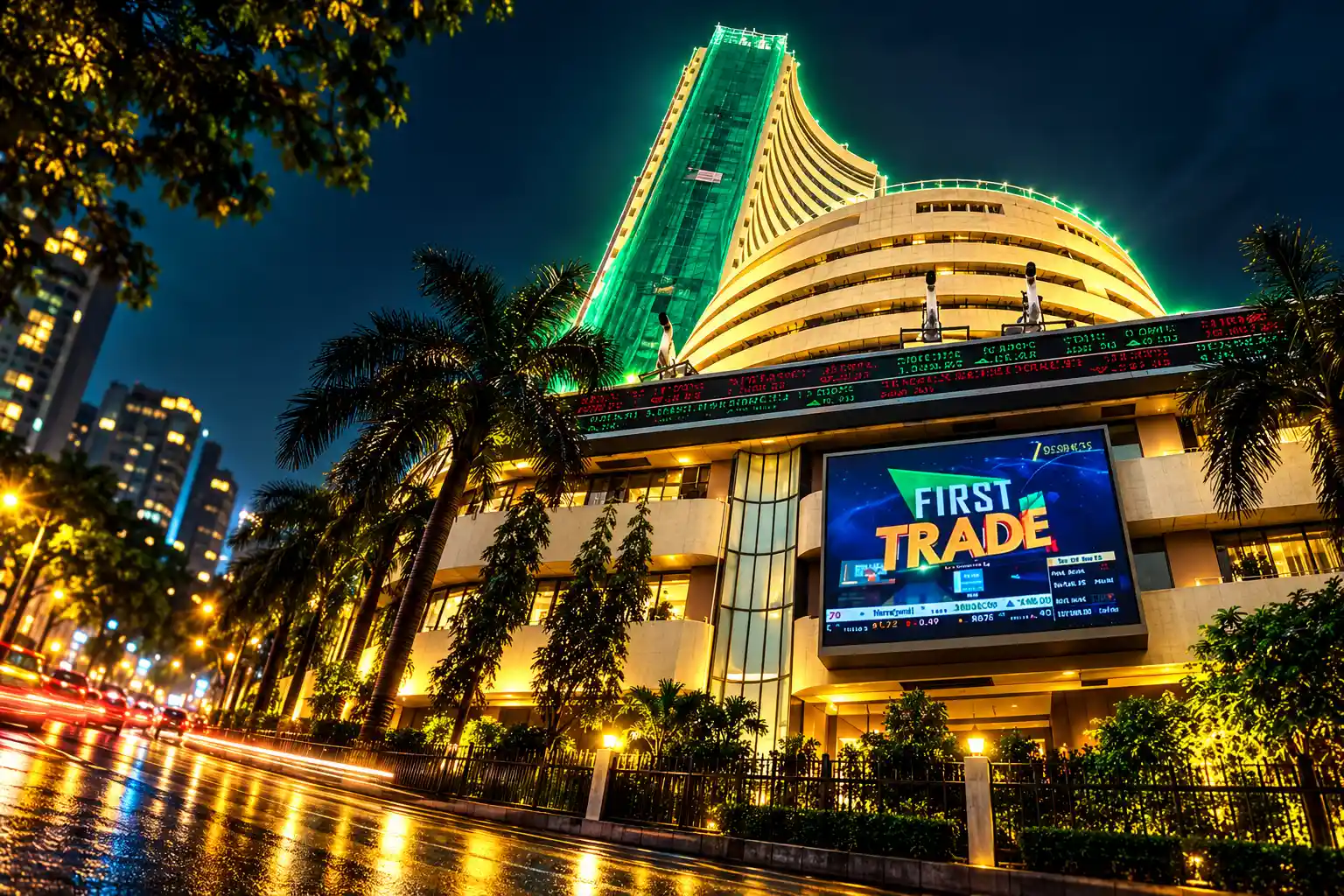
The Largest File Still Has No Price Band
Jio Platforms is the largest named book, at Rs 37,700 crore (about $3.8 billion). SEBI issued its observation letter on 28 August 2026, after the company filed its draft red herring prospectus on 19 June. The draft is a fresh issue of up to 27 crore shares, about 2.9 per cent of the post-issue equity, with no offer for sale.
Reliance Industries holds 66.43 per cent. Meta Platforms holds 9.98 per cent and Google 7.73 per cent. Draft-prospectus accounts say about Rs 27,500 crore of proceeds would repay or prepay borrowings at Reliance Jio Infocomm, the material telecom subsidiary. At that size the deal would pass Hyundai Motor India’s 2024 listing of about Rs 27,859 crore.
JIO FILE, AS IT STANDS
- Regulator nod: Observation letter dated 28 August 2026; the issue has not opened.
- Structure: Fresh issue only, up to 27 crore shares, about 2.9 per cent post-issue.
- Use of proceeds: About Rs 27,500 crore earmarked to repay or prepay Reliance Jio Infocomm debt.
- Latest quarter: Jio Platforms posted operating revenue of Rs 39,173 crore in the June quarter, up 11.8 per cent, with EBITDA of Rs 20,865 crore.
There is still no price band and no bid schedule. Street talk on 4 September pointed at a Navratri-Diwali window, which would put any open toward late October, not the next fortnight. That is rumour, not a filing. Retail chatter has already shifted to a parent-shareholder quota in the draft papers, and to whether buying one Reliance share is enough to game that window. That argument is about allotment tactics on one mega file. It does not move the other 237 names.
PhonePe’s Pause Leaves Rs 12,000 Crore Idle
Jio, the National Stock Exchange of India and PhonePe together account for Rs 79,700 crore, or 17 per cent of the headline queue. Only one of the three has a live observation letter and a clean path to print a red herring. NSE is still waiting. PhonePe has already stepped back.
NSE filed a draft prospectus in June for a 100 per cent offer for sale of up to 14.89 crore shares, about 6 per cent of paid-up capital, sized at Rs 30,000 crore in the Prime Database tape. Unlisted deals have implied a valuation around Rs 5 lakh crore. The Supreme Court on 3 September disposed of SEBI’s appeals in the co-location and dark-fibre cases after a Rs 1,491.21 crore settlement, without admission or denial of guilt. Amit Tungare, managing partner at Asahi Legal, called the disposal “the ultimate green light” for the exchange. The final observation letter is still awaited.
PhonePe received SEBI approval on 20 January 2026 for a proposed Rs 12,000 crore offer, then paused on 16 March. Sameer Nigam, the chief executive, said the firm remained committed to a public listing in India and would resume once global markets were more stable. Under the 12-month rule that approval runs to January 2027. It is still in the Prime Database line. It is not in the calendar.
WHAT WE KNOW
- Jio: Observation letter in hand since 28 August; no open, no band.
- NSE: Draft filed, court overhang lifted on 3 September; final SEBI letter outstanding.
- PhonePe: Approval from 20 January still live; listing paused since 16 March.
WHAT IS UNCONFIRMED
- Jio dates: Offer period and valuation are not on a public timetable.
- NSE timing: Chairman Tuhin Kanta Pandey has said approval was expected soon; the letter has not landed.
- PhonePe return: The company has not set a date inside the January 2027 window.
Gaurav Sood, managing director and head of equity capital markets at Avendus Capital, has said Indian companies may still raise a little over $20 billion in IPOs this calendar year, with two or three mega issues doing the bulk of the work. That is the conversion bet. It is not a 238-company flood.
What Happens When Observation Letters Expire?
Under Regulations 44(1) and 59C of the ICDR rules, a public issue has to open within 12 months of SEBI’s observations, or 18 months on the confidential route. Miss the window and the issuer files again. Prime Database already marks refiled names, including Prism, NSE and Veritas Finance, with an asterisk.
On 7 April 2026, after industry bodies cited weak participation and West Asia tension, SEBI granted a one-time extension until 30 September for observation letters that were due to lapse between 1 April and that date. Lead managers still have to file an updated offer document and confirm Schedule XVI. The extra time ends in 26 days.
THE CLOCK ON THE PAPER QUEUE
- 31 March 2026: Prime Database closes the year with 18 companies, seeking Rs 22,400 crore, letting approvals lapse, plus 15 withdrawals.
- 7 April 2026: SEBI extends observation letters due to expire from 1 April through 30 September 2026 until 30 September.
- 26 August 2026: Sembcorp Green Infra dates its draft abridged prospectus, a new filing, not an extension case.
- 28 August 2026: Jio Platforms receives its observation letter, starting a fresh 12-month clock.
- 30 September 2026: The one-time extension expires for the older letters that used it.
Haldea put the lapse logic in plain words in the year-end note. Issuers would rather let an approval die than list into a weak tape, because an IPO is a once-in-a-lifetime event for most of them. FY26 already tested that. The September cliff tests it again for the names that borrowed extra time in April.
Two Record Years, Then a Slower Tap
The queue looks enormous partly because the last two years were enormous. Prime Database’s year-end release recorded an all-time high of Rs 1,78,963 crore from 112 main-board IPOs in 2025-26, 10 per cent above the previous high of Rs 1,62,387 crore from 78 issues. The paper queue is 2.6 times that record year.
The close of that record year was already soft. The last three months raised Rs 18,772 crore. Average deal size fell 23 per cent, to Rs 1,598 crore from Rs 2,082 crore. Average listing gain, on closing price, dropped to 8 per cent from 30 per cent. Only 34 of 108 listed issues, or 31 per cent, gained more than 10 per cent on debut, against 71 per cent a year earlier. By 27 March, 37 of 108 were above issue price, and the average return had slipped to -7 per cent. Retail applications fell to 12.87 lakh from 21.31 lakh. Average oversubscription cooled to 28 times from 49 times. Fresh capital was Rs 70,719 crore, 40 per cent of the money raised; the rest was sale by existing holders.
WHAT PRICED, AGAINST WHAT IS QUEUED
| Period | Issues | Amount (Rs crore) |
|---|---|---|
| FY25 main-board IPOs | 78 | 1,62,387 |
| FY26 main-board IPOs | 112 | 1,78,963 |
| FY27, 1 April to 26 August | 30 | 46,453 |
| Calendar 2026, 58 firms to early September | 58 | 73,757 |
| Estimated queue now | 238 | 4,65,613 |
FY27 fundraising from 1 April to 26 August was Rs 46,453 crore from 30 issues, 16 per cent below Rs 55,338 crore from 38 issues a year earlier. Calendar 2026 collections through early September, on Prime Database figures used by market desks, were Rs 73,757 crore from 58 firms, led by SBI Funds Management at Rs 9,813 crore and Manipal Hospitals at Rs 9,200 crore. July and August did the heavy lifting after a barren April and May.
The primary market always follows the secondary market. Even though we have seen several launches in the last couple of months, many of them have had to reduce their issue size and/or valuations. Several issuers have deferred their IPO plans. Going forward, there is a huge pipeline of issues waiting in the wings. As long as the secondary market remains stable, we should see more issues in the balance part of the year.
Pranav Haldea, Managing Director, Prime Database
Dharmesh Mehta, managing director and chief executive at DAM Capital Advisors, said many companies are choosing to raise less capital rather than take more dilution at lower valuations. Pratik Loonker, managing director and head of equity capital markets at Axis Capital, said issuers are putting deal execution ahead of stretching the book. That is already visible in the tape: Manipal came in below an earlier $1 billion-plus ambition, Indo-MIM printed smaller than first talked, and Zepto has looked at a pre-IPO round of about Rs 1,000 crore instead of charging the Rs 5,106 crore Prime Database line.
Green Power and Lenders Take the Mid-Size Slots
Below the three mega files the named books are still large, and they are not all consumer internet. Disclosed financial-services issues alone run to about Rs 71,200 crore. On the approved list, engineering has the most names at 14, then information technology at 13, housing and construction at 12, electrical equipment at 10 and financial services at nine.
NAMED BOOKS UNDER RS 10,000 CRORE
- Avaada Electro: Rs 7,600 crore, still in the queue.
- Prism: Rs 6,650 crore; the former Oravel Stays parent filed an updated draft on 30 June 2026 after earlier attempts did not list.
- Carlsberg India: Rs 6,300 crore.
- Zepto: Rs 5,106 crore on the Prime Database line, delayed rather than pulled.
- Hella Infra Market, Dorf-Ketal Chemicals, Credila Financial Services: Rs 5,000 crore each.
- SAEL Industries: Rs 4,575 crore, on a draft dated 3 November 2025.
- Sembcorp Green Infra: Rs 3,750 crore fresh issue, draft dated 26 August 2026.
Sembcorp’s papers, hosted by SEBI, describe a fresh issue aggregating up to Rs 3,750 crore with no offer for sale, and a possible pre-IPO placement of up to Rs 750 crore that would cut the fresh issue if it happens. The company is among India’s ten largest renewable independent power producers by operational capacity, with 3.60 GW running and 4.04 GW/GWh under construction across 105 projects in 13 states and union territories as at 31 March 2026. FY26 revenue from operations was Rs 2,652.50 crore and net profit Rs 371.08 crore. It is a second attempt; an earlier Sembcorp Energy India draft from 2018 was withdrawn.
Continuum Green Energy is down for Rs 3,650 crore, Tablespace Technologies Rs 3,350 crore, and Encube Ethicals, Svatantra Microfin and Muthoot Fincorp Rs 3,000 crore each. Hero FinCorp is estimated at Rs 3,600 crore. Those industrial and lending books need public equity for expansion and for a listed reference price. They also compete for the same domestic mutual-fund cheque that has already replaced foreign investors as the main anchor bid. In FY26, for the first time, mutual funds took 14.89 per cent of IPO paper as anchors, ahead of foreign portfolio investors at 13.38 per cent.
September’s Live Calendar Is Small
The dated books this month are a different species from Jio and NSE. Pranav Constructions has filed its red herring and is scheduled to open on 7 September; Prime Database had sized it at Rs 400 crore. Asset Reconstruction Company (India) is scheduled to open on 9 September. Veegaland Developers is scheduled to open on 10 September and close on 15 September, with a proposed issue of Rs 210 crore. Aragen Life Sciences and a handful of jewellery issuers have added filings. Emerald Jewel Industry is shown at Rs 30 crore.
DATES THAT ARE ACTUALLY ON THE TAPE
- 7 September: Pranav Constructions scheduled to open.
- 9 September: Asset Reconstruction Company (India) scheduled to open.
- 10 to 15 September: Veegaland Developers, Rs 210 crore, scheduled to open and close.
- 30 September: SEBI’s one-time validity extension ends for older observation letters.
FY26 already showed how a fat filing year can shrink. Some 240 companies filed offer documents, against 166 the year before, and 18 still let Rs 22,400 crore of approvals lapse. PhonePe’s Nigam can wait until January 2027. Jio’s 12-month clock runs to August 2027. NSE still needs the letter. The 111 unnamed Rs 1,500 crore lines can be rewritten the moment a merchant bank puts a real size in a document, or they can vanish when a letter expires.
Pranav Constructions opens on 7 September. That is the next dated book. The Rs 4.66 lakh crore list will still be on the screen after it prices.
Disclaimer: This article is news reporting and analysis of India’s IPO queue and related regulatory filings, and it is for information only. It is not investment advice, a recommendation to apply for any public issue, or a view on the value of any share. Readers who are considering an IPO application or a related investment should consult a SEBI-registered investment adviser or a qualified financial planner who can judge their own risk and holding period. Issue sizes, approval status, offer dates and secondary-market conditions are taken from the sources cited and can change as companies file, withdraw, recast or list.

The BMW iX4 Undercuts Mercedes and Trails Its Twin

Scotland’s Ten Big Supermarkets Already Hold the Weekly Shop

Scotland EMS Faces a State Probe After a Wagram Death

Meritz Signs Ripple to Race Korea’s 2027 Token Rules

Pocognoli’s First Camp Leaves Scotland Third and Exposed

Volkswagen Sells the Osnabruck Plant to Clear a Board Fight

Tata Motors’ Iveco Tender Opens as Holders Still Decide

Saksham Gaur Finds He Is His Own Company’s Client

Onimusha Way of the Sword Preload Hits a Windows 11 Wall

Apple’s Foldable iPhone Hinges on Samsung Display Supply
-
 AUTO1 month ago
Volkswagen Sells the Osnabruck Plant to Clear a Board Fight
-
 AUTO2 months ago
Tata Motors’ Iveco Tender Opens as Holders Still Decide
-
 BUSINESS2 months ago
Saksham Gaur Finds He Is His Own Company’s Client
-
 GAMING2 months ago
Onimusha Way of the Sword Preload Hits a Windows 11 Wall
-
 NEWS2 months ago
Apple’s Foldable iPhone Hinges on Samsung Display Supply
-

 AUTO2 months ago
Simple Wave Chases Range as Ather Konarc Cuts Price
-

 NEWS1 month ago
The Frame Pro’s $1,200 Labor Day Cut Needs a Soundbar
-

 NEWS2 months ago
iQOO 16 Locks 8,400 mAh While 100W Charging Holds