

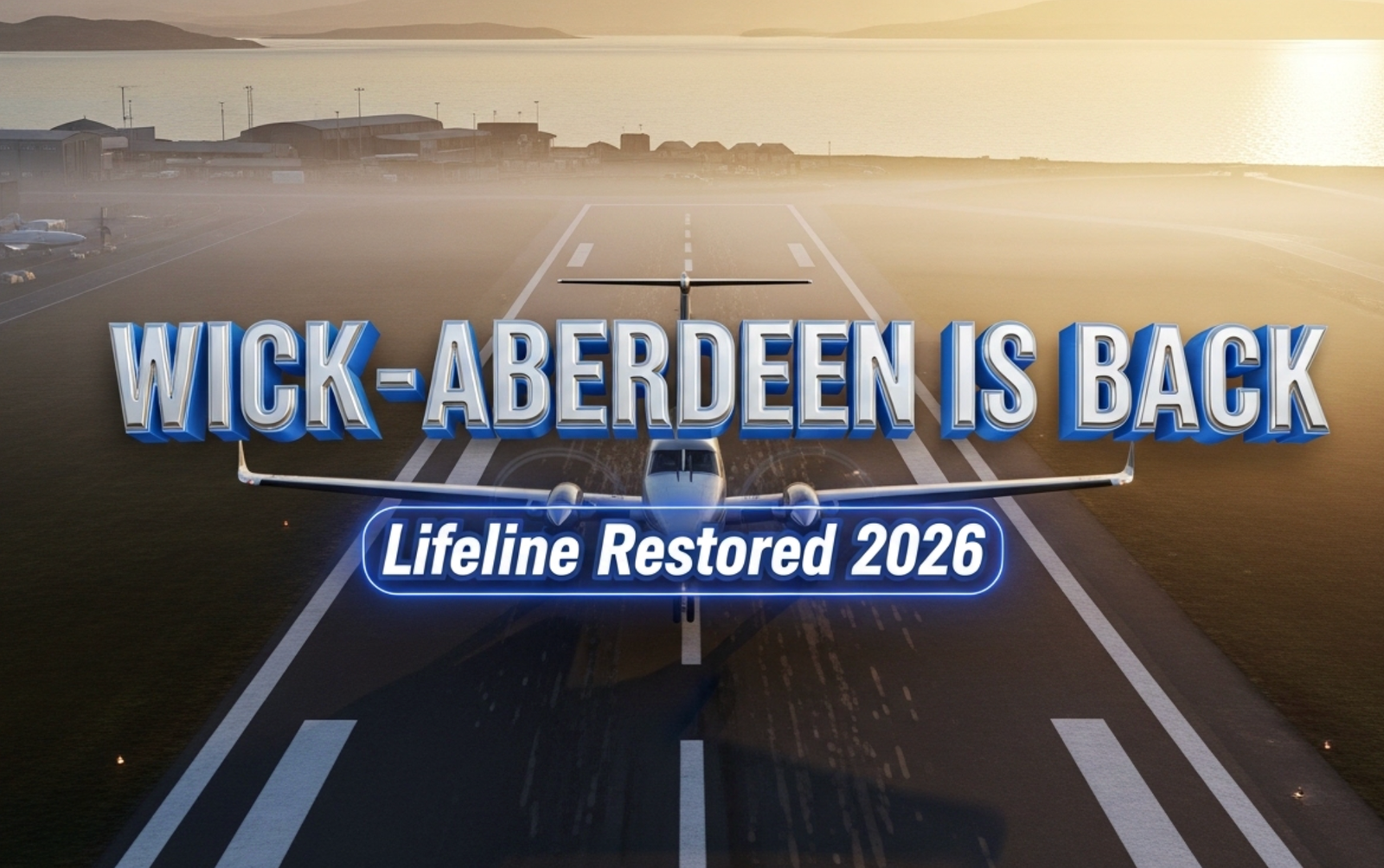
Remote communities in Scotland’s far north are celebrating after Air Charter Scotland successfully restored the critical Wick-Aberdeen air connection that vanished last year. The first scheduled flight touched down on January 14, 2026, bringing cheers from passengers who had faced long drives or expensive private options for months.
This lifeline route is back in action, and people in Caithness say it changes everything.
Inaugural Flight Marks Emotional Homecoming
Passengers on that first return service from Aberdeen to Wick John O’Groats Airport stepped off the Beechcraft King Air 200 to applause from locals and dignitaries. Twenty community leaders gathered on the tarmac, including Highland Council Leader Raymond Bremner and representatives from the Caithness Chamber of Commerce.
Derek Thomson, Chief Commercial Officer at Air Charter Scotland, called the moment “a promise kept.” He thanked partner operator DragonFly Executive Aviation for stepping in at short notice with their King Air aircraft and crew.
One passenger, nurse Sarah MacLeod who travels weekly to Aberdeen’s hospitals, fought back tears. “I have missed birthdays and family events because the route was gone. Today feels like getting part of my life back,” she said.
The service runs six days a week with return flights, giving travelers reliable options for medical appointments, business meetings, and family visits.
Why This Route Means So Much to the Far North
People in Wick and surrounding areas have felt isolated since the previous operator pulled out. The eight-hour drive to Aberdeen became the only realistic choice for many.
The air link is not just convenient. It is essential.
Local businesses rely on it to fly staff to North Sea oil platforms. Patients depend on it for specialist treatment at Aberdeen Royal Infirmary. Students use it to get home from university.
Councillor Bremner put it bluntly: “Without this connection, our young people leave and never return. With it, they can build careers here and still access the opportunities they need.”
New data from Highlands and Islands Enterprise shows the route previously supported more than 400 jobs in Caithness and generated £18 million annually for the regional economy.
Smooth Start and Bigger Plans Ahead
The current Beechcraft King Air 200 carries nine passengers and has already seen strong bookings. Load factors exceeded 75 percent in the first week, according to airport sources.
From March 1, 2026, the service upgrades to a 19-seat Jetstream J32 operated by AIS Airlines. This larger aircraft will allow more locals to fly and reduce ticket prices thanks to higher capacity.
Air Charter Scotland is working to add the Jetstream to its own Air Operator Certificate. That move would let the company expand scheduled services to other remote Scottish routes that need reliable connections.
Airport manager Iain Bain said passenger numbers could double within a year if the service stays consistent.
Communities Breathe Easier
In Thurso and Wick, people speak openly about the relief they feel.
Local hotel owner Margaret Campbell told us her bookings from oil workers dropped 40 percent when flights stopped. “We are already seeing inquiries again. This flight saves marriages, saves jobs, saves lives,” she said.
Young mother Lisa Gunn travels monthly for her son’s cancer treatment in Aberdeen. “Before this restarted, I was spending £600 on private taxis or missing appointments. Now I can afford to hold my boy’s hand when he needs me most.”
Those stories are repeating across Caithness kitchens and workplaces this week.
The far north of Scotland has its wings back. Families are reunited more easily. Businesses can plan with confidence. Patients can focus on getting better instead of how to get there.
Air Charter Scotland delivered more than flights on January 14. They delivered hope to a region that refused to be forgotten.
What does this restored route mean to you or your community? Drop your thoughts in the comments below.