
 Ishan Crawford
 Anatolii and Lidiia Kyrylov spent nearly their entire lives in Mariupol, a once-thriving trading port in southeastern Ukraine. They never imagined they’d have to leave, let alone start over in a foreign land at their age—69 and 73, respectively.
But when Russia launched its full-scale invasion in early 2022, their city quickly became one of the war’s deadliest battlegrounds. Mariupol was besieged, bombed, and reduced to ruins. Survival was a daily struggle.
“The bombings were horrible,” Lidiia recalled. “We had no water. We were collecting the snow, melting it, and drinking it one sip at a time. We were trying to save it.”
Food was scarce. “Our food was one small potato a day,” Anatolii said. “Our home was all shaking. The planes were flying and dropping bombs. There were tanks. It was a horror.”
The Dangerous Escape Through Russian Checkpoints
Leaving Mariupol was not just a decision—it was a necessity. With no transport available, they fled on foot.
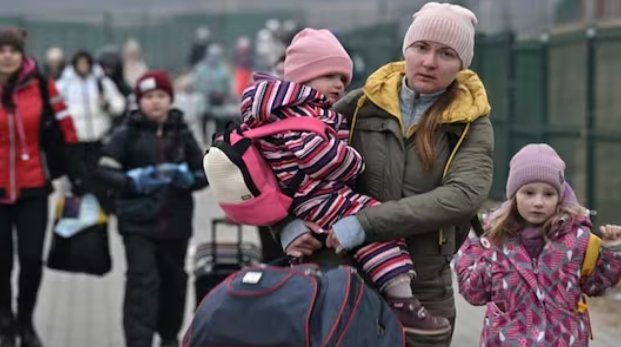
“People were walking with pets, buggies, bags,” Anatolii said. “We passed 19 Russian checkpoints. Men, including myself, had to undress the upper body. They were looking for tattoos and for bruises from carrying the machine gun.”
One wrong move, one suspicion, could have cost them their lives.
“They did not find anything, they let us go. It was very scary, they were screaming at us, trying to intimidate us. It was mostly elderly people and children with us.”
But eventually, they reached Ukrainian-controlled territory.
“So much happiness, so many tears, you cannot imagine,” he said. “We fell to our knees. We knew we were safe.”
A New Start in Scotland—but for How Long?
With visas granted, they made their way to Scotland, where a sponsor helped them settle in Aberdeen.
“We started to explore Aberdeen,” Lidiia said. “We liked it—liked everything. Nature, good people. We were very happy. We like the care for people.”
Their situation, however, highlights a broader challenge: the uncertainty facing thousands of Ukrainians in the UK.
Since the war began, more than 28,000 Ukrainian refugees have arrived in Scotland alone. The UK government allowed them to stay for three years under the Homes for Ukraine scheme. But time is running out, and refugees must now apply for an 18-month extension.
What Happens When the Extension Ends?
There are concerns about what happens after that extension expires. The UK government says it aims to provide certainty and security while aligning its policy with Ukraine’s long-term goal of repatriating its citizens.
But not everyone has a home to return to.
“In Ukraine, we have no place to return to,” Lidiia said.
For many, the future remains unclear. While international talks on ending the war continue, displaced Ukrainians in Scotland are left wondering what comes next. Some have built lives, found jobs, and integrated into their new communities. But without long-term security, the fear of being uprooted again lingers.
 Windows 11 KB5095093 Lands With Point-in-Time Restore and 35-Day Pause
  Meta Cuts Smart Glasses to $299 to Outflank Snap and Apple
  Messi Leads the 2026 World Cup Golden Boot Race After Two Matches
  Australia March On as Athapaththu Ton Lights Up T20 World Cup
  Galaxy Z Fold 8 Leak Reveals Colors, Storage, and a New Ultra Variant
  Ronaldo’s Six-World-Cup Record Leads a Matchday Full of Milestones