

Scotland’s night skies turned into a breathtaking display on January 3, 2026, as the Wolf supermoon rose high and bright. Photographers across the region captured stunning images of this rare event, marking the first full moon of the year and the last supermoon until late 2026.
What Makes This Moon So Special
Astronomers explain that a supermoon happens when the full moon reaches its closest point to Earth in its orbit. This makes it appear up to 15 percent larger and 30 percent brighter than a regular full moon.
The Wolf moon gets its name from old traditions in the Northern Hemisphere. People once thought wolves howled more in January due to scarce food during winter. This year’s event followed a series of supermoons from October through December 2025.
Experts note that the moon reached peak illumination at 2:03 a.m. on January 3. It stayed visible and impressive throughout the weekend, especially near the horizon during evening rises.
Clear weather in many parts of Scotland helped skywatchers get clear views. The moon’s close encounter with Jupiter added extra sparkle, as the planet shone brightly nearby.
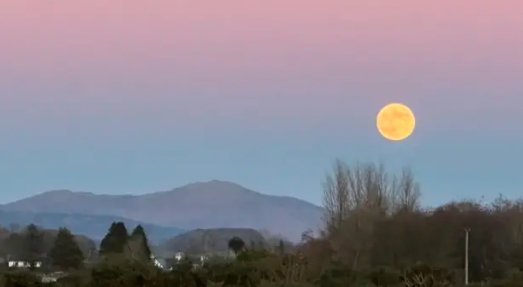
Captivating Photos from Scotland
BBC Weather Watchers shared impressive shots of the supermoon over snowy landscapes in Aberdeenshire. One photo showed the yellow moon glowing above snow-capped evergreen trees against a cloudy sky.
In North Lanarkshire, a close-up image captured the moon’s silvery surface with dark patches on a black background. The detail highlighted craters and seas visible to the naked eye under good conditions.
Over the Isle of Bute, a photographer snapped the moon rising over green fields with sheep grazing below. The scene mixed pale pink skies and light blue clouds for a peaceful rural vibe.
Social media buzzed with more images from places like Fife and East Lothian. Users posted about the moon hanging out with Jupiter, creating a double treat for astronomy fans.
These photos show how the supermoon lit up both urban and rural spots. From coastlines to highlands, the event drew people outdoors despite the winter chill.
Why Scotland Offered Prime Viewing
Scotland’s varied landscapes provided ideal backdrops for the supermoon. Locations like the Bass Rock in East Lothian and lighthouses in Fife framed the moon perfectly against the sea and sky.
Weather played a key role, with clear patches allowing for vivid colors. The moon’s height in the sky made it prominent, especially in northern areas where nights are longer in winter.
Astronomy groups reported high engagement, with many sharing tips on camera settings for night photography. Simple smartphones worked well, but telescopes revealed more details.
Here are some popular spots where photos were taken:
- Aberdeenshire: Snowy hills and forests for a wintery feel.
- North Lanarkshire: Urban edges for clear moon close-ups.
- Isle of Bute: Fields and coastlines for scenic rises.
- Fife: Lighthouses adding dramatic foregrounds.
Historical Context and Fun Facts
Full moons have carried names for centuries, tied to seasons and nature. The Wolf moon links to Native American and European folklore about hungry wolves in midwinter.
This supermoon is part of a cycle where the moon’s orbit brings it closer every few months. Recent events included the 2025 Cold Moon, which also drew global attention.
Scientists track these moons to study Earth’s tides and gravity effects. Supermoons can cause slightly higher tides, known as king tides, in coastal areas.
For comparison, here’s a quick table of recent and upcoming supermoons:
| Date | Name | Notable Feature |
|---|---|---|
| October 2025 | Harvest Moon | Closest to autumn equinox |
| November 2025 | Beaver Moon | Paired with meteor showers |
| December 2025 | Cold Moon | Brightest winter full moon |
| January 2026 | Wolf Moon | First of the year, with Jupiter |
| November 2026 | Next Supermoon | End of a long wait |
This data shows the pattern and why 2026’s start felt extra special.
Experts say climate change might affect future viewings, with more clouds from shifting weather patterns. Yet events like this remind us of nature’s reliable wonders.
Tips for Spotting Future Moons
If you missed this one, plan ahead for better luck next time. Check local weather apps for clear nights and head to dark sky areas away from city lights.
Use binoculars or a basic telescope to see surface details. Apps can track the moon’s position and predict rises.
Join online communities for shared experiences. Many groups host virtual watch parties during big events.
Remember, supermoons happen a few times a year, but each offers unique views based on location and season.
Looking Ahead to More Celestial Events
The Wolf supermoon capped off a string of impressive sky shows, building excitement for 2026’s astronomy calendar. Later this year, expect meteor showers and planetary alignments.
Events like this connect people to the cosmos and spark interest in science. They also boost tourism in scenic spots like Scotland’s highlands.
Share your own photos or stories in the comments below. Did you spot the supermoon? Let us know what made it memorable for you.