

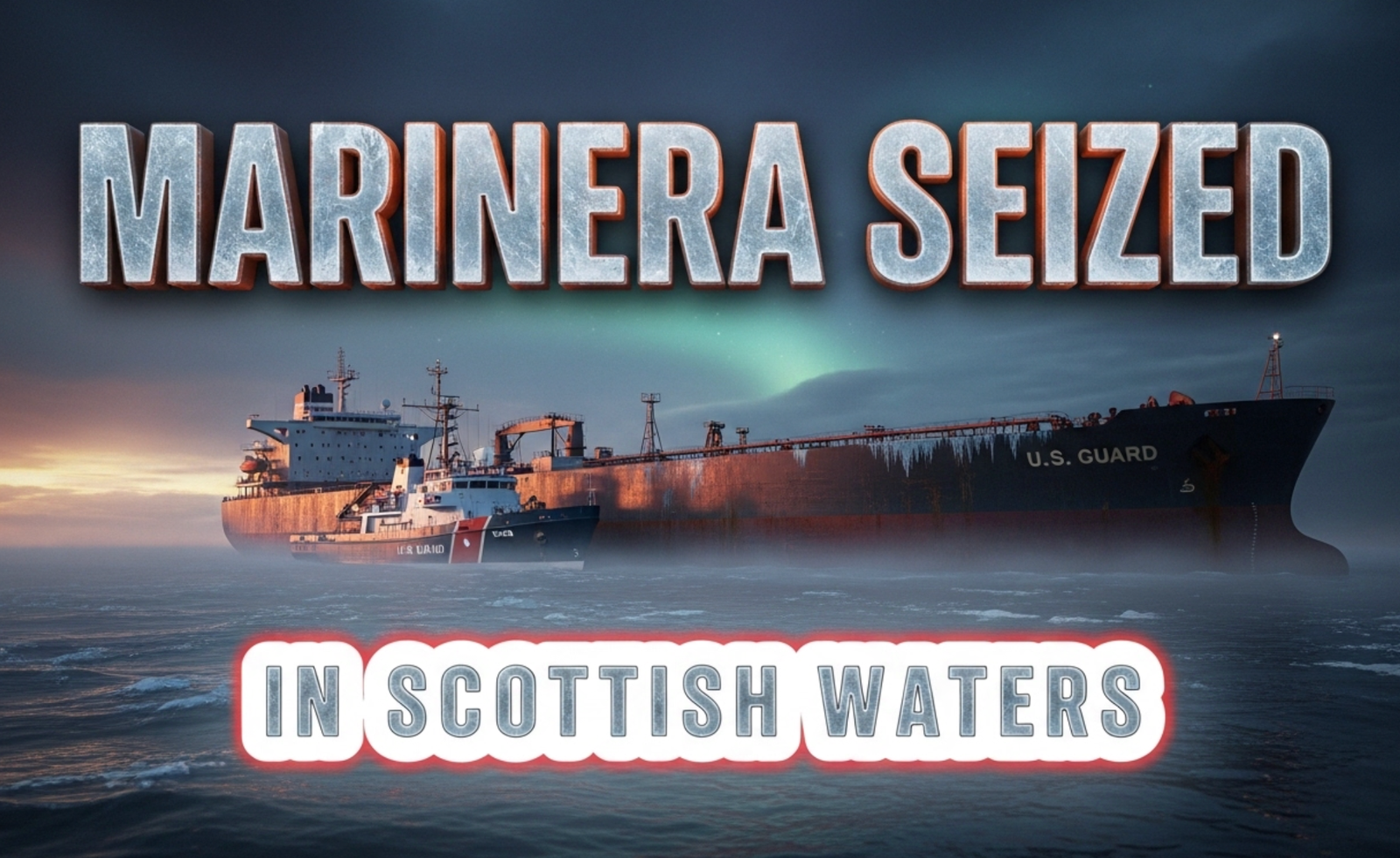
A Russian-flagged oil tanker carrying sanctioned Venezuelan crude has arrived in Scotland’s Moray Firth under US Coast Guard escort, just days after American forces boarded and seized the vessel in the North Atlantic in a bold sanctions-enforcement operation.
The ship, now renamed Marinera but previously known as Bella-1, was captured south of Iceland on January 8, 2026, ending a high-seas pursuit that began when the tanker tried to run the US naval blockade around Venezuela.
How the Dramatic Seizure Unfolded
US forces tracked the Marinera for weeks as it loaded crude in Venezuela, then sailed north attempting to reach Russian ports via the Atlantic.
The vessel first raised suspicion when it falsely flew the Guyanese flag, then switched to Russian colors mid-voyage, a common trick used by shadow-fleet operators.
American boarding teams, supported by RAF surveillance flights and Royal Navy logistics, took control of the ship 100 miles southeast of Iceland.
No shots were fired and the crew surrendered peacefully, according to Pentagon sources quoted by Reuters on January 16.
The tanker was then directed to the sheltered waters of Scotland’s Moray Firth to receive food, water, and basic supplies for the 22 crew members before continuing its journey to a US port for legal processing.
Inside Russia’s Growing Shadow Fleet
The Marinera is one of an estimated 1,400 aging tankers that make up Moscow’s “dark fleet,” vessels deliberately kept off insurance registries and fitted with fake identities to move sanctioned oil from Russia, Iran, and now Venezuela.
These ships routinely turn off their tracking systems brighten, spoof locations, and conduct risky ship-to-ship transfers at sea.
Lloyd’s List reported in December 2025 that at least 110 shadow tankers are currently drifting abandoned worldwide after owners simply walked away to avoid arrest or massive cleanup bills.
Experts warn the next major oil spill is inevitable, with Britain’s coastline directly in the firing line as dozens of these uninsured hulks pass through UK waters every single week.
Britain Finally Changes Tack
For years London hesitated to board suspicious tankers, citing legal concerns.
That changed with the Marinera operation.
Defence Secretary John Healey confirmed British forces provided “critical enablers” including air surveillance, refuelling support, and basing for US aircraft.
Government sources now tell The Times that ministers have quietly decided the Sanctions and Anti-Money Laundering Act 2018 does give UK authorities the power to board and detain shadow vessels in British waters.
One senior Royal Navy officer told me: “We’ve been watching these rust buckets sail past Dover for years. Finally someone in Whitehall grew a backbone.”
The French Navy is reportedly ready to join joint patrols in the English Channel, where shadow tankers currently pass through French territorial waters without challenge.
Why This Matters to Every British Motorist and Taxpayer
Every barrel of sanctioned oil that reaches market keeps pump prices artificially low for now but funds Russia’s war in Ukraine and Iran-backed militias across the Middle East.
More immediately, if one of these uninsured tankers breaks apart off Cornwall or Shetland, British taxpayers will foot a cleanup bill that could easily top £3 billion, according to Environment Agency modelling.
The Marinera case proves coordinated Western action works.
The question now is whether Britain and its allies have the political will to repeat it, hundreds of times over, before the inevitable disaster strikes.
The sight of a seized shadow tanker riding at anchor in Scottish waters, flying the stars and stripes alongside the saltire, sends the clearest message yet to Moscow and Caracas: the free ride is over.
What do you think, should Britain start boarding every dark-fleet tanker that comes within 200 miles of our shores? Drop your thoughts below and tag #StopTheShadowFleet if you’re sharing on X or Instagram, this story is trending hard right now.