
 Ishan Crawford
 Royal Mail delivered barely three in ten first-class letters on time last year across Shetland, Orkney and the Western Isles, and no regulator target requires it to do any better. Business owners on the islands say they now plan around failure as a matter of course, buying spare equipment and building slack into every deadline just to keep trading.
Island economies contributed about £3bn (roughly $3.8bn) to Scotland’s economy in 2023, according to the consumer watchdog Consumer Scotland, which says fragile mail delivery is holding back small businesses within it. Around 60,000 people live in the postcodes that Royal Mail and Ofcom have left outside any enforced minimum service standard.
Three Islands, One-Third the Reliability
Royal Mail publishes its own delivery performance by postcode area every year. Its most recent figures, folded into a new new safeguards to improve postal services study from Consumer Scotland, put the three island council areas among the worst-served postal regions anywhere in the UK.
| Area | First-Class On-Time Rate | Reporting Period | Ofcom Target |
|---|---|---|---|
| Shetland | 29% | 2024-25 | None (exempt) |
| Orkney | 31% | 2024-25 | None (exempt) |
| Western Isles | 31% | 2024-25 | None (exempt) |
| UK first-class average | 75.7% | 2025-26 | 93% (90% from April 2026) |
Even Royal Mail’s national average, the figure now under Ofcom investigation, is more than double what islanders are getting. None of the three island areas show up in that investigation at all, because none of them carry a target to miss.
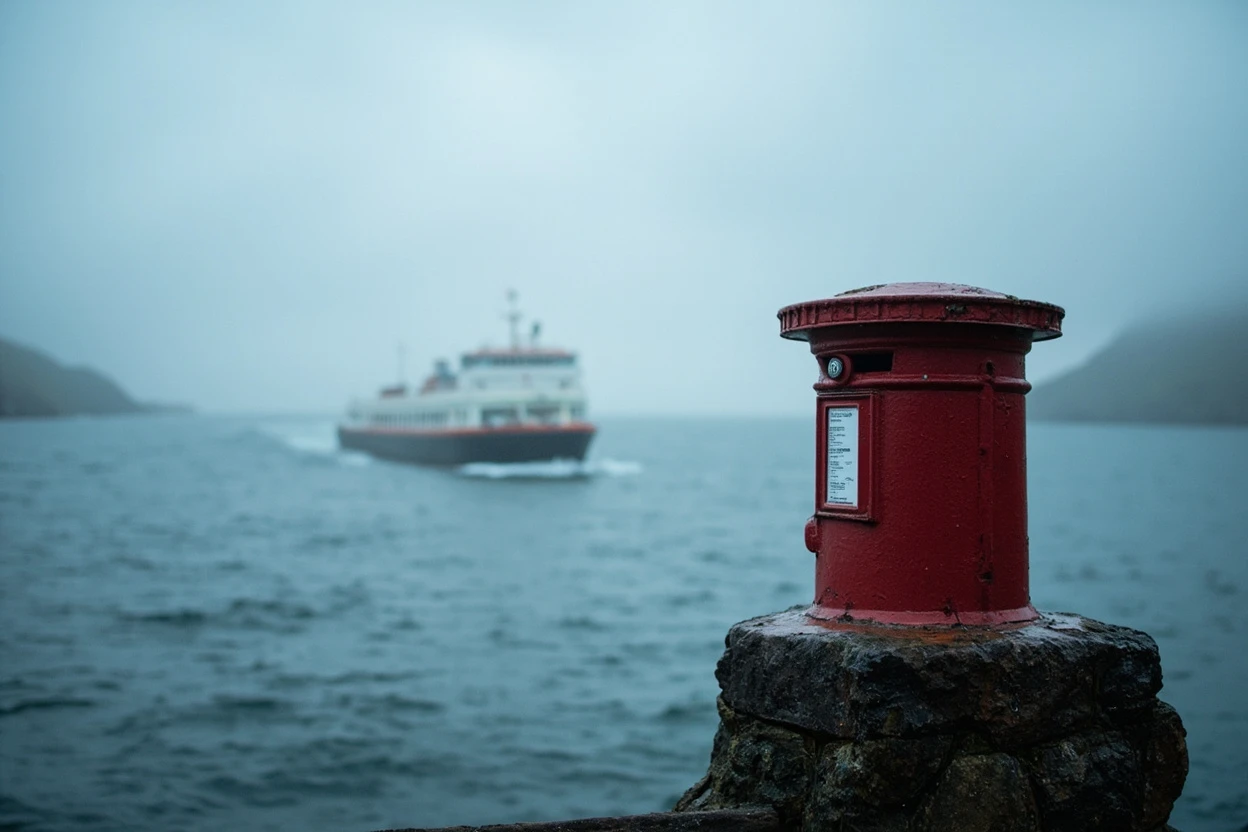
Why Doesn’t a 29% On-Time Rate Trigger a Fine?
Because no target applies there in the first place. Ofcom enforces a postcode-based delivery target across the rest of the UK, but Orkney, Shetland and the Western Isles were never brought inside that regime, so poor performance there carries no regulatory consequence, however far it falls short of the mainland benchmark.
“Every area in Scotland has a postcode-based delivery target, and those are set and enforced by Ofcom,” said Tracey Reilly of Consumer Scotland. “But the island communities are actually exempt from those targets.”
Reilly said the watchdog wants that changed. “We’d like to see them brought within the overall regime,” she said. “It doesn’t have to be the same target but we want some guaranteed minimum level of service, because we think that’s only fair.”
The gap shows up in cost as much as speed. Consumer Scotland found islanders face delivery surcharges of £10 to £50, and some retailers refuse to ship to island postcodes at all. “For consumers, it can really increase the cost of living,” Reilly said, noting that a delivery charge can sometimes exceed the price of the item being posted.
Businesses Build Their Own Insurance Policies
Amy Garrick-Wright, a self-employed electrician in Shetland, sends her test instruments away for calibration on a schedule she no longer trusts to the post.
“If my main meter goes away for calibration and doesn’t come back for a month, I can’t be without it,” she said. “So I’ve had to buy a second meter. It’s that sort of planning that you’re forced to have to do.”
She described a specialist ladder that sat somewhere for a month before she chased it up, and HMRC letters that arrived weeks late, delaying her tax registration. Hospital letters, she said, sometimes turned up almost to the day of the appointment.
In Orkney, jeweller Martin Fleet has leaned on Royal Mail for more than 30 years to ship pieces from Sheila Fleet Jewellery. The pressure peaks around fixed dates that will not move.
Without that service, we simply couldn’t operate our business. It’s as simple as that.
Fleet named the dates that matter most: birthdays, anniversaries and Christmas. “You can’t really move Christmas, so you’ve got to make sure you make those deadlines,” he said. Both business owners put the strain on the system, not on local staff. “That’s not the fault of the postal workers, who work extremely hard,” Garrick-Wright said. “But structurally there’s huge issues that aren’t being addressed.”
Harris Tweed Rides on the Same Ferries
The exemption reaches well beyond individual traders. Consumer Scotland’s study found heritage exporters, including Harris Tweed weavers, Fair Isle knitwear producers, Stornoway black pudding makers, and island whisky and gin distillers, depend on the same fragile network to reach customers beyond the islands.
An economic analysis of postal pricing commissioned by the Scottish Government traces island surcharges to the fixed cost of ferry and flight capacity, which barely shifts whether a route carries one parcel or a hundred.
For a heritage producer selling a tweed jacket or a bottle of island gin, a £30 or £40 surcharge lands as a real dent in the final price, either absorbed by the business or passed on to a customer who can simply buy from somewhere cheaper to reach.
Royal Mail Points to Storms, Ferries and a £500m Plan
Royal Mail says serving the islands involves some of the most complex delivery routes in the UK, dependent on ferry and air services that can be cancelled at short notice because of severe weather.
“When a flight or ferry is cancelled, mail remains within our network and is moved using the next available service, including alternative routes where possible,” the company said. “The length of any delay depends on when transport links resume and capacity becomes available.”
It added that cancellations “can happen at short notice and may affect individual routes differently, which means it is not always possible to give customers advance notice of every disruption.”
The company points to a wider recovery effort. Royal Mail has changes to how letters are delivered under way as part of a five-year, £500m investment programme, with a quarter-by-quarter plan aimed at hitting its delivery targets by April 2027.
Ofcom Just Lowered the Bar It Can’t Clear
Royal Mail’s island performance sits inside a bigger regulatory story. Ofcom opened a fresh investigation in June 2026 after the company delivered just 75.7% of first-class post on time against a 93% target, and 90.2% of second-class post against a 98.5% target, having missed its local delivery target in every UK postcode area.
It is not the first time. Ofcom has fined Royal Mail more than £37m over the past three years, including a £21m penalty in October 2025, and could now impose a fourth. A House of Commons Library briefing on the company’s regulatory history traces a pattern of missed targets stretching back years.
Even while investigating, Ofcom has lowered the bar Royal Mail must clear. From April 2026, the headline targets drop to 90% for first-class and 95% for second-class, down from 93% and 98.5%. The company’s own national average, 75.7%, still falls short of both the old and new figures. None of it touches the islands, which remain outside any target either way.
- Confirmed: Ofcom has fined Royal Mail more than £37m since 2023, including £21m in October 2025.
- Confirmed: The investigation opened in June 2026 covers the 2025-26 delivery year.
- Confirmed: Royal Mail has committed £500m over five years, targeting recovery by April 2027.
- Unconfirmed: Whether Ofcom will issue a fourth penalty, or how large it would be.
- Unconfirmed: Whether Orkney, Shetland and the Western Isles will ever get a target of their own.
Consumer Scotland argues that last gap is the one worth closing first.
What Consumer Scotland Wants Changed
The watchdog’s report makes eight recommendations, aimed not just at Royal Mail but at the UK Government, Ofcom, parcel operators, retailers and consumer bodies.
- Cap or make surcharges transparent – so island shoppers know delivery costs before they buy, rather than being charged £10 to £50 after checkout.
- Clearer delivery information – upfront notice at the point of sale when a retailer will not ship to an island postcode at all.
- Minimum service standards – a guaranteed baseline for island postcodes, brought within Ofcom’s wider regulatory regime.
- Shared accountability – obligations spread across government, the regulator, operators and retailers, not Royal Mail alone.
A separate Consumer Scotland survey of the wider parcels market found that 58% of shoppers want uniform delivery pricing, rising to 73% among those over 65.
Postal Affairs Minister Blair McDougall, whose Westminster brief covers postal regulation, said he knew services “had not met the expectations of customers in the islands for quite some time.” He pointed to commitments extracted when the Czech-owned EP Group took over Royal Mail’s parent company last year, including a bar on shareholders pulling money out of the business until performance improves and a guarantee that Royal Mail remains the UK’s designated universal service provider.
“We have no plans to change the minimum requirements of the USO in legislation,” McDougall said, “and this government will continue to hold their performance to account.” For now, the exemption stands, and Orkney, Shetland and the Western Isles remain the only parts of the UK where Royal Mail’s delivery clock isn’t running at all.
Frequently Asked Questions
What is Royal Mail’s Universal Service Obligation?
The Universal Service Obligation is Royal Mail’s legal duty to deliver post six days a week at a uniform UK-wide price. Under reforms already under way, second-class letters are moving to alternate weekday delivery instead of six days, with the change reaching Royal Mail’s full network of 1,200 delivery offices by December 2026.
Why are Orkney, Shetland and the Western Isles excluded from delivery targets?
The three island council areas were never brought inside Ofcom’s postcode-based target regime because of the logistical difficulty of ferry and flight delivery. Consumer Scotland wants a guaranteed minimum standard there instead, even if it differs from the mainland figure, rather than no floor at all.
How do delivery surcharges affect shopping habits?
Consumer Scotland’s wider research found 91% of people who hit a delivery surcharge say it puts them off buying items that need posting, and 70% say they would look for the same product elsewhere rather than pay it. On the islands, surcharges of £10 to £50 are common, and some retailers refuse island deliveries outright.
What did the government negotiate when Royal Mail changed owners?
When the Czech-owned EP Group took over Royal Mail’s parent company last year, the UK government secured commitments including a bar on shareholders extracting profit until performance improves and a guarantee that Royal Mail stays the country’s designated universal service provider, according to Postal Affairs Minister Blair McDougall.
Will the islands get a delivery target of their own?
Not yet. Consumer Scotland wants island postcodes brought into a regulated system with a guaranteed minimum standard, but the UK government says it currently has no plans to change the Universal Service Obligation’s minimum requirements in legislation.
 ONGC licence frees Venezuela cash and operatorship talks
  Anthropic Hits $65 Billion Run Rate and Flips the AI Cash Test
  Supreme Court grounds the fare free-for-all with three-week clock
  Gold Nears $4400 as Soft Data Meets Oil Inflation Risk
  Nifty Slips as Zaggle Circuits and Dhoot Debuts Big
  Diesel Crack Tops $100 as Iran Rhetoric Lifts Crude