
 Ishan Crawford
 Police Scotland employed 16,402 full-time equivalent officers on 30 June 2026, down 29 from the previous quarter and 25 fewer than a year earlier. The figure is the lowest since June 2024 and continues a gradual slide after a short recovery.
Scottish Government quarterly strength statistics, published in early August, also put the rate at roughly 29.4 officers per 10,000 people. The Scottish Police Federation says the headcount masks mounting pressure on those still serving.
The move looks small on paper. Over successive quarters, though, small falls compound into a thinner frontline, fewer buffers for peak demand, and sharper local unevenness. That is the pattern the latest release continues to show.
What the June Figures Show
The official snapshot records a 0.2 percent quarterly fall from 16,430 FTE at the end of March 2026. Year-on-year the drop is also 0.2 percent. Numbers sit 168 above the 16,234 recorded in March 2007, yet remain hundreds below levels seen a decade ago.
A recruitment push after the June 2024 low of 16,207 lifted the total into early 2025. That gain has largely reversed. Police Scotland notes that strength fluctuates with intakes, retirements and resignations, and that recruitment continues.
| Date | FTE Officers | Change |
|---|---|---|
| 30 June 2024 | 16,207 | Recent low |
| 30 June 2025 | 16,427 | +220 YoY then |
| 31 March 2026 | 16,430 | +14 QoQ |
| 30 June 2026 | 16,402 | -29 QoQ, -25 YoY |
Chart data from the government release show a downward trend from mid-2021 to mid-2024, a rebound, then a return to the lower plateau. The next release covering 30 September is due in early November.
Read across the table, the story is one of a brief climb that failed to hold. The June 2025 total of 16,427 had looked like recovery from the 16,207 floor. By March 2026 the force had only edged to 16,430. Three months later it was back at 16,402. Net movement over that full year is essentially flat to slightly down, not a sustained rebuild.
The 168-officer cushion above the March 2007 baseline offers limited comfort when the comparison shifts to the higher totals of a decade ago. Those earlier peaks set public and political expectations that the current plateau does not meet.
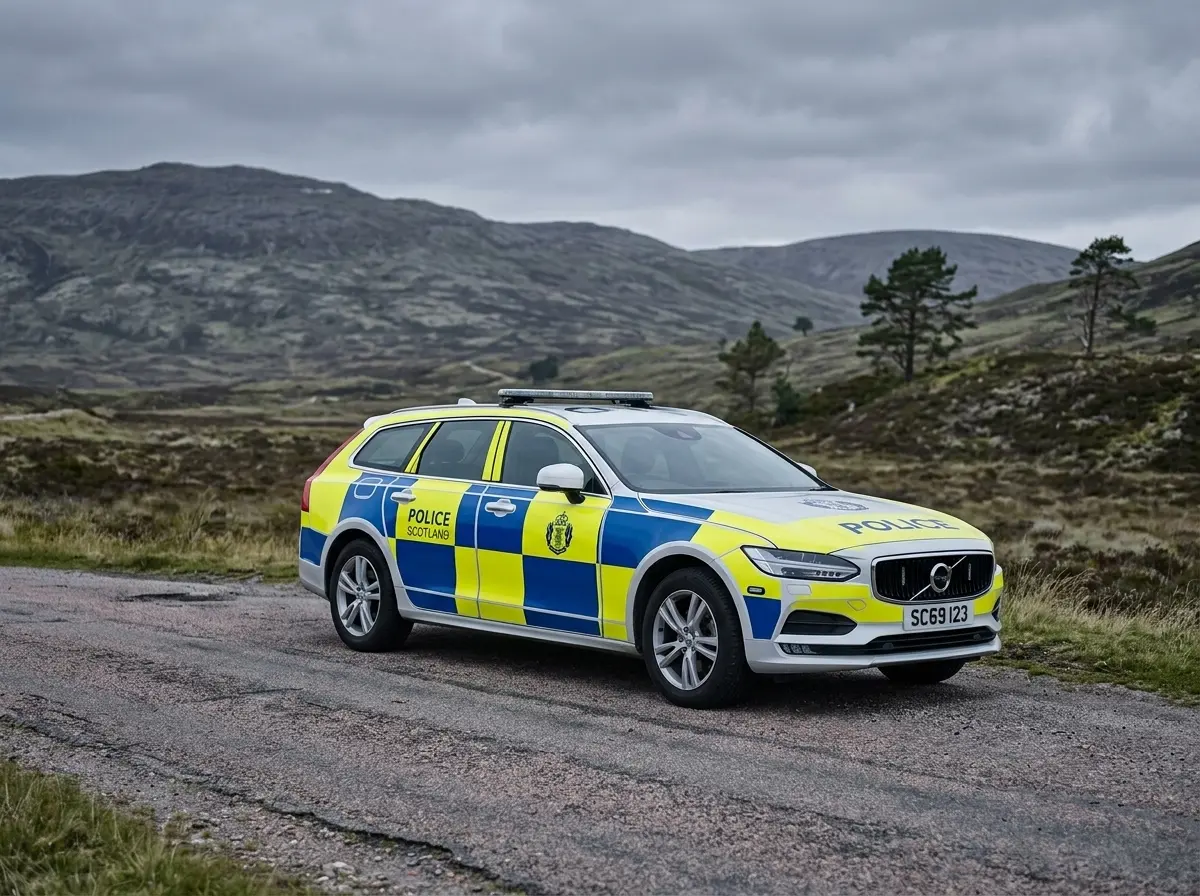
Recruitment Keeps Running to Stand Still
Chief Constable Jo Farrell told the Scottish Police Authority that 169 new probationers made their declarations in mid-July 2026. Twenty-two special constables also joined. Specials delivered more than 51,000 volunteering hours in the prior year.
Yet the net figure still fell. The force has flagged rural and remote areas as a persistent recruitment challenge. A dedicated vehicle has toured Caithness, Argyll and similar communities to promote openings. Entrance-test pass rates have risen sharply in recent years, but application volumes have been uneven.
Federation officials stress that recruitment alone is not enough. Experienced officers must stay. Competitive pay, support and resources matter if policing is to remain a long-term career.
The July intake lands after the June count, so it will feed into later statistics rather than the figures just published. Even a solid probationer class only offsets leavers if retirements and resignations stay modest. When experienced officers depart faster than new arrivals become fully deployable, the headline FTE can fall even while training places fill.
Special constables add volunteer capacity and local presence, but they do not replace regular officer hours on complex investigations, court work or prolonged public-order deployments. The 51,000 hours they gave in the prior year matter to communities. They do not close a multi-hundred gap against earlier regular strength.
Remaining Officers Feel the Extra Weight
David Kennedy, general secretary of the Scottish Police Federation, said the latest numbers continue a longer-term concern even if the quarterly move looks small.
Police Scotland remains hundreds of officers below where it was a decade ago, at a time when policing is facing increasingly complex and demanding challenges. Our members continue to deliver an outstanding service, but they are doing so under relentless pressure. Every reduction in officer numbers places greater strain on those who remain, impacting workloads, wellbeing, and ultimately the service that can be provided to communities.
Kennedy added that retention needs equal focus through pay, support and proper resources. Crowd discussion on X echoed the decade-scale shortfall of several hundred to around a thousand officers since the force’s early years, and noted that local unevenness can feel sharper than the national average.
That cumulative gap shows up in everyday demand: complex investigations, public order, court abstractions and the ordinary volume of calls. Earlier coverage of budget cuts and protest demand spikes already pointed to stretched capacity.
Workload does not shrink in step with headcount. When officer numbers drift down, the same volume of calls, the same court commitments and the same major inquiries land on a smaller pool. Abstractions bite harder. Rest days become harder to protect. Wellbeing risks rise precisely when the force most needs experienced staff to stay.
The Federation’s emphasis on retention follows from that arithmetic. A recruitment pipeline that merely replaces leavers leaves no margin for sickness, training abstractions or sudden demand spikes. Pay, support and resources are the levers that decide whether mid-career officers treat policing as a long-term profession or an exit route.
Rural Divisions Stretch Furthest
Farrell has repeatedly identified rural and remote locations as the hardest posts to fill. Officers in places such as Argyll and West Dunbartonshire can spend large parts of a shift travelling to jobs or moving detainees to distant custody centres.
- Long travel times reduce available patrol and response hours.
- Single-crewing and mutual aid become more common.
- Local knowledge gaps grow when temporary cover rotates in.
- Specialist resources take longer to arrive.
The force has tried mobile recruitment events and local advertising. Net strength still drifts. Communities that already wait longer for attendance feel the shortfall first when numbers tighten further.
Geography turns a national average into a local crisis. An officer who spends a large share of a shift on the road is not available for patrol, prevention or immediate response in the community that needs them. Mutual aid from neighbouring areas can fill gaps in the short term, yet it pulls resource from those areas in turn and rarely builds the local knowledge that steady postings create.
Temporary cover and rotating attachments keep basic cover in place. They do less for continuity of investigations, relationships with partner agencies, or public confidence that the same faces will still be there next month. When specialist units must travel further, scene attendance and forensic support also slow, adding delay on top of thinner core cover.
Scotland Keeps a Density Edge Over England and Wales
Ministers often note that Scotland still fields more officers per head than England and Wales. Latest comparable data put England and Wales at 236 FTE officers per 100,000 residents (about 23.6 per 10,000) as of 31 March 2026, with a total of 145,886 officers. Scotland’s rate sits higher near 29-30 per 10,000.
| Area | Approx. Officers per 10,000 | Latest FTE Total |
|---|---|---|
| Scotland (June 2026) | ~29.4 | 16,402 |
| England & Wales (March 2026) | ~23.6 | 145,886 |
That relative advantage is real. It does not erase the absolute decline from earlier Scottish peaks or the distribution problems inside Scotland. Recorded crime trends and public expectations still run against a thinner frontline than the force once fielded.
Per-head comparisons also flatten geography. A national rate near 29.4 per 10,000 can coexist with sparse cover in remote divisions where travel time consumes a large share of each shift. England and Wales face their own distribution pressures, yet the Scottish debate turns on whether a still-higher average is enough when absolute numbers have slid and rural posts remain hard to fill.
Ministers can fairly point to the gap with the 23.6 rate south of the border. Critics can equally point to the hundreds of officers Scotland no longer fields compared with its own recent past. Both statements draw on the same published totals. They answer different questions: relative standing versus domestic capacity over time.
The Budget Already Assumes a Tight Hold
In March the Scottish Police Authority agreed a balanced budget for 2026-27 that, with savings, aims to maintain officer numbers at around 16,500. Farrell described extremely difficult choices: a 20 percent cut to overtime budgets, release of temporary staff who had handled investigations, vetting and production work, and tighter vacancy management.
The Scottish Government provided a cash uplift of roughly £90 million, less than the sum the chief constable had said was needed simply to stand still. Modelling shared earlier pointed to hundreds of “workforce modernisation” savings if the gap stayed large. June’s 16,402 already sits below the 16,500 holding line.
Those choices free some cash for estates, body-worn video rollout and digital work. They also remove buffers that once absorbed peaks in demand. Earlier severe budget cut pressures had already forced similar trade-offs.
- March 2026: Budget set to hold near 16,500 with overtime and temporary-staff savings.
- June 2026: Actual FTE lands at 16,402.
- July 2026: 169 probationers and 22 specials sworn in.
- November 2026: Next quarterly strength figures due.
Justice Secretary Neil Gray has said the chief constable has what she needs to hold the approximate figure, while noting that more resource would allow extra community and early-intervention work. Opposition figures, including Scottish Labour’s Pauline McNeill, argue the drop puts communities at risk while crime pressures persist.
The holding line of around 16,500 was never a growth target. It was a floor defended through overtime cuts, tighter vacancy control and the release of temporary staff who had been carrying investigative and administrative load. Landing at 16,402 in June means the force entered the second quarter of the financial year already short of that floor, before the July probationer intake could appear in the totals.
Overtime and temporary capacity once smoothed surges in protest demand, major inquiries and seasonal peaks. Trimming both protects the cash position and the headline officer number. It also leaves less slack when several pressures arrive at once. Body-worn video and digital projects may claw back court time and improve evidence quality over the medium term. They do not instantly replace the hours removed from the overtime budget.
July Intakes Face a Narrow Path Back
The mid-July declarations of 169 probationers and 22 specials are the first large intake visible after the June dip. On simple arithmetic they are large enough to lift the headline above the June 16,402 mark if leavers stay low through the autumn. The path back to the budget’s holding line near 16,500 is narrower, and it depends on more than raw declarations.
Probationers are not immediately full-strength deployable officers. Training, tutoring and restricted duties mean their contribution builds over months. Meanwhile retirements, resignations and other exits continue on their own timetable. The net FTE movement between June and the next published snapshot will reflect both sides of that ledger, not the intake figure alone.
- June baseline: 16,402 FTE, already under the 16,500 hold.
- July intake: 169 probationers plus 22 specials declared.
- Autumn test: whether net strength rises once training and exits are counted.
- November release: first official read on whether the dip reversed.
Special constables boost volunteer hours and visible presence. They do not count toward the regular FTE total the budget is trying to hold. The force can therefore report healthy special recruitment while the regular strength figure that drives the 16,500 discussion stays under pressure.
November’s statistics will show the combined effect. A clear rise would suggest the July class and ongoing campaigns outpaced exits. A flat or lower number would suggest the plateau is still drifting, and that retention and rural fill rates remain the binding constraints.
How Local Cover Diverges From National Averages
National FTE and per-head rates describe the force as a whole. Day-to-day experience turns on where officers are posted, how far they must travel, and how often mutual aid or single-crewing fills gaps. That is why Federation commentary and public discussion keep returning to local unevenness even when the Scotland-wide rate still exceeds the England and Wales figure.
Rural and remote divisions absorb the divergence first. Long travel times, distant custody centres and slower specialist attendance convert a modest national shortfall into longer waits and thinner patrol cover. Urban commands face different pressures, including higher call volume and more frequent public-order abstractions, but they usually start from denser basing and shorter run times.
Crowd discussion that puts the decade-scale shortfall in a range from several hundred to around a thousand officers reflects that lived gap. People judge policing by attendance times, continuity of local officers and the capacity to handle complex jobs without stripping neighbouring areas. A national rate of roughly 29.4 per 10,000 does not answer those local tests on its own.
Budget choices sharpen the same split. Overtime cuts and tighter vacancy management constrain the flexible hours that once reinforced hard-to-fill posts. Technology rollout and estates investment may improve efficiency later. In the near term, communities that already waited longer remain the first to notice when net strength drifts and buffers shrink.
Pressure Compounds Quietly
The two-year low is modest in percentage terms. The second-order effects are not. Each lost officer increases the share of complex work, travel time and abstraction carried by those left. Rural posts stay hardest to fill. Budget savings that protect the headline number remove overtime and temporary capacity that once covered surges.
Police Scotland continues to recruit and to roll out technology such as body-worn video that can free court time and improve evidence. Retention of experienced staff and consistent rural coverage remain the harder variables. The November statistics will show whether the July intake and ongoing campaigns reverse the June dip or whether the plateau simply drifts lower again.
For now the service is operating with fewer officers than it had two years ago and far fewer than a decade ago, while the officers who remain absorb the difference.
The published totals, the budget hold near 16,500, and the Federation’s warning on workload all point the same way. Small quarterly moves matter because the force is already operating without the spare capacity it once used to absorb peaks. Whether November brings a rebound or another soft reading will decide if June was a dip or the next step on a lower plateau.
 SEBI CAS Forces Options Traders to Recalibrate Closing Risk
  Sensex Drops 400 Points as Oil Spike Tests Market Resilience
  Ardee Industries IPO Rides Lead Recycling Boom at Discount
  Gold Nears 4300 but Iran Risks Cap Gains Ahead of NFP
  Scotland Construction Stalls as Skills and Tariffs Blunt Infra Gains
  Lok Sabha Bill Opens UPI Charges Path for Banks Over Merchants