
 Ishan Crawford
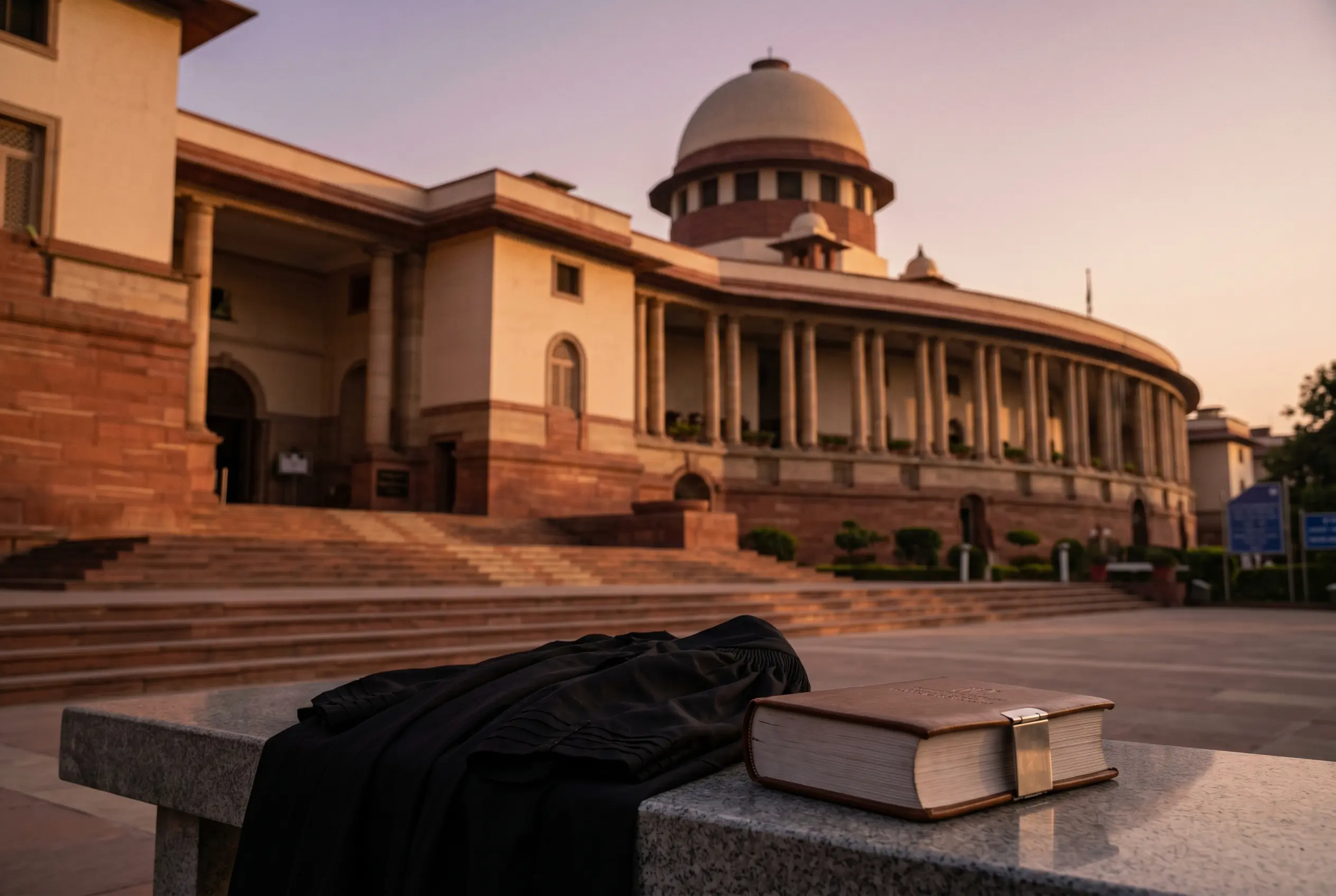
 The Supreme Court of India on Wednesday voided the ₹202 crore penalty (roughly $24 million) that the Competition Commission of India had carried over Amazon for nearly five years, over the US group’s 2019 investment in Future Coupons Private Limited (FCPL), a promoter entity of the now-defunct Future Retail. A bench of Justices Vikram Nath and Sandeep Mehta ordered every rupee already deposited or recovered to be refunded within eight weeks.
The order closes the longest-running merger-disclosure dispute in Indian competition history, and re-opens a quieter doctrinal question Amazon’s lawyers had been pressing since 2022: how much strategic intent does a foreign acquirer need to surface in a Form I notice before the regulator can label a deal interconnected and pull approval back.
Eight Weeks to Refund a Five-Year Bill
Justices Nath and Mehta did more than stop the meter on the fine. They set aside the underlying CCI order of December 17, 2021, which had simultaneously placed the 2019 approval in abeyance and demanded a fresh notice in Form II. The Tribunal order that had largely upheld the regulator in June 2022, with a small trim on the smaller penalty heads, falls with it.
Senior Advocates Gopal Subramanium and Arvind Varma appeared for Amazon, with a team of fifteen advocates on briefs. Additional Solicitor General N Venkataraman led for the Commission. Both sides had been arguing the matter in instalments since Amazon first secured an interim stay on coercive recovery in September 2023, and the file had moved across three benches before landing with Justice Nath’s roster this term.
The refund clock starts the day the certified order is uploaded. Amazon had paid the full sum after the National Company Law Appellate Tribunal’s 45-day deadline in 2022, so the cheque the regulator now has to write is for the principal, plus, if Amazon presses for it, statutory interest at rates the bench did not specify from the dais.
How Project Taj Became the CCI’s Centerpiece
The penalty had nothing to do with whether Amazon’s investment hurt competition. The Commission cleared the combination on November 28, 2019, on the merits, finding no appreciable adverse effect on the Indian market. The trouble started two years later, when Future Retail’s independent directors flagged a tranche of Amazon’s internal correspondence in a separate Delhi High Court filing.
The Email to Bezos
A July 19, 2019, internal email headlined “Request for APPROVAL for Project Taj [Future]” ran from an Amazon India executive up to Jeff Bezos, then chief executive of Amazon.com. It sought sign-off on definitive transaction documents that, the regulator later argued, framed the FCPL stake as one piece of a much larger play.
The Copperfield Seller Memo
A second deck referred to the structure as “Project Taj [Future Group], Investment in National Multi-Category Copperfield Seller.” FCPL, in that internal framing, was a vehicle to acquire strategic rights over the retailer, not the standalone gift-card business Amazon’s Form I had described. A third filing, the “Taj Coupons, Business Plan for 5 years” deck, mapped the gift-card line in close detail; it was the document Amazon eventually furnished to the regulator on follow-up questions.
What the Commission Said Amazon Hid
The Commission concluded that Amazon had projected FCPL’s gift-card upside as the rationale for a ₹1,431 crore cheque while its own boardroom papers pointed elsewhere. The CCI’s 57-page December 2021 order set out four threads the regulator said had been concealed:
- The retailer’s store network as a foothold for offline retail in India
- An ultra-fast delivery rollout across top Indian cities
- Private-label grocery and fashion lines to ride that network
- A path to lift the stake further once foreign-investment rules loosened
Read together, the Commission held, those threads made the FCPL deal and the broader Future Group commercial agreements parts of one combination. Amazon had filed only the narrow part.
From the Tribunal’s 45-Day Deadline to the Top Court’s Reversal
Amazon took the December 2021 order straight to the National Company Law Appellate Tribunal. On June 13, 2022, an NCLAT bench substantially upheld the regulator’s reading, leaving the ₹200 crore principal under Section 43A of the Competition Act intact while trimming the twin ₹1 crore penalties under Sections 44 and 45 to ₹50 lakh each. It directed Amazon to deposit within 45 days.
The cheque went in. The appeal went up. Amazon’s special leave petition to the Supreme Court was admitted in early 2023; the interim stay on coercive recovery followed that September. The matter then sat through three benches before Wednesday’s reasoned ruling.
Here is how the three levels read on the same record:
| Forum | Date | Ruling on principal | Ruling on the 2019 approval |
|---|---|---|---|
| CCI (original) | Dec 17, 2021 | Imposed under Section 43A | Earlier approval held in abeyance, fresh Form II demanded |
| NCLAT (appeal) | Jun 13, 2022 | Upheld in full | Abeyance affirmed |
| Supreme Court (final) | May 27, 2026 | Set aside; refund within 8 weeks | Underlying order set aside |
The bench’s written reasons turn on whether the regulator can re-characterise a notified transaction years after clearing it, on the strength of documents the parties never filed and were never legally bound to file. On that question, Wednesday’s order says no, at least on the present record.
The Combination That Outlived Its Own Subject
The strangest fact about today’s win is that there is no longer anything to acquire. Future Retail was admitted to insolvency in July 2022 after Reliance Industries quietly pulled the ₹25,000 crore slump sale it had announced with Kishore Biyani’s group in August 2020. The company went into liquidation in 2024 with no resolution plan approved by creditors.
Amazon’s call option over the promoter shares, the very right the regulator said was the real prize of the FCPL deal, expired into a shell. The 2019 cheque is a sunk cost. The Singapore International Arbitration Centre tribunal that had stayed the Reliance transaction at Amazon’s request in October 2020 became a footnote once the underlying chain collapsed.
Wednesday’s ruling, then, is about doctrine, not money. Amazon recovers its penalty. The question of who controlled India’s second-largest brick-and-mortar grocery chain was settled in a different courtroom four years ago, in the affirmative for nobody.
What the Ruling Does to India’s Merger-Disclosure Standard
The CCI’s December 2021 order was a first. No filer had ever had an approved combination clawed back on the strength of after-the-fact internal documents, and no filer had been hit with the maximum penalty under Section 43A for what the regulator characterised as a “deliberate design” to suppress scope.
That order was read across the antitrust bar as the new template for combination scrutiny in India, particularly for the kind of step-acquisition structures large platform and consumer-internet companies had begun to file. With Wednesday’s reversal, the template loses its only appellate-tested case.
The Tribunal decision left the substantive questions of law about what counts as an interconnected combination unanswered. Today’s order does not answer them either; it removes the precedent that had been read as the answer.
The Nishith Desai Associates analysis of the 2022 Tribunal order had warned that the appellate record was thin on the doctrinal points, and the Kluwer Competition Law Blog’s standard-of-disclosure analysis reached the same conclusion. That thinness now matters. The Commission’s enforcement teams will have to rebuild the interconnected-combination theory case by case, on filings rather than on internal mail.
For acquirers, the practical takeaway is narrower than it looks. The judgment removes one maximum-penalty risk attached to one type of regulatory aggression. It does not legalise opaque structuring, and it does not stop the regulator from asking the same questions in a future Form II.
A Cooler Climate for the CCI’s Pending Big-Tech Files
The Commission has multiple active reviews involving global platforms whose Indian acquisition structures have drawn the same kind of step-up and option-overhang criticism that anchored the Amazon case, including ongoing examinations of digital-marketplace conduct and adjacent fintech tie-ups. Without the December 2021 order to cite, those files lose their most powerful in-house precedent on disclosure standards.
The new Section 6(2A) regime under the Competition Act, effective from September 2024, already shifted Indian merger control toward deal-value thresholds and a stricter standstill obligation on closing. Wednesday’s ruling will push the regulator to lean on those forward-looking tools rather than the retrospective re-characterisation route the Amazon order tried out.
None of which helps the Commission’s morale on a matter that consumed five years of senior bandwidth and ended with an eight-week refund window.
At the Supreme Court’s gates on Wednesday afternoon, Amazon’s legal team was already drafting the refund application. The principal is coming back. The doctrinal vacuum it leaves behind is the part that will keep the regulator’s drafting tables busy through the rest of this calendar year.
 ONGC licence frees Venezuela cash and operatorship talks
  Anthropic Hits $65 Billion Run Rate and Flips the AI Cash Test
  Supreme Court grounds the fare free-for-all with three-week clock
  Gold Nears $4400 as Soft Data Meets Oil Inflation Risk
  Nifty Slips as Zaggle Circuits and Dhoot Debuts Big
  Diesel Crack Tops $100 as Iran Rhetoric Lifts Crude