
 Ishan Crawford
 Geologists in Scotland have gained rare access to a massive rock core from the Great Glen Fault, offering fresh insights into the Earth’s history dating back hundreds of millions of years. This breakthrough came from drilling work tied to a major hydro storage project in Lochaber, with analysis ramping up in late 2025 to reveal how ancient faults shaped the landscape.
The Discovery and Its Origins
Scientists from the British Geological Survey recently examined a priceless rock core pulled from the depths of the Great Glen Fault. This fault line, stretching over 1,000 kilometers from Ireland through Scotland to Norway, formed around 400 million years ago during the birth of the Scottish Highlands.
The core emerged during exploratory drilling for the Coire Glas pumped hydro storage scheme near Loch Lochy. Proposed by SSE Renewables, the project aims to boost the UK’s energy storage by nearly doubling current capacity, enough to power three million homes for a full day. Drilled in 2023 and delivered to Edinburgh in 2024, the samples have been under intense study throughout 2025, providing a cross-section through the UK’s largest fault zone.
This access marks a once-in-a-lifetime chance, as the fault’s rocks are usually hidden under lochs like Ness, Oich, and Lochy. Minor earthquakes still occur here, reminding us of the fault’s active past.
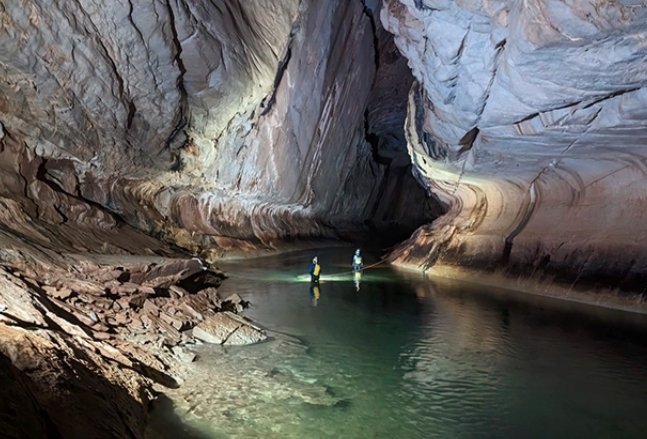
Experts describe the core as spectacular, showing marble-like green rocks with orange shades from depths of 30 to 40 meters. These samples help explain fluid movements from deep in the Earth’s crust and how they alter rock properties over time.
Scientific Insights and Analysis
The analysis focuses on understanding fundamental crustal processes. Geologists have studied about 10 meters of core material, alongside deeper boreholes reaching 650 meters, to map fluid-rock interactions and fault mechanics.
Key findings include evidence of extensive fluid flow through the fault’s core and damage zones. This reveals how the fault evolved, from its role in forming Scotland to its connections with other global fault systems.
- Fluid inclusions in the rocks show ancient water movements that changed mineral compositions.
- X-ray diffraction and microscopy uncover patterns of rock deformation over millions of years.
- Geochemical tests highlight differences between the fault’s core and surrounding areas.
These details could answer big questions about Earth’s history, such as how continents shifted and mountains rose. The core also links to broader studies, like those on the Walls Boundary Fault in Shetland, showing the fault’s extension across the North Atlantic.
In 2025, researchers expanded their work with field studies in places like Ardgour and Glensanda, building updated structural models. This ties into recent trends in renewable energy, where hydro projects uncover geological treasures.
Broader Implications for Scotland and Beyond
This discovery goes beyond science, touching on energy and environmental issues. The Coire Glas scheme, if built, will enhance Scotland’s renewable grid, storing excess wind and solar power for peak demand. It aligns with the UK’s push for net-zero emissions by 2050, amid growing calls for more pumped storage to handle variable renewables.
The fault’s story also connects to modern events. In 2025, minor tremors in the Highlands drew attention, echoing historical quakes. Globally, similar fault studies in places like California inform earthquake preparedness.
| Aspect | Details |
|---|---|
| Fault Length | Over 1,000 km (Ireland to Norway) |
| Depth | Up to 40 km |
| Age | Formed 400 million years ago |
| Recent Analysis | 2025 studies on fluid-rock interactions |
| Related Project | Coire Glas hydro storage, powers 3 million homes for 24 hours |
Preserving the core at the British Geological Survey ensures future access for scientists worldwide. This could inspire similar explorations in other ancient fault zones.
Challenges and Future Prospects
While exciting, the work faces hurdles. Drilling in such rugged terrain is costly and complex, and environmental concerns arise with large hydro projects. Critics worry about impacts on local wildlife and water levels in Loch Ness, famous for its monster legend.
Yet, supporters highlight the dual benefits: clean energy and scientific gains. In late 2025, talks of expanding the scheme to places like Loch Ness surfaced, with proposals for massive 500 GWh storage systems to support renewable growth.
Looking ahead, this core could refine models of seismic activity, aiding predictions in fault-prone areas. It also boosts Scotland’s profile in global geology, drawing researchers and tourists alike.
As analysis continues into 2026, experts hope to unlock more secrets about our planet’s dynamic past. Share your thoughts on this geological breakthrough in the comments below, and spread the word to fellow science enthusiasts.
 One UI 9’s Privacy Display Fix Reaches Just One Galaxy Phone
  Samsung Drops Its Own Exynos Chip for the Galaxy Watch9 and Ultra 2
  Marathon’s Vault Breaker Arrives as Bungie’s Bigger Bet Keeps Faltering
  Sony’s PlayStation Disc Cutoff Erases the Last Proof of Ownership
  Tesla’s Summer Update Hands Grok the Keys, and Musk’s Empire More Reach
  Apple’s $634 Million Masimo Payment Is Final After Appeal Denial