
 Chris Muir
 Standing in the heart of Lower Largo, a quaint Scottish seaside village, a weathered plaque catches the eye. Above it, a lone figure is carved in stone—one hand shielding his gaze, the other clutching a staff. Dressed in tattered rags, a flintlock pistol tucked in his belt, he stares out to sea. This is Alexander Selkirk, the mariner who inspired Daniel Defoe’s famous castaway, Robinson Crusoe.
A Walk Through Literary History
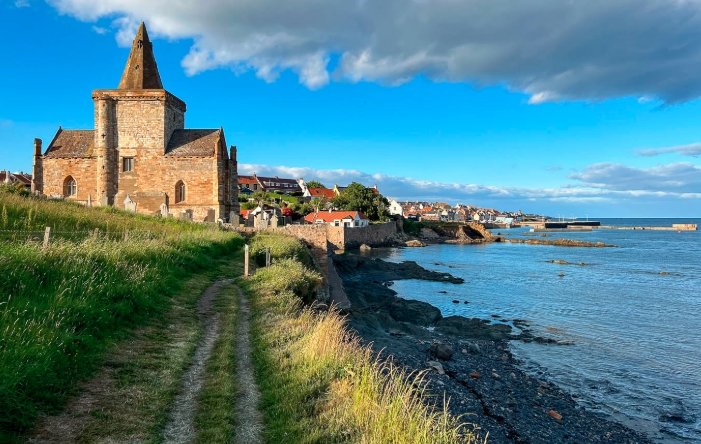
Selkirk was born here in 1676, and his remarkable survival story became the foundation for one of the most celebrated novels in English literature. The Fife Coastal Path, a 116-mile stretch linking the firths of Forth and Tay, offers walkers a chance to experience the landscapes that shaped his tale.
Leaving the village, the path winds along golden sands where seabirds peck at retreating tides. The Isle of May looms on the horizon, a place of rugged beauty and seabird colonies. Along the way, footprints of the past emerge—crumbled stone cottages, echoes of an era when the sea dictated the rhythm of life.
The Thrill of the Elie Chain Walk
A few miles ahead, the path reaches one of its most exhilarating sections: the Elie Chain Walk. Thought to have originated in the early 20th century, this cliffside challenge features eight steel chains bolted into the rock, aiding climbers as they navigate jagged coastal edges.
- The best time to tackle the chain walk is during low tide.
- Some sections require a firm grip and steady nerves.
- A misplaced step could mean a wet landing—adventure comes with a risk.
Beyond the thrill, the reward is undeniable. The climb reveals hidden caves, dramatic sea arches, and swirling waters below. It’s a reminder that Scotland’s coast is as untamed as the mariner who once roamed these shores.
Seaside Villages and Unexpected Delights
The route continues to Elie, a charming village where modern life blends seamlessly with maritime heritage. A beachside sauna puffs gentle curls of smoke into the sky. A converted horse trailer serves as a mobile wellness retreat—an idea sparked by local entrepreneur Judith Dunlop, who has expanded her sauna business along the coast.
Further ahead, St Monans and Pittenweem welcome weary walkers with cozy cafés and a slower pace of life. The scent of fresh seafood drifts from Anstruther, home to one of Scotland’s most famous fish and chip shops. It’s a place to pause, refuel, and soak in the salty air.
Art and the Changing Tide
In Anstruther, artist Julie Brook is preparing for an ambitious project as part of the Beach of Dreams festival. Her installation, Tide Line, will create a temporary stone pathway across the intertidal zone, accessible only at low tide.
Julie points toward the rocky shore. “We’ll move stones carefully, working with the landscape. Each day, the tide will reclaim the path, reshaping it.”
The concept is simple yet profound—a pathway leading nowhere, yet rich with meaning. Selkirk himself might have appreciated the symbolism, having spent years staring at an endless ocean, wondering if a ship would ever appear on the horizon.
Where the Land Meets the Sea
Beyond Anstruther, the path meanders through Cellardyke, home to a tidal swimming pool that invites brave souls to take an invigorating dip. A mile ahead, Crail’s picturesque harbor provides a postcard-perfect rest stop. The Harbour Gallery serves steaming bowls of soup, a welcome comfort after a windswept walk.
The final stretch towards Kingsbarns shifts the scenery once more. Here, the coastline is rugged and wild, with kelp-draped rocks bearing witness to the full force of the North Sea. The Inn at Kingsbarns, a community-run establishment, offers a warm fire and hearty fare—a fitting end to a day’s walk.
The Final Stretch: St Andrews and a Fading Legacy
Reaching St Andrews, the journey closes with another sauna, this time at East Sands, where locals gather for post-sea-dip warmth. A new British sauna culture is emerging—livelier than its German counterpart, hotter than the Scandinavian tradition, and decidedly more clothed.
Selkirk’s story, though centuries old, still lingers along this coast. When he was finally rescued in 1709 after four years marooned on a Pacific island, his thoughts on solitude were recorded by his captain: “One may see that solitude and retirement from the world is not such an insufferable state of life.” Yet, upon returning to Scotland, he often longed for his lonely island. It is said he found solace at Kincraig Point—where the Elie Chain Walk now tempts modern adventurers.
The Fife Coastal Path is more than a walk; it’s a layered experience, where past and present merge, and every tide carries whispers of those who came before.
 Windows 11 KB5095093 Lands With Point-in-Time Restore and 35-Day Pause
  Meta Cuts Smart Glasses to $299 to Outflank Snap and Apple
  Messi Leads the 2026 World Cup Golden Boot Race After Two Matches
  Australia March On as Athapaththu Ton Lights Up T20 World Cup
  Galaxy Z Fold 8 Leak Reveals Colors, Storage, and a New Ultra Variant
  Ronaldo’s Six-World-Cup Record Leads a Matchday Full of Milestones