

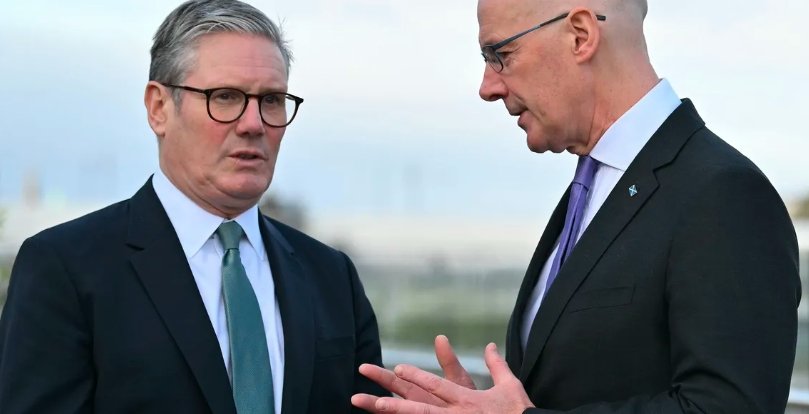
Scotland’s First Minister John Swinney issued a stark warning to UK Prime Minister Keir Starmer about an existential threat to the nation’s energy sector during a key meeting. The discussion happened ahead of the British-Irish Council summit in Wales on December 7, 2025, amid growing job losses and policy concerns in oil, gas, and renewable industries.
Urgent Meeting Highlights Energy Woes
John Swinney met Keir Starmer to address mounting pressures on Scotland’s energy industry. He stressed the need for immediate UK Government action to prevent irreversible damage.
Recent events have fueled these concerns. ExxonMobil announced cuts at its Mossmorran plant, while Harbour Energy revealed plans to slash 100 offshore jobs in Aberdeen. Both companies pointed to UK policies as key factors.
Swinney called for removing the energy profits levy, which taxes oil and gas firms heavily. He argued this would support a fair shift to renewables without harming workers.
The First Minister also raised issues from the recent UK Budget, including impacts on major sites like Grangemouth and the Acorn carbon capture project. Clarity on UK-US trade talks was another point of discussion.
Roots of the Existential Threat
The threat stems from a mix of high taxes and delayed investments. The energy profits levy, now at 78 percent for some firms, has drawn criticism for driving away business.
Scotland’s oil and gas sector has seen over 13,000 jobs lost in the past year alone. At the same time, the UK imports more than 40 percent of its energy needs, often from sources that could be tapped domestically.
Policy decisions under both previous Conservative and current Labour governments have worsened the situation. Delays in projects like Acorn, meant for carbon capture, have left investors hesitant.
Swinney compared the potential fallout to 1980s deindustrialization under Margaret Thatcher. He warned Starmer risks a similar legacy if action is not taken soon.
Communities in the North-east and other areas still bear scars from past industrial declines. Without support, a just transition to green energy could leave thousands behind.
Job Losses and Economic Impact
Job cuts are hitting hard across Scotland’s energy hubs. Harbour Energy’s announcement follows similar moves by other firms, blaming fiscal pressures.
In Aberdeen, the oil capital, local economies rely on these roles. The loss of 100 positions at Harbour adds to a trend that could see 58,000 jobs vanish if trends continue.
Grangemouth refinery’s closure earlier this year eliminated 400 jobs, despite pledges to save it. Mossmorran faces shutdown risks, threatening more livelihoods.
These losses ripple out. Supply chains, local businesses, and families suffer reduced income and uncertainty.
- Over 13,000 oil and gas jobs lost in Scotland over the past year.
- UK energy imports exceed 40 percent of total needs.
- Potential for 58,000 more job losses without policy changes.
- High taxes like the 78 percent windfall levy deter investments.
Experts note that while climate goals are vital, rushed policies ignore worker retraining and new opportunities in renewables.
Government Responses and Criticisms
Keir Starmer’s administration has defended its approach, emphasizing net zero targets. However, critics say it overlooks Scotland’s unique needs.
Scottish officials push for more funding and faster decisions on projects like Acorn. They argue Westminster holds back progress by controlling key energy policies.
Opposition voices, including SNP members, accuse Labour of betraying workers. Some draw parallels to past governments that prioritized ideology over jobs.
Starmer has highlighted investments in Wales for nuclear energy, but Scotland’s anti-nuclear stance limits similar options. This has sparked debates on missed billions in funding.
Public sentiment on social media reflects frustration. Many users express anger over imported energy while local industries decline.
Path to a Just Transition
A just transition means balancing climate action with economic security. Scotland aims to lead in renewables, but needs UK support to make it happen.
Initiatives like carbon capture at Acorn could create jobs and cut emissions. Yet, repeated delays have companies pulling back.
Swinney urged moral responsibility to meet climate commitments without abandoning communities. He called for a pipeline of investments to protect skills.
Looking ahead, the 2026 Scottish elections could hinge on these issues. Voters in energy-dependent regions may demand real change.
| Key Projects Affected | Status | Job Impact | Policy Issue |
|---|---|---|---|
| Grangemouth Refinery | Closed | 400 lost | Lack of UK support |
| Mossmorran Plant | At risk | Potential cuts | High taxes |
| Harbour Energy Offshore | Job cuts announced | 100 lost | Energy profits levy |
| Acorn Carbon Capture | Delayed | Investment stalled | Budget delays |
Broader Implications for UK Energy
The crisis extends beyond Scotland, affecting UK energy security. Relying on imports raises costs and vulnerability.
Recent global events, like supply disruptions in 2025, underline the need for stable domestic production. Scotland’s resources could play a key role.
Analysts predict higher energy bills if deindustrialization continues. A balanced approach might include tax relief and green incentives.
Swinney’s warning echoes calls from industry leaders for urgent talks. Without compromise, tensions between Edinburgh and London may grow.
Calls for Unity and Action
Stakeholders from unions to businesses seek collaboration. A united front could secure a sustainable future.
As debates heat up, public awareness is crucial. Sharing stories from affected workers highlights the human cost.
What do you think about the energy sector’s future in Scotland? Share your views in the comments and spread this article to raise awareness.