
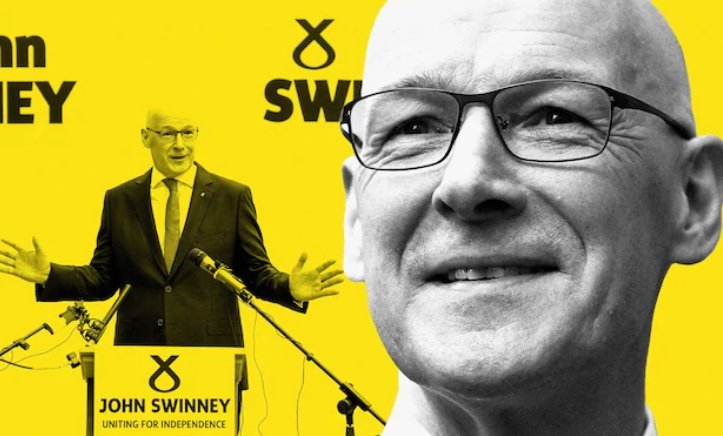
Scottish National Party leader John Swinney launched his party’s Holyrood election campaign on December 8, 2025, in Glasgow, promising that independence could slash household energy bills by more than a third by harnessing Scotland’s renewable resources. With the election set for May 2026, Swinney tied the push for self-rule to energy policy, echoing the 1970s “It’s Scotland’s oil” slogan with a new focus on renewables to boost economic gains for Scots.
Swinney’s Bold Energy Pledge
Swinney told supporters that Scotland’s vast wind, wave, and solar potential offers a “second chance” after missing out on oil wealth. He argued that breaking from the UK would let Scotland decouple electricity prices from gas, leading to long-term savings.
Recent polls show energy costs as a top voter concern, with UK bills rising despite global drops in wholesale prices. Swinney claimed independence would mirror Norway’s model, where state control built a sovereign wealth fund now worth over $1.5 trillion.
He criticized the UK government’s energy profits levy, calling it a threat to Scotland’s industries. This levy, extended by Labour, taxes excess profits from oil and gas firms amid high energy prices.
Renewables at the Heart of SNP Strategy
The SNP’s campaign highlights Scotland’s renewable strengths, producing enough green energy to power all homes twice over in 2024 data. Party plans include giving communities up to 20 percent ownership in local wind projects, aiming to share profits directly.
This approach contrasts with past UK policies, which Swinney said funneled oil revenues south. Scotland exported 80 percent of its renewable energy to England in 2024, per industry reports, yet Scots face some of Europe’s highest bills.
Critics, including environmental groups, question the SNP’s oil stance. They argue favoring fossil fuels undermines climate goals, with Scotland missing 2025 emissions targets.
Public sentiment on X reflects mixed views, with some praising the focus on green jobs while others doubt the bill-cutting claims without clear timelines.
Independence Path and Voter Priorities
Swinney avoided specifics on securing independence, as UK Prime Minister Keir Starmer opposes another referendum. Polls from November 2025 show Scots nearly split on self-rule, with 45 percent in favor.
He linked energy reform to broader gains, like better NHS services and housing. Recent investments cut surgical wait times by 15 percent in 2025, but education gaps persist.
Voters want action on cost-of-living pressures, with inflation easing to 2.3 percent in late 2025. Swinney insisted independence is key to prosperity, despite Labour’s gains in Scotland’s recent general election.
Challenges and Criticisms
Climate advocates slammed Swinney’s levy critique, saying it ignores the need to phase out oil. Friends of the Earth noted Scotland sold offshore wind leases cheaply, benefiting corporations over locals.
Opposition parties like Scottish Labour called the pledges unrealistic, pointing to SNP governance issues like delayed ferries and budget shortfalls.
Key challenges facing the SNP include:
- Declining poll numbers after July 2024’s UK election losses.
- Internal party rifts on strategy post-Nicola Sturgeon.
- Growing calls for nuclear energy, which Swinney rejects.
A November 2025 YouGov survey showed SNP leading voting intentions at 35 percent, ahead of Labour’s 30 percent.
Economic Impact of Renewables Push
Scotland’s renewables sector employed 27,000 people in 2024, up 10 percent from 2023, according to government figures. Independence could unlock $20 billion in annual green investments, per SNP estimates.
Here’s a quick look at potential bill savings under the SNP plan:
| Scenario | Current Average Bill (2025) | Projected with Independence | Savings |
|---|---|---|---|
| Household | £1,928/year | £1,285/year | £643/year |
| Small Business | £4,500/year | £3,000/year | £1,500/year |
| Based on SNP policy paper and 2025 Ofgem data. Projections assume decoupled pricing by 2030. |
These figures assume policy changes post-independence, but experts warn of transition costs.
What It Means for Scotland’s Future
As the Holyrood race heats up, Swinney’s energy focus taps into national pride and economic woes. With global shifts to net-zero by 2050, Scotland’s resources position it well, but delivery depends on political will.
Voters will weigh if independence truly delivers cheaper power against risks of economic uncertainty. Recent events, like the UK’s 2025 budget hiking energy duties, fuel the debate.
Share your thoughts on the SNP’s energy plans in the comments below, and spread this article if it helped clarify the election stakes.