
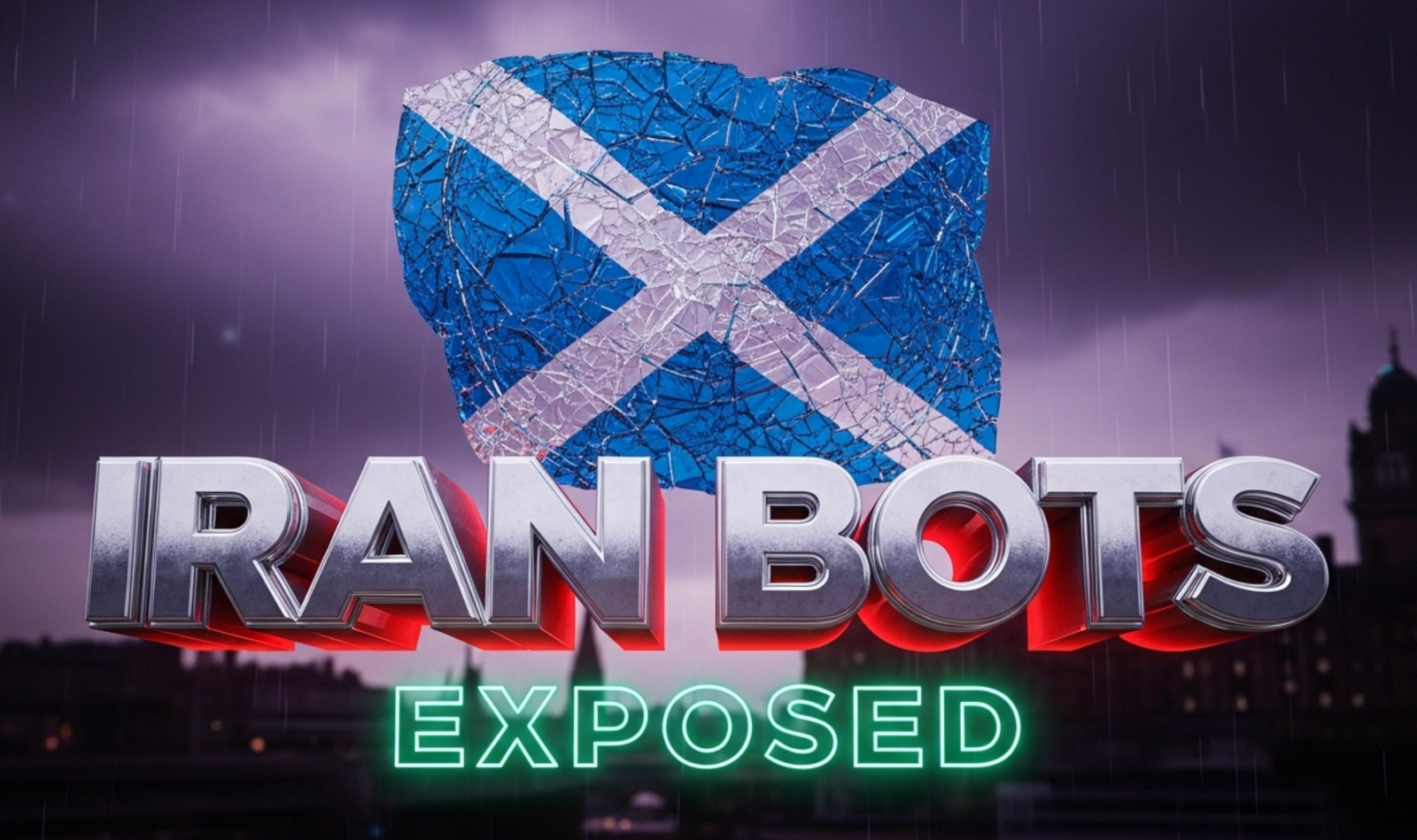
British intelligence officials confirmed yesterday that dozens of highly active X accounts promoting Scottish independence abruptly stopped posting in early January 2026, coinciding exactly with Iran’s nationwide internet blackout during anti-regime protests.
The timing has triggered alarm bells in Westminster and Holyrood alike.
Multiple sources inside the UK government have now widened an existing foreign interference probe to include what they call “a coordinated Iranian influence operation” that targeted the Scottish independence debate for at least 18 months.
How the Network Was Exposed
The breakthrough came from two separate tracks that suddenly converged.
First, X’s new account-location transparency feature, rolled out in November 2025, began showing clusters of supposedly Scottish accounts posting from IP ranges inside Iran.
Second, Israeli cybersecurity firm Cyabra published fresh analysis showing more than 1,300 coordinated profiles went dark within hours of Tehran pulling the plug on the internet on 3 January 2026.
Cyabra’s data reveals the same network had generated over 42 million impressions on Scottish independence content since mid-2024.
Most accounts used Saltire profile pictures, Glasgow or Edinburgh location tags, and posted exclusively in English with perfect Scottish slang.
Yet every single one fell silent the moment Iran went offline.
One account, @WeegieForYes2, had posted 47 times a day for 14 months straight.
It has not tweeted once since 2 January.
Westminster Reacts Swiftly
Foreign Affairs Select Committee chair Dame Emily Thornberry did not mince words in Parliament this week.
“We have either discovered the world’s most dedicated group of Iranian Scottish nationalists, or someone in Tehran has been running a very deliberate campaign to stir division inside the United Kingdom,” she said.
Thornberry has summoned senior executives from X, TikTok, and Meta to appear before the committee next month.
Ofcom has been asked to prepare enforcement action under the Online Safety Act if the platforms are found to have ignored clear evidence of state-backed disinformation.
The National Security Act 2023 now gives regulators powers to fine companies up to 4% of global turnover for failing to remove foreign interference material.
Scotland’s Political Class Pushes Back Hard
First Minister John Swinney called the allegations “convenient timing” for a UK government that has blocked every route to a second referendum.
He told journalists outside Bute House: “The people of Scotland do not need bots from Tehran or briefings from London to know that this country wants its voice heard.”
SNP Westminster leader Stephen Flynn went further, accusing unionist parties of “weaponising foreign interference claims to avoid facing the democratic argument”.
Senior Labour figures in Scotland have stayed notably quiet.
Anas Sarwar’s office issued only a one-line statement saying the party “takes all foreign interference seriously”.
The Numbers Behind the Movement
None of this has dented actual support for independence on the ground.
The latest Panelbase poll (12-15 January 2026) shows:
- Yes 49%
- No 51% (within margin of error)
The same poll for the May 2026 Holyrood election gives:
- SNP 38%
- Labour 31%
- Conservatives 16%
- Greens 8%
- Lib Dems 5%
Pro-independence parties combined still lead by 46% to 44% on the regional list.
That translates into another likely SNP-Green majority under Holyrood’s proportional system.
Why Iran Would Bother
Security sources tell me Tehran’s interest is simple: keep Britain distracted and divided while it faces Western pressure over its nuclear programme and support for proxy groups.
One former MI6 officer who worked Iran desk said: “It costs pennies to run a few thousand fake accounts. The payoff is chaos inside a permanent UN Security Council member. It’s the cheapest chaos money can buy.”
Similar low-cost operations have previously targeted Brexit discourse, anti-monarchy sentiment, and English regional devolution debates.
Scotland simply offered the biggest constitutional fault line still open.
The accounts did not just amplify independence.
They routinely attacked the Royal Family, accused the BBC of anti-Scottish bias, and praised figures like Alba Party leader Alex Salmond in ways that often felt oddly out of step with mainstream Yes movement messaging.
Many genuine independence supporters had already started blocking the most extreme accounts months ago, describing them as “too pure to be real”.
The sudden silence across the entire network has left grassroots Yes groups feeling both vindicated and angry.
One longtime activist in Glasgow told me: “We knew something was off. But the idea that unionists will now use this to question the legitimacy of half the country is absolutely galling.”
Westminster sources say the expanded Philip Rycroft inquiry will deliver interim findings before the Holyrood election in May.
Officials expect those findings to show Iranian state involvement “at the highest levels of confidence”.
For now, the bots are gone.
But the debate they tried to hijack is very much alive, louder than ever, and entirely Scottish.
What do you make of this? Were the bots amplifying a real movement or trying to poison it? Drop your thoughts below, and if you’re on X, use #RealYesNotBots when you share.