

Scotland is grappling with severe travel disruption as heavy snowfall batters Glasgow and surrounding regions in the wake of Storm Dave. Thousands of tourists and commuters face road closures, rail cancellations, and hazardous conditions despite the Met Office lifting official severe weather warnings. The unexpected winter blast has left travelers stranded and authorities scrambling to restore normal operations across the country’s vital transport network.
Storm Dave Leaves Trail of Disruption Across Scotland
Storm Dave swept through the UK over the weekend, bringing wind gusts of up to 93 mph to parts of North Wales and Northern Ireland before tracking northeast into the North Sea. The storm left thousands of homes without power in Wales and County Armagh, creating widespread disruption before conditions intensified over Scotland.
As the storm system moved north, it drew cold Arctic air across Scotland, triggering blizzard-like conditions and heavy snowfall that caught many by surprise. Glasgow and the Scottish Highlands bore the brunt of the winter weather, with substantial snow accumulation blanketing roads and drastically reducing visibility.
Transport Scotland issued urgent travel warnings as conditions deteriorated rapidly Saturday night into Sunday morning. Major routes connecting Glasgow to Edinburgh, Stirling, and the Highlands experienced severe delays and dangerous driving conditions.
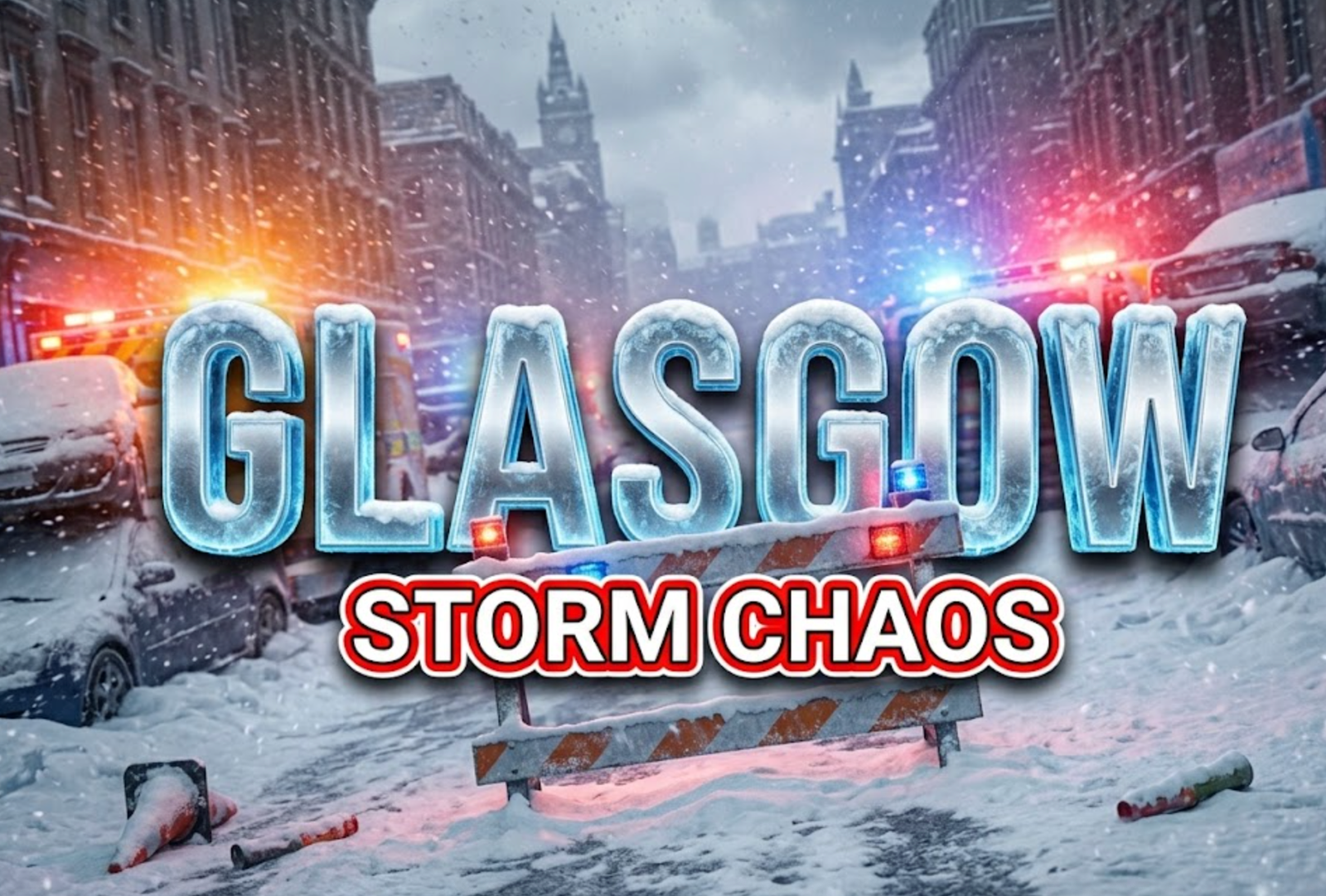
Roads Close and Rail Services Grind to Halt
ScotRail announced widespread cancellations and service interruptions across key commuter routes as emergency speed restrictions were imposed to protect passenger safety. Multiple train services between Glasgow Central and other major Scottish cities were suspended or significantly delayed due to snow and ice on the tracks.
Road networks suffered equally severe disruption. The M8, M74, and A9 corridors experienced multiple closures and reduced speeds as gritter crews worked around the clock to clear accumulating snow. Local councils deployed emergency response teams, but continuing snow showers overwhelmed clearance efforts in many areas.
- Major motorways reduced to single-lane traffic in affected areas
- Bus services cancelled across Glasgow and surrounding towns
- Emergency speed limits imposed on remaining open routes
- Gritter crews working 24-hour shifts to maintain critical roads
Drivers attempting to navigate the conditions faced treacherous ice patches and near-zero visibility in some locations. Police Scotland reported multiple minor collisions and vehicles abandoned on roadside embankments throughout Sunday morning.
Tourists Caught in Travel Nightmare
International visitors and domestic tourists planning spring breaks in Scotland found themselves stranded as the snowstorm disrupted carefully planned itineraries. Hotels across Glasgow issued advisories recommending guests postpone outdoor activities and non-essential travel until conditions improved.
Popular tourist destinations including Kelvingrove Park and The Glasgow Botanic Gardens became virtually inaccessible due to snow-covered pathways and hazardous walking conditions. Tour operators cancelled scheduled excursions to Loch Lomond and the Trossachs National Park as roads leading to these attractions remained impassable.
Families and tour groups experienced cascading delays across connecting transport services, with many forced to extend hotel stays unexpectedly. Glasgow Airport reported flight delays affecting both domestic and international routes as de-icing operations struggled to keep pace with continuing snowfall.
The Loch Lomond Springfest, a highly anticipated seasonal event drawing thousands of visitors annually, was postponed indefinitely due to safety concerns. Community organizers expressed disappointment but emphasized that visitor safety remained the top priority.
Safety Warnings and Emergency Response
Emergency services across Scotland issued critical safety guidance for anyone attempting travel during the ongoing weather crisis. The Scottish government urged residents and visitors to avoid non-essential journeys until conditions stabilize.
Authorities recommended that drivers venturing onto roads ensure their vehicles are equipped with winter tires and emergency kits containing blankets, warm clothing, food, water, shovels, and traction aids. Mobile phone chargers and first aid supplies were also highlighted as essential items.
Emergency services continue monitoring vulnerable populations, including elderly residents and those with limited mobility who may struggle with heating or access to supplies. Community support networks mobilized across affected regions to check on isolated individuals.
The UK Met Office explained that the volatile weather pattern resulted from cold air masses from the North Atlantic colliding with moisture-laden systems already saturating Scotland following Storm Dave’s passage. This combination created ideal conditions for heavy snow accumulation despite rising calendar temperatures typically associated with spring.
Conditions Expected to Improve Gradually
The Met Office forecasts gradual improvement through Sunday afternoon and into Monday as temperatures rise modestly and snow showers taper off across most of Scotland. However, meteorologists warn that residual snow and ice will persist on road networks and surfaces well into the early week.
Transport Scotland advises travelers to monitor official updates continuously as conditions evolve. Officials emphasize that road surfaces will remain hazardous even after snowfall stops, with black ice posing significant risks during overnight hours when temperatures drop.
ScotRail announced plans to restore full service schedules progressively as track conditions allow, but warned passengers to expect residual delays and cancellations through Monday. The rail operator urged customers to check journey planners before traveling and consider alternative arrangements where possible.
The Scottish tourism industry faces potential economic impacts as the unexpected weather disrupts the crucial spring travel season. Industry representatives expressed hope that quick recovery of transport infrastructure will minimize longer-term effects on visitor numbers.
The unexpected severity of post-storm snowfall highlights the unpredictable nature of UK spring weather and its capacity to disrupt modern transportation networks. As Glasgow and Scotland begin the recovery process, authorities urge continued caution and patience from residents and visitors alike. Share your experiences and stay safe during these challenging conditions, and check official Transport Scotland channels for the latest updates before planning any travel across the region.