
 Chris Muir
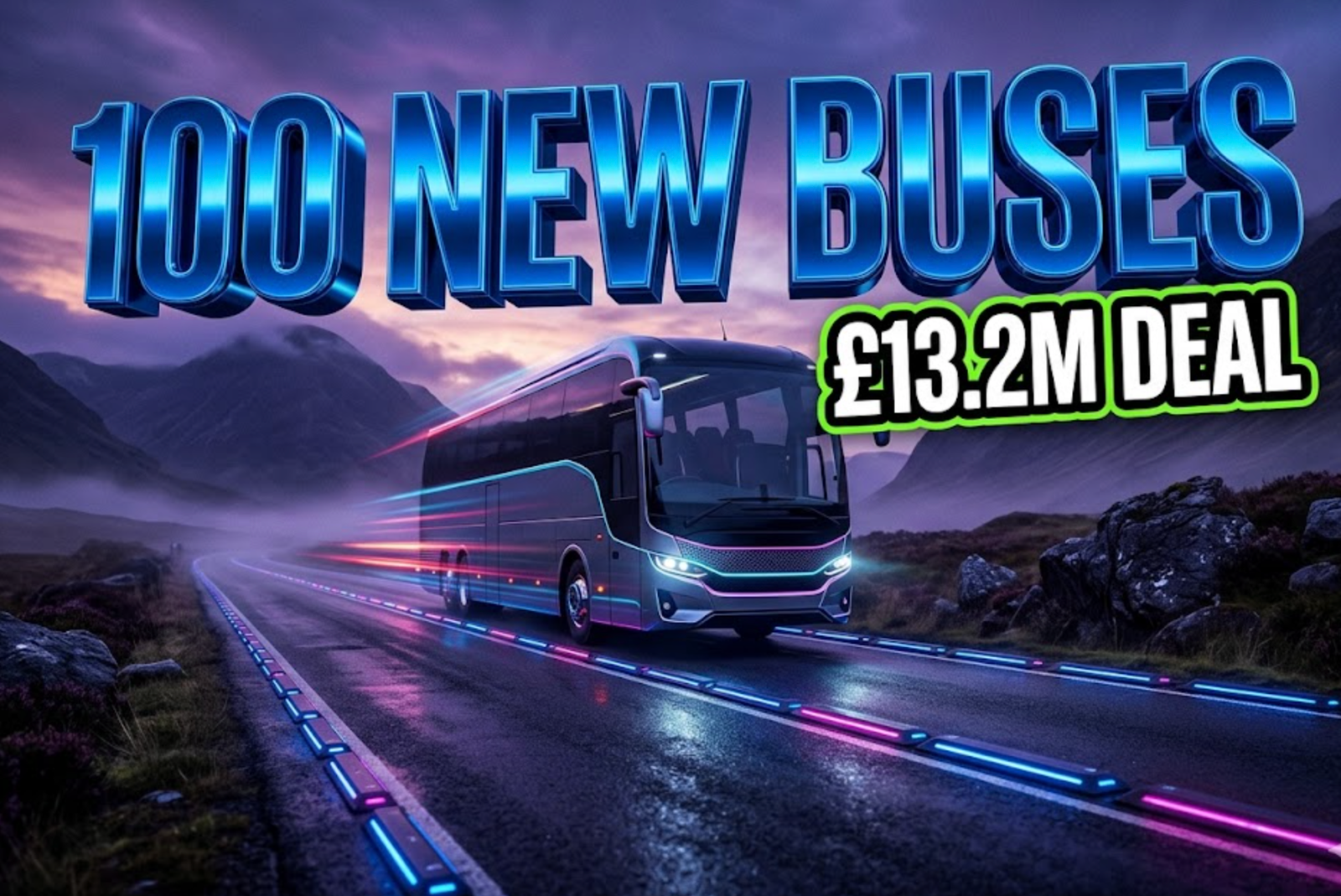
 Scotland’s green transport revolution just hit the accelerator. Tech-driven operator Ember has secured a massive £13.2 million government grant to double down on its zero-emission mission, funding a purchase of 100 brand-new electric coaches that promises to reshape how Scots travel between cities.
The substantial award comes from the Scottish Government’s ScotZEB3 (Scottish Zero Emission Bus Challenge Fund) scheme, a decisive move designed to fast-track the nation’s transition to a net-zero transport network. This latest injection of capital allows Ember to significantly expand its footprint, bringing its signature silent, eco-friendly intercity travel to more corners of the Highlands and Lowlands than ever before.
Major Expansion Powered by ScotZEB3
This deal marks a pivotal moment for public transport in the UK. With the delivery of these 100 vehicles, Scotland is poised to cement its status as the only country in the world operating a fully electric national coach network. The funding isn’t just about buying hardware; it is a strategic investment in connectivity.
Ember’s network, which has already disrupted traditional service models on routes like Dundee to Edinburgh and Glasgow, will use the new fleet to increase frequency and unlock entirely new destinations. While the operator is keeping the exact new route map under wraps for now, the implications are clear: the “electric spine” of Scotland is growing.
Key benefits of the fleet expansion include:
- High-Frequency Services: Turning hourly routes into turn-up-and-go corridors.
- Rural Connectivity: Bringing zero-emission transport to underserved towns and villages.
- Emissions Reduction: Removing thousands of car journeys from Scottish roads annually.
“We’re grateful to the Scottish Government for the support,” an Ember spokesperson stated regarding the award. “We genuinely believe ScotZEB has helped make Scotland a global leader in zero-emission coaches and buses. It means Scotland is now… seeing the benefits, with quieter roads, lower emissions and improved air quality.”
Why Yutong Won Over Local Manufacturers
The expansion has not come without industry debate, particularly regarding the choice of manufacturer. Ember has confirmed the 100 new vehicles will be supplied by Yutong, the Chinese manufacturing giant, rather than a domestic builder. This decision highlights a growing rift between operator needs and local manufacturing capabilities.
Ember addressed the elephant in the room directly, stating they had approached Scottish-based manufacturer Alexander Dennis (ADL) “many times” with proposals. According to Ember, they were told “repeatedly” that ADL “cannot offer a suitable product and have no interest in developing something for this market.”
While ADL is a titan in the city bus sector, the intercity coach market requires vehicles with different specifications—specifically regarding range, luggage capacity, and high-speed efficiency. The Yutong GTe14 and TCe12 models, which make up Ember’s fleet, offer the range and under-floor luggage space critical for long-distance travel, a segment where domestic options have lagged.
To mitigate the “import” criticism, Ember highlighted that Yutong has invested significantly in Scotland’s manufacturing landscape. This includes hiring locally based staff and providing full, specialized training for Ember’s own mechanics, ensuring the technical expertise remains within the Scottish workforce.
Tech-First Travel Experience
Part of Ember’s rapid rise has been its focus on passenger experience, treating the bus more like a rolling tech startup than a legacy transport service. The new Yutong coaches are expected to feature the latest iteration of Ember’s passenger comforts.
Travelers can expect 5G Wi-Fi, ergonomic seating, and the seamless “Ember OS” ticketing system that eliminates paper tickets and tracks buses in real-time with pinpoint accuracy.
“The short version is simple: more places, more often, more reasons to leave the car at home.” — Ember Spokesperson.
This user-centric approach has been vital in converting die-hard car drivers into coach passengers. By combining reliability with the environmental “feel-good” factor of electric travel, Ember is betting that these 100 new buses will run at high capacity from day one.
Connecting Communities and Future Routes
The arrival of these vehicles will likely open up the Highlands to reliable electric transport. Historically, electric vehicle range anxiety limited services in the north, but the latest battery technology from Yutong pushes the range capabilities to over 350 miles on a single charge.
This capability unlocks routes to Inverness, Fort William, and potentially cross-border services into Northern England. For rural communities, this is a lifeline, offering a green alternative to car ownership in areas where public transport has often been an afterthought.
As the vehicles enter production, the focus now shifts to the infrastructure. Ember is simultaneously rolling out ultra-fast charging hubs to support this larger fleet, ensuring that the turnaround times at terminuses are as quick as refueling a diesel engine.
The ScotZEB3 funding has effectively given the green light to a new era of Scottish transport. The days of the noisy, diesel-belching intercity coach are numbered, and if Ember’s trajectory is any indication, they might be gone sooner than anyone predicted.
What are your thoughts on Scotland importing buses versus buying local? Does the lack of a domestic electric coach option justify the decision? Let us know in the comments below or share your thoughts on X using #EmberExpansion.
 Coal India, BEL Miss Estimates as India’s Mid-Caps Surge Ahead
  HCLTech’s Neo.AI Unit Chases the Business Its Mid-Tier Rivals Built
  Nvidia in Talks to Guarantee $250 Billion for OpenAI’s Data Hub
  HDFC Bank Fines CEO and CFO, Refers MSRDC Case to RBI
  Hyderabad Gold Rate Rises as India’s New 15% Duty Bites
  Maruti Brezza Facelift Prices Fall Thanks to a Tax Rule