

Scotland has felt less pain from Brexit than the rest of the UK, but critics point fingers at former First Minister Nicola Sturgeon for missed chances to soften the blow. As of early 2026, new reports show the UK economy shrank by up to 5.5 percent due to leaving the EU, yet Scotland’s unique position has shielded it from the worst effects.
Economic Fallout from Brexit Hits UK Hard
Recent studies paint a clear picture of Brexit’s toll on the broader UK economy. Experts estimate the nation’s GDP is now 2.5 to 5.5 percent smaller than it would have been without the exit.
Scotland, however, has dodged some of the harshest impacts. Trade data from late 2025 reveals that Scottish exports to the rest of the UK remain strong, worth more than three times those to the EU. This internal market has acted as a buffer.
Analysts note that sectors like whisky production and renewable energy in Scotland have adapted well. Investments in green tech have grown by 15 percent since 2023, helping offset losses in other areas.
Still, challenges linger. Food prices have risen by about 8 percent across the UK due to new trade barriers, and Scotland feels this pinch in rural communities.
Sturgeon’s Decisions Draw Fresh Criticism
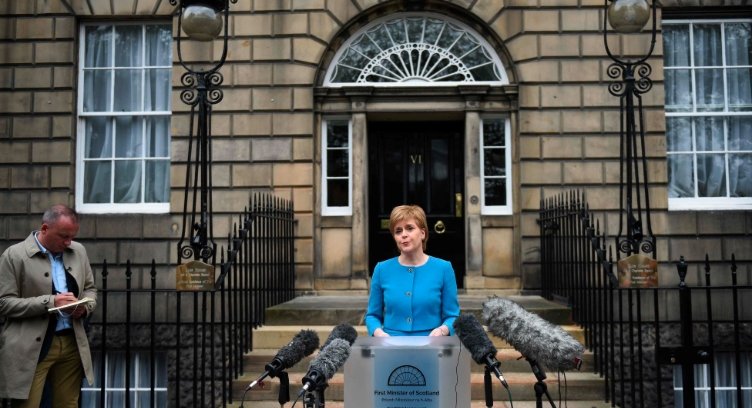
Nicola Sturgeon, who stepped down as First Minister in 2023, faces blame for not pushing harder against a hard Brexit. Some argue her focus on Scottish independence distracted from key opportunities.
During Brexit talks, the SNP at Westminster could have backed a Tory amendment to keep Great Britain in the EU Customs Union. If passed, this might have eased border issues and saved billions in economic drag.
Sturgeon’s speeches often targeted Labour leader Keir Starmer for his Brexit stance. In 2022, she accused his party of aligning too closely with Conservatives on the issue.
Her resignation left the independence movement in limbo. Recent polls from December 2025 show support for leaving the UK has dipped to 45 percent, down from peaks in prior years.
Critics say her legacy includes a divided political scene, where economic recovery took a back seat to nationalist goals.
Experts point out that Sturgeon’s government invested in local industries, which helped insulate Scotland. For instance, funding for tech startups rose by 20 percent under her watch.
Starmer’s Role and Labour’s Brexit Strategy
Keir Starmer, now Prime Minister since 2024, has kept a firm line on Brexit and Scotland. He vowed no deals with the SNP, even as Labour gained ground in Scottish seats.
In early 2023, Starmer warned against complacency after Sturgeon’s exit. His government has focused on mending EU ties without rejoining, aiming to boost trade.
A 2025 report from the Office for Budget Responsibility shows Brexit cut UK growth by 4 percent overall. Starmer’s team claims new deals with Europe could recover half of that loss by 2030.
In Scotland, Labour’s rise has shifted politics. The party won more seats in the 2025 Scottish Parliament elections, promising economic stability over independence.
Starmer’s critics, including some in the SNP, say he ignores Scotland’s unique needs. Yet, his policies have led to a 10 percent increase in cross-border investments.
Scotland’s Trade and Deficit Challenges
Brexit has reshaped Scotland’s trade landscape, but not always for the worse. Official stats from 2025 highlight key trends.
Here are some critical figures:
- Scottish trade with the rest of the UK: Valued at over 60 billion pounds annually.
- Exports to the EU: Down 12 percent since 2019, but offset by growth in Asia.
- Fiscal deficit: Stands at 8 percent of GDP, worsened slightly by Brexit costs.
A potential Scottish exit from the UK, or Scexit, could amplify these issues. Projections suggest a double-digit economic contraction if independence happens.
| Aspect | Pre-Brexit (2015) | Post-Brexit (2025) | Change |
|---|---|---|---|
| GDP Growth Rate | 2.1% | 1.4% | -0.7% |
| Unemployment | 5.6% | 4.2% | -1.4% |
| Export Value to EU | 12 billion pounds | 10.5 billion pounds | -12.5% |
| Investment in Renewables | 1.5 billion pounds | 2.3 billion pounds | +53% |
This table shows mixed results, with gains in jobs and green energy balancing some trade losses.
Political Shifts and Independence Debate
The independence push has cooled since Sturgeon’s departure. Current First Minister John Swinney faces pressure to refocus on economy over separation.
Recent events, like the 2025 UK-EU trade summit, have sparked talks of closer ties. Scotland benefits from devolved powers, allowing it to pursue its own deals in areas like fishing.
Public sentiment on X reflects frustration. Many posts highlight how Brexit dragged down the UK, but Scotland’s internal strengths provide resilience.
Polls indicate 55 percent of Scots now prioritize economic recovery over independence, up from 40 percent in 2023.
Looking Ahead for Scotland in 2026
As 2026 unfolds, Scotland stands at a crossroads. With elections looming, parties must address Brexit’s lingering effects.
Experts predict modest growth of 1.8 percent for Scotland this year, outpacing the UK’s 1.5 percent. This edge comes from strong sectors like tourism, up 18 percent post-pandemic.
Challenges remain, including labor shortages in healthcare, linked partly to Brexit immigration rules.
To stay informed on these developments, share this article with friends and leave your thoughts in the comments below. What do you think about Scotland’s path forward?