
 Ishan Crawford
 Wikipedia’s ‘Which came first?’ game arrived on iPhone on June 11, 2026, inside version 8.2.0 of the Wikipedia iOS app. The game’s App Store listing describes it as a “daily trivia game built from Wikipedia facts” and points users to the Explore feed. Each round pairs two historical events that share the same calendar date and asks which one happened first.
The Android experiment that preceded the iPhone launch tells a more complicated story than the App Store update. Users who actually opened the game returned to the app 7.3% more often than the control group in a 20-day A/B test, per the Wikimedia Foundation’s own design page. The broader app audience came back 1.3% less.
The Game and Where iPhone Users Find It
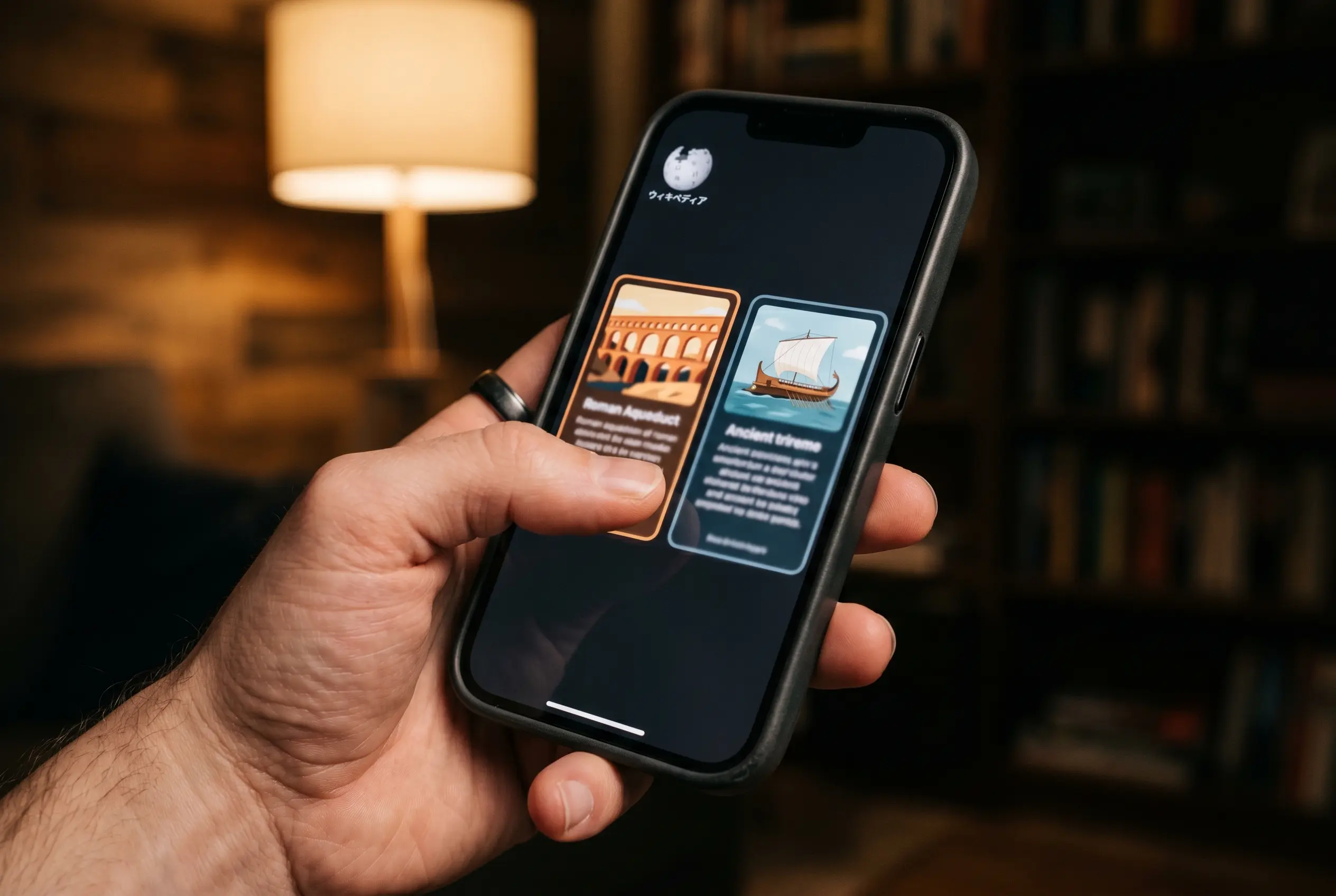
The game is simple to describe. Players see two illustrated cards, each showing a real historical event tied to the current calendar date, and pick the one that happened first. Get it right and a point goes on the board; miss and the game moves on. Five questions, one running total, then a results page with links to read more about each event on Wikipedia.
The iPhone version sits inside the standard Wikipedia app, not a separate download. iOS users who already have the app installed can open the App Store, tap Update, and let the new build, version 8.2.0, install. Once updated, opening the app reveals the game inside the Explore feed, the same surface that surfaces trending articles and “On This Day” content. The whole flow takes a minute or two, and the game loads the same day regardless of timezone. The Wikipedia app is free, ad-free, and works offline once articles are saved.
No Wikipedia account is required to play. The game keeps scores and streaks locally on the device, not tied to a user profile, so two people sharing an iPad see two separate histories. Apple’s App Store listing for the Wikipedia app, found at the Wikipedia iOS app download page, calls the new feature a daily trivia experience built from Wikipedia facts. The Wikipedia iOS app’s source code on GitHub is open for anyone who wants to see how the game wires into the Explore feed.
To find the game on an iPhone:
- Open the Apple App Store on your iPhone.
- Search for “Wikipedia” and update the app to the latest version.
- Open the updated Wikipedia app.
- Tap the Explore tab in the bottom navigation.
- Look for the “Which came first?” game card and tap to play.
A Year on Android Before iPhone
The iPhone version is the second platform, not the first. The Wikimedia Foundation built the game for the Wikipedia Android app first and tested it for nearly a year before bringing it to iOS, per the foundation’s team page on the game. That page calls the Android version the starting point and lists an iOS target of March 2026.
The Android team originally built a working version of the game in September 2024 during a Sprinthackular, an internal sprint designed to test product ideas. That prototype produced usability feedback positive enough to justify a permanent build. The team then rolled the game out as part of an A/B test on May 21, 2025, and scaled it to eight languages including English, French, Portuguese, Russian, Spanish, Arabic, Chinese, and Turkish. The iPhone version, when it arrived on June 11, 2026, was effectively the same game with a different access path.
The iOS release landed where Apple’s review process and the iOS app’s release cadence put it, not where the original internal plan called for. The MediaWiki page for the game states, “We’re currently testing this feature on Android first, but we plan to bring Wikipedia-based games to iOS by March 2026.” The iPhone build missed that March 2026 target and arrived on June 11, 2026. The mechanics stayed the same as the Android version, including the five-question format, the “On This Day” sourcing, and local-only score tracking. The access path was the one thing that changed: Explore feed on iOS, More menu on Android. Moneycontrol’s coverage of the launch notes the game came to iPhone “nearly a year after it was introduced on Android.”
Key dates in the rollout:
- September 2024: Wikimedia Android team prototypes the game during an internal Sprinthackular.
- May 21, 2025: A/B test begins in English, French, Portuguese, Russian, Spanish, Arabic, Chinese, and Turkish.
- June 8, 2026: iOS version enters beta with German added to the language list, per the foundation’s weekly tech newsletter.
- June 11, 2026: Game arrives on iPhone via version 8.2.0 of the Wikipedia iOS app.
What the A/B Test Showed
The Android data sits in plain sight on the Wikimedia Foundation’s design page. The picture it draws is split, not a clean win. Most launch coverage stopped at the App Store update and skipped the methodology behind it.
The first target was retention: a 5% lift in return rate among users who engaged with the game. The actual result split in two directions. Overall, game group users came back 1.3% less than the control group. Among the smaller set of users who actually opened the game, the return rate was 7.3% higher. The game worked for the people who tried it and slightly hurt the broader retention number for everyone who saw the prompt and moved on.
The other three targets did better. The team wanted at least 15% of users to start the game; 11.7% did, just short. The team wanted at least 40% of starters to finish the same session; 71.4% did, almost double the target. The team wanted at least 5% of players to share their score, read a related article, or save one to a reading list; 10.0% did, exactly double the target. The fourth target, 10 new app installs from shared game links, ended at 169.
Two other numbers changed how the foundation reads the experiment. The game prompted the creation of 1,526 new app accounts during the test window, a side effect that did not show up as a planned metric. About 25% of users returned to play more than once, and most drop-off happened on the first slide of the game (63.6%). In a follow-up survey, 95% of game players said they were satisfied or neutral, and 97.5% said they were interested or possibly interested in trying other mini-games. Readers who want the full breakdown can read the Wikimedia team’s game design notes, where every key result and its target is laid out side by side.
Key A/B test numbers from the Android experiment:
- 1,526 new app accounts created during the test window
- 11.7% of users who saw the prompt started the game
- 71.4% of those starters completed it the same session
- 95% of surveyed players were satisfied or neutral
- 97.5% said they were interested in trying more mini-games
How the Game Builds Its Daily Questions
The questions are not written by hand. They come from a specific corner of Wikipedia. Every day, the game pulls real historical events from the On This Day pages on each language’s Wikipedia. The page for June 12, for example, lists every notable event recorded for that calendar date across all years.
The system then randomly pairs two of those events into a single comparison and serves them as the day’s question. Each pair covers events on the same calendar date but in different years, which is what makes the “which came first?” answer non-obvious. A player who runs the game on June 12, 2026, sees five questions about events that happened on past June 12s, and the next day sees a different set built from June 13’s history.
The team has not published a full editorial review of which events get paired, but the design doc spells out the data flow. Language Wikipedias need to maintain day-of-year pages with at least ten historical events per calendar day for the game to work in that language, per the team’s contribution guide. The A/B test covered English, French, Portuguese, Russian, Spanish, Arabic, Chinese, and Turkish. Volunteers can expand that list by adding events to their language’s day-of-year page. Once a day’s game is over, the questions stay accessible in the archive, though the foundation notes past games may look slightly different from the day they were first published if the source Wikipedia page was updated.
Differences iPhone Players Will Notice
On iOS, the game lives inside the Explore feed. The iPhone and Android builds share the same data and the same five-question mechanic, but the access path is the visible difference. On Android, the game sits behind a different surface: the bottom-bar “More” tab, then a “Games” submenu. Both paths lead to the same five daily questions, the same archive, and the same local-only score storage. Score history stays on the device and is not tied to a Wikipedia account. The iOS beta, which the foundation’s weekly tech newsletter confirmed on June 8, 2026, added German to the language lineup, bringing the iOS total to nine: English, German, French, Portuguese, Russian, Spanish, Arabic, Chinese, and Turkish. The App Store describes the public iOS build, version 8.2.0, as the first to carry the “Which came first?” game on iOS.
The chart below shows the practical differences in one place. The game mechanic, archive access, and account-free play are identical on both platforms. Where iPhone users tap Explore, Android users tap More > Games, and the version trail is different, with iOS 8.2.0 carrying the iPhone launch on June 11, 2026.
| Feature | iPhone (iOS app 8.2.0) | Android (Wikipedia app) |
|---|---|---|
| Where to find the game | Explore feed | More > Games |
| Sign-in required | No | No |
| Score storage | Local on device | Local on device |
| Quiz archive | Available after each round | Available after each round |
The Bigger Bet Behind a Wikipedia Game
The trivia game is part of a deliberate foundation experiment, not a casual product release. “Which came first?” sits inside the 2024-2025 Annual Plan under a workstream the foundation calls Wiki Experiences 3.1, which is aimed at logged-out readers. Retention is the underlying target: a 5% lift in how often readers return to the app. The Android A/B test cleared that bar for the engaged subset of users, missed it for the broader logged-out audience, and produced 1,526 new app accounts as a side effect. The iPhone launch expands the experiment to a second platform without changing the underlying hypothesis. The foundation is also exploring more Wikipedia-based games, and 97.5% of surveyed Android players said they would be interested in trying more of them.
If we create a daily-use Wikipedia-based trivia game in the Android app, logged-out readers who engage with this feature will open the app on multiple days within a 20-day period at a rate at least 5% higher than those who do not engage with the feature.
The Wikimedia Foundation’s Android team, on the game’s MediaWiki design page, framed the bet as a retention hypothesis. The Android data answered the question in two parts: yes, but only for the users who actually played. The iPhone audience gives the foundation a second, much larger test bed for the same experiment, on a platform with a different user base and a different Explore feed structure. The foundation has signaled it is exploring more Wikipedia-based games, with the next round of iPhone data still to come.
The iPhone launch is the foundation’s vote of confidence in an experiment that worked for its most engaged users. Most of the launch coverage stopped at the App Store update. The Android A/B test results, sitting on a MediaWiki design page, lay out the data behind the iOS decision.
Frequently Asked Questions
How do I play “Which came first?” on iPhone?
Update the Wikipedia app to version 8.2.0 or later from the App Store, open the app, and tap the Explore tab. The game card appears in the Explore feed, and tapping it starts the day’s five-question round.
Do I need a Wikipedia account to play?
No. The foundation’s design docs state that no sign-in is required, and scores and history are saved locally on the device, not synced to a user profile.
How many questions are in each daily game?
Five. Each game pairs two historical events that share the same calendar date and asks which one came first. The set refreshes every 24 hours.
Can I go back and play past rounds?
Yes. A quiz archive is available from the results page, so players can revisit earlier rounds they may have missed. The foundation notes that archived rounds may look slightly different from the day they were first published if the underlying Wikipedia “On This Day” page was updated.
Is the iPhone version the same as the Android version?
The five-question mechanic, the “On This Day” data source, the local score storage, and the archive are the same on both platforms. The main difference is the access path: Explore feed on iOS, the More > Games menu on Android.
 Rimpact’s Gravel Tuned Mass Damper: A 400g, £229.99 Bet on Comfort
  Chrome 149 Patches 28 Security Flaws, 12 Memory-Safety Bugs
  NYT Strands Hints and Answers for Friday, June 12, 2026
  iPhone 18 Pro Max Leak Reveals Dark Cherry, Light Blue and Black
  WhatsApp Rolls Out Multi-Account Support to iPhone Users
  UFC 6 Launches June 19 With a Brazilian Engineer’s Build Behind It