
 Axel Piper
 A wave of breakthroughs in alternative battery technologies is reshaping the energy storage landscape as companies across the United States, Spain, and Scotland push beyond traditional lithium-based systems. Recent advances in sodium-ion, iron-sodium, and vanadium redox flow batteries signal a potential shift in how the world stores renewable energy.
Sodium-Ion Battery Matches Solar Panel Lifespan
Unigrid, a US-based sodium-ion battery developer, announced a significant breakthrough with its proprietary sodium cobalt oxide chemistry. The company’s commercial-grade cells have achieved 5,000 full-depth cycles at 100% depth of discharge while maintaining greater than 95% capacity retention.
This performance translates to an expected cycle life of 20,000 cycles and an operational lifespan reaching up to 25 years. The achievement puts Unigrid’s technology ahead of lithium iron phosphate batteries, which typically deliver around 12,000 cycles.
The 25-year operational life aligns perfectly with the typical lifespan of solar panels, eliminating the need for mid-project battery replacements. This synchronization could transform project economics for renewable energy developers.
Darren H. S. Tan, CEO of Unigrid, emphasized the financial implications. Project operators can now match storage lifecycles with solar assets, enabling more predictable financing models like Battery-as-a-Service and reducing lifetime costs across the grid.
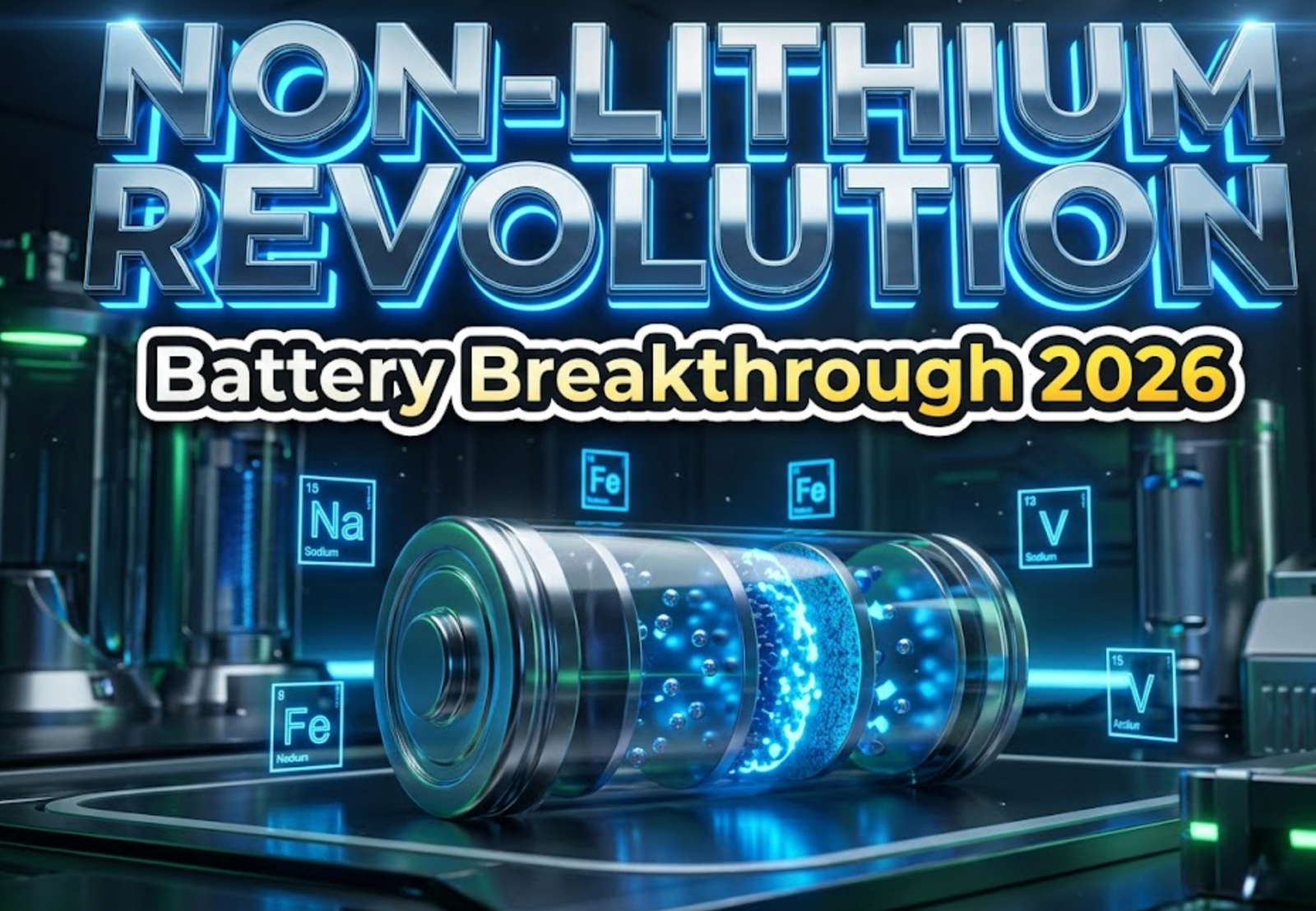
Unigrid began shipping its sodium cobalt oxide cathode cells at commercial volume in January 2026. The company became the first battery manufacturer outside China to export sodium-ion cells at scale, utilizing a fab-less, foundry-subscription model that avoids expensive gigafactory construction.
The company partners with existing manufacturers to produce its proprietary cell chemistry, enabling rapid global expansion through 40-foot container shipments. After obtaining UN38.3 certification for safe transport last year, Unigrid transitioned from pilot production to full-scale exports by 2025.
Key Advantages of Sodium-Ion Technology:
- Uses abundant, domestically available materials
- Lower cost compared to lithium-based systems
- Enhanced safety profile with reduced fire risk
- Performs well in extreme temperatures
- Eliminates reliance on critical minerals
Iron-Sodium Battery Manufacturer Expands Domestic Supply Chain
Inlyte Energy has partnered with Ervin Industries to develop specialized iron powder formulations for its iron-sodium battery systems. The collaboration aims to optimize battery performance while building a robust domestic supply chain using readily available American materials.
Inlyte’s technology employs sodium metal chloride battery chemistry, also known as ZEBRA batteries, which have operated successfully for over 40 years. The system uses a conversion chemistry of iron and sodium chloride, with solid beta-alumina as the electrolyte and molten sodium aluminum chloride as a catholyte.
Ervin Industries brings expertise in engineered iron materials for surface preparation, metalworking, and advanced manufacturing. The company produces these materials from recycled metals, ensuring sustainability and cost-effectiveness for large-scale battery production.
The partnership focuses on refining material specifications, enhancing production methods, and improving characteristics to support widespread deployment. Inlyte plans to select a site for its first domestic production facility in 2026, with commercial deliveries scheduled for 2027 in collaboration with HORIEN Salt Battery Solutions.
In February 2026, Inlyte announced a partnership with Swiss data center operator NTS Colocation AG to deploy 2MW of iron-sodium battery capacity by 2028. This project demonstrates growing confidence in alternative battery chemistries for critical infrastructure applications.
Spain Completes Testing of Vanadium Flow Battery Facility
La Fundación Ciudad de la Energía, operating under Spain’s Ministry for Ecological Transition, has completed operational testing of a 1MW/8MWh energy storage facility using vanadium redox flow battery technology. The installation includes a 100kW/800kWh experimental module dedicated to research and development testing.
Spanish company CYMI received the contract worth 6.4 million euros, incorporating technology from South Korean firm H2 Inc. The vanadium redox flow battery operates through vanadium redox reactions across four oxidation states, stored in multiple electrolyte tanks.
This technology offers power-energy decoupling and an operational lifespan exceeding 20 years. The flexibility to independently scale power and energy capacity makes flow batteries particularly attractive for grid-scale applications requiring long-duration storage.
The facility forms part of a broader project focused on green hydrogen production, sustainable synthetic fuels, and energy storage. Funding comes from the European Union’s Recovery, Transformation and Resilience Plan and Next Generation EU initiative.
Beyond the vanadium flow batteries, the Cubillos del Sil Technology Development Centre now hosts sodium-sulfur battery systems with 1MW/5.8MWh capacity and lithium-ion systems providing 600kW/1.3MWh. Combined installations completed during 2025 bring total energy storage capacity to approximately 15MWh.
The project aims to gather technical data supporting industrial-scale development of various storage technologies. This information will help determine optimal operating conditions and accelerate industry decarbonization efforts.
In 2024, Enel Green Power launched what was then the largest vanadium redox flow battery in Mallorca, Spain. The 1.1MW/5.5MWh system, supplied by Largo Clean Energy, operates at the 3.34MWp Son Orlandis solar plant in Palma municipality.
Industry Shifts Toward Material Diversity
These developments reflect a broader industry trend toward diversifying battery chemistries beyond lithium-ion dominance. Supply chain vulnerabilities, geopolitical tensions, and environmental concerns are driving investment in alternative technologies using more abundant materials.
Sodium, iron, and vanadium offer advantages in specific applications. Sodium-ion batteries excel in stationary storage where weight matters less than cost. Iron-sodium systems provide safety and sustainability for critical infrastructure. Vanadium flow batteries deliver extended duration storage with minimal degradation.
The US National Fire Protection Association is developing NFPA 800, a comprehensive standard addressing battery transport and storage across different chemistries. This standardization will facilitate wider adoption of alternative battery technologies as shipping procedures adapt to handle diverse systems safely.
The convergence of technological maturation, policy support, and commercial partnerships suggests non-lithium energy storage solutions are moving from laboratory curiosities to viable grid-scale options. As these technologies prove their reliability and economics, they may reshape assumptions about energy storage infrastructure for renewable integration.
The race to develop alternative battery chemistries is accelerating as manufacturers, utilities, and governments recognize that no single technology will meet all energy storage needs. These recent milestones from the US, Spain, and Scotland demonstrate that viable options beyond lithium are emerging across global markets, offering new pathways to store the renewable energy that will power tomorrow’s grids.
What do you think about these non-lithium battery breakthroughs? Share your thoughts in the comments below about which technology you believe holds the most promise for widespread adoption.
 Windows 11 KB5095093 Lands With Point-in-Time Restore and 35-Day Pause
  Meta Cuts Smart Glasses to $299 to Outflank Snap and Apple
  Messi Leads the 2026 World Cup Golden Boot Race After Two Matches
  Australia March On as Athapaththu Ton Lights Up T20 World Cup
  Galaxy Z Fold 8 Leak Reveals Colors, Storage, and a New Ultra Variant
  Ronaldo’s Six-World-Cup Record Leads a Matchday Full of Milestones