
 Zane Lee
 A remarkable Bronze Age combat shield discovered in a North Ayrshire peat bog over two centuries ago has finally returned to Scottish soil. The intricately decorated warrior’s guard, unearthed near Beith around 1779, spent more than 230 years in London and now takes center stage in what experts are calling a once-in-a-lifetime exhibition.
Ancient Warrior’s Shield Makes Historic Homecoming
The National Museum of Scotland has secured a loan of the Beith shield from the Society of Antiquaries of London, where it has resided since 1791. This marks the first time the artifact has been displayed on Scottish territory since its discovery during field labor in the late 18th century.
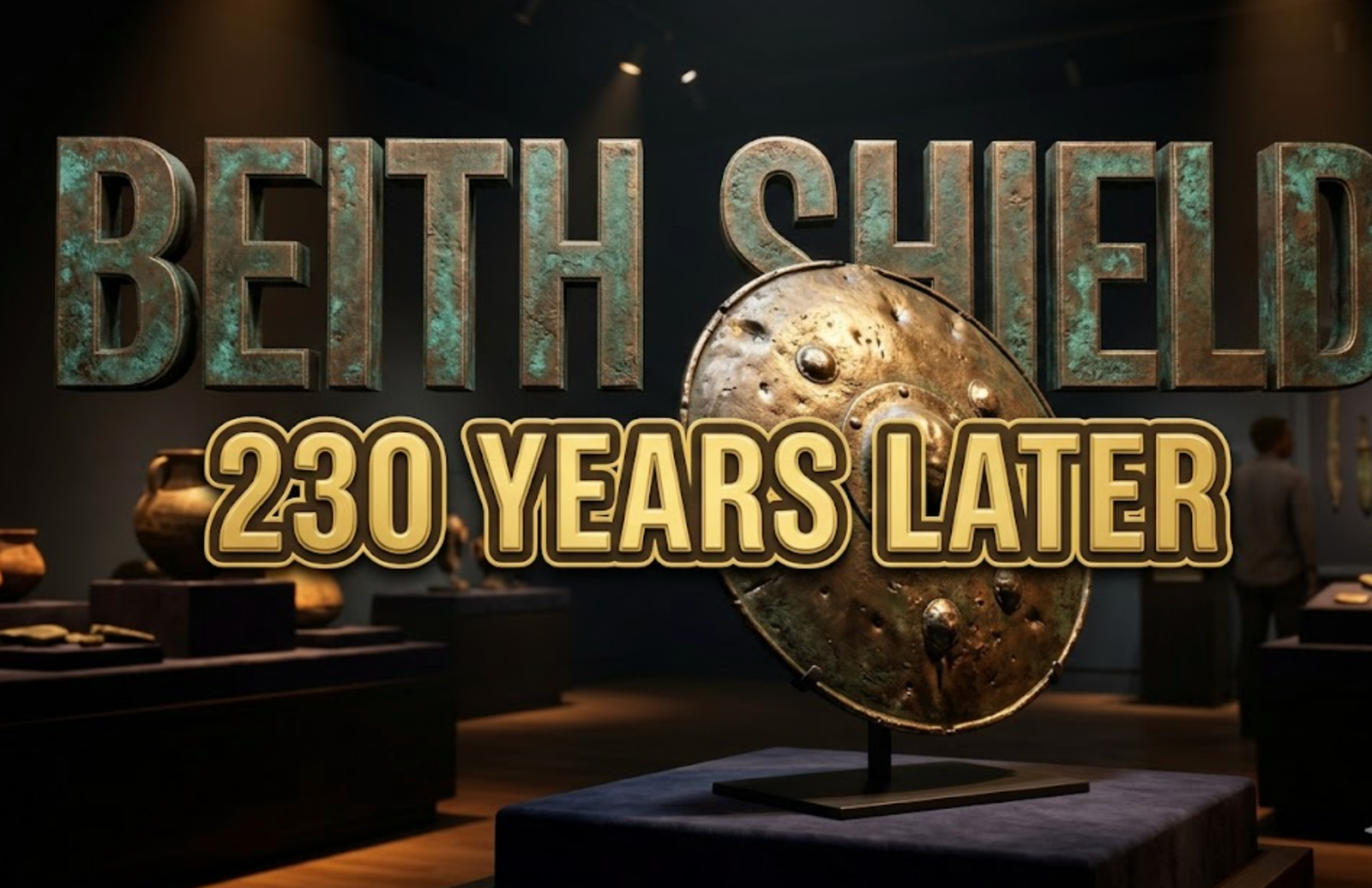
The shield will anchor the museum’s upcoming exhibition titled “Scotland’s First Warriors,” scheduled to open this summer. Measuring between 60 and 70 centimeters in diameter, the bronze guard bears elaborate hammered bosses and raised ribs that showcase the remarkable metalworking skills of Bronze Age craftsmen.
Battle scars etched into the shield’s surface tell a vivid story of ancient combat. Damage from spear strikes and other weapons suggests this was no ceremonial piece but a functional defensive tool that saw real conflict.
Mystery of the Peat Bog Burial
Historical records indicate the shield was found buried upright in peat alongside six others, though the location of those companion pieces remains unknown. This unusual burial practice has puzzled archaeologists and historians for generations.
Dr Matthew Knight, senior curator of prehistory at the National Museum of Scotland, believes the burial method and the shield’s sophisticated design point to ownership by someone of considerable importance in Bronze Age society.
“We know that because they’re so hard to make and they’re quite rare objects, whoever owned it was probably someone quite special,” Knight explained. The discovery of multiple shields buried together suggests a significant communal ritual, possibly involving several high-ranking individuals from different communities.
One compelling theory suggests the burial may have represented a peace ceremony where leaders symbolically surrendered their defensive weapons.
Understanding Scotland’s Bronze Age Warriors
The Bronze Age in Scotland stretched across 1,400 years, from approximately 2,200 BC to 800 BC. This transformative period witnessed the evolution from early bronze production, using copper and tin alloys, to the initial adoption of iron technology.
The era fundamentally changed how Scottish communities organized, fought, and expressed power.
Shields like the Beith example required exceptional skill to create. Craftsmen hammered and shaped bronze into functional yet decorative forms that served dual purposes as protective equipment and status symbols.
Unprecedented Shield Collection on Display
The exhibition brings together six Bronze Age shields for the first time, creating an unparalleled opportunity to study these artifacts side by side. Additional shields discovered in the Borders and Aberdeenshire during the 19th century will join the Beith shield in the display.
Museum curators recently laid out all the shields together for comparative analysis, examining similarities in construction techniques and decorative patterns while noting regional variations. This research promises new insights into Bronze Age warfare, social structure, and cultural practices across different parts of Scotland.
The collaborative study may reveal trade networks, shared artistic traditions, or distinct regional identities among Scotland’s earliest organized warrior cultures.
What the Shields Reveal About Ancient Scotland
These bronze artifacts offer rare physical evidence of how conflict, ceremony, and social hierarchy intersected in prehistoric Scotland. The quality of metalwork demonstrates sophisticated technological knowledge that required specialized training and access to raw materials.
The practice of burying valuable military equipment in peat bogs raises questions about Bronze Age belief systems and ritual practices. Bogs held special significance in many ancient cultures, often viewed as liminal spaces between the earthly and spiritual worlds.
Some researchers suggest such deposits represented offerings to gods or ancestors, while others propose they marked important territorial boundaries or commemorated significant events like treaties or alliances.
The return of the Beith shield represents more than a museum acquisition. It reconnects Scotland with a tangible piece of its distant past, offering contemporary audiences a chance to stand face-to-face with an object that witnessed violence, ceremony, and the lives of people who shaped the landscape over three millennia ago. As visitors prepare to encounter these ancient shields this summer, they will witness not just bronze and damage, but the enduring legacy of Scotland’s first warriors whose identities remain shrouded in the mists of prehistory yet whose craftsmanship speaks across the centuries.
What do you think motivated Bronze Age communities to bury valuable shields in peat bogs? Share your thoughts in the comments below.
 Sensex Drops 893 Points, Nifty Falls 1.16% as IT and Metals Drag
  Messi Overtakes Klose and Marta as All-Time World Cup Top Scorer
  New Zealand Women vs Scotland Women T20 World Cup 2026 Prediction
  Tata Motors CV Sets FY2028 Bet on Iveco, AI Margins and 3,400 EVs
  Akasa Air Plans 30% Capacity Growth in FY27, Holds Long-Term Target
  Nvidia’s Hot Liquid Cooling Could Cut AI’s Water Bill, but Not Its Energy