
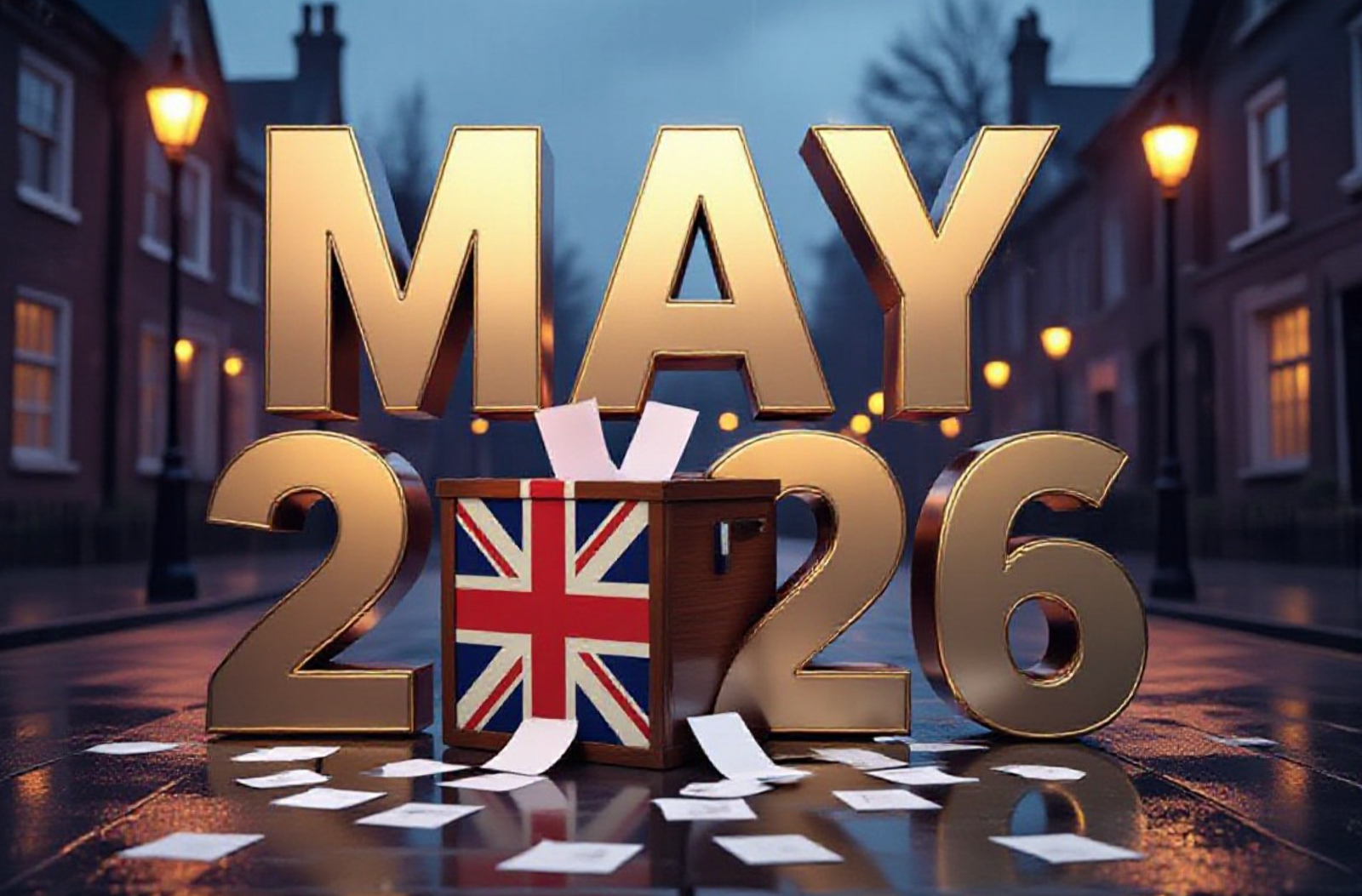
Millions of Brits will head to polling stations on Thursday 7 May 2026 in the biggest day of voting since the 2024 general election. Scotland and Wales will choose entirely new parliaments while large parts of England vote for councils and directly elected mayors. Some areas will wait years longer than expected because of government delays.
What Is Actually Happening on 7 May?
Voters in Scotland will elect all 129 Members of the Scottish Parliament (MSPs) using the mixed voting system introduced in 1999.
Wales will elect a much larger Senedd of 96 Members for the first time, using new boundaries and a fully proportional closed-list system.
In England, more than 4,000 council seats across 106 authorities are up for grabs, along with six new directly elected mayors in Croydon, Hackney, Lewisham, Newham, Tower Hamlets and Watford.
Police and Crime Commissioner elections will also take place across England and Wales.
But 30 council areas have had their elections postponed, some until 2028, as the government pushes through local government reorganisation into larger unitary authorities.
Why Some Voters Are Being Denied a Say Until 2028
The government says merging district and county councils into single unitary authorities will save money and improve services.
Critics, including the Electoral Commission, warn that up to 250 councillors could end up serving seven-year terms without facing voters.
The independent elections watchdog said the delays risk “damaging public confidence in our democracy”.
Opposition parties have accused Labour of gerrymandering by choosing which areas keep voting and which do not.
Five councils that were already delayed from 2025 will now wait until 2027. Brand new mayoral contests planned for Greater Essex, Norfolk & Suffolk, Hampshire & the Solent, and Sussex & Brighton have been pushed all the way to 2028.
Scotland: A Straight Fight to Run Health, Education and Justice
Every single one of the 129 Holyrood seats is up for election.
Seventy-three are decided by first-past-the-post in constituencies. The other 56 regional list seats are allocated to make the overall result more proportional.
The party or coalition with the most seats normally forms the government and its leader becomes First Minister.
Current polls show Labour consistently ahead of the SNP for the first time since 2007. John Swinney’s party has led Scotland uninterrupted since 2007, but support has dropped sharply since the general election.
Whoever wins will control the £60 billion Scottish budget, the NHS in Scotland, schools, colleges, universities, policing and justice.
Wales: Bigger Parliament, New Voting System, Same Big Issues
The Senedd expands from 60 to 96 members and switches to full proportional representation with closed party lists.
Voters will choose only a party, not individual candidates, in 16 larger constituencies that pair the new Westminster seats.
Labour has run Wales since 1999 but lost its overall majority in 2021 and currently leads a minority government.
Plaid Cymru, the Conservatives and Reform UK will all try to capitalise on anger over 20mph speed limits, NHS waiting lists and farm subsidy changes.
The next First Minister will control health, education and transport spending in Wales.
Local Services on the Brink Almost Everywhere
Councils in England are responsible for social care, bins, roads, parks, planning and libraries.
Many are in financial crisis. Birmingham, Woking, Thurrock and others have effectively declared bankruptcy in recent years.
Council tax has risen sharply almost everywhere while services have been cut.
The elections on 7 May will decide who tries to fix this mess in more than 100 towns and cities.
The six new London-area mayors will have significant budgets and powers over housing and transport in their boroughs.
These elections really matter. They will shape schools your children attend, the care your parents receive, the state of your roads and bins, and in Scotland and Wales, the direction of the entire country for the next five years.
Some voters are being asked to wait up to seven years for their say because ministers decided reorganisation is more important than democracy. That should worry everyone, no matter who you support.
Early May will be cold and possibly wet, but please make the effort to vote. These decisions will affect your daily life far more than Westminster often does.
What do you think the results will be? Will Labour sweep the board or will the SNP and Plaid hold firm? Drop your predictions in the comments and share this article with friends who need reminding to vote.


