
 Zane Lee
 British Defense Secretary John Healey revealed on Wednesday that the UK has been closely watching a Russian intelligence ship called the Yantar just outside territorial waters north of Scotland for several weeks. The vessel, known for spying and mapping undersea cables, even aimed lasers at Royal Air Force pilots during surveillance, prompting a strong warning from London that it stands ready for any escalation.
Details of the Yantar’s Movements and Actions
The Yantar entered the UK’s wider waters in recent weeks and now lingers on the edge of territorial limits north of Scotland. This ship belongs to Russia’s navy and serves dual purposes: it collects intelligence during peaceful times and could sabotage key infrastructure in conflicts. Experts note its ability to deploy underwater drones and sensors to scan seabeds for vital cables that carry internet, power, and communication lines across the Atlantic.
British forces responded swiftly to the intrusion. The Royal Navy sent the frigate HMS Somerset to shadow the vessel, while RAF P-8 Poseidon aircraft flew overhead to track its path. During one such flight between November 5 and 11, crew members on the Yantar directed light lasers at the pilots. This move, described as deeply dangerous, marked the first time this specific ship targeted British aviators in this way. Such actions can temporarily blind pilots and heighten crash risks, turning routine monitoring into a high-stakes standoff.
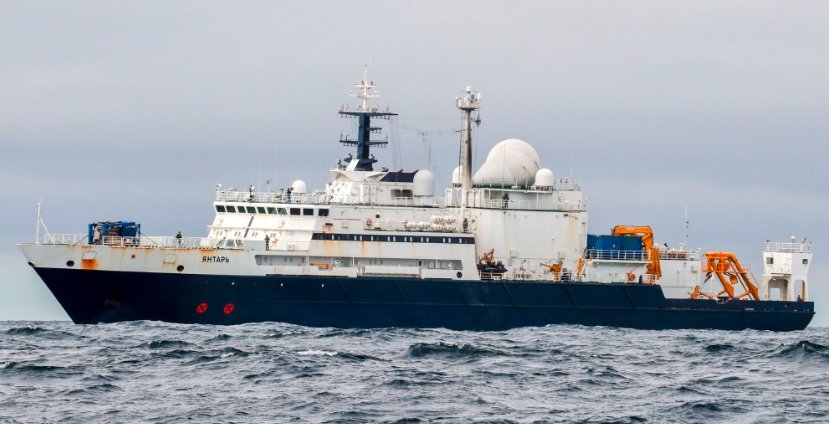
The incident builds on earlier encounters. Back in January 2025, the Yantar approached UK waters, and the Royal Navy responded by surfacing a nuclear-powered attack submarine nearby as a subtle show of strength. The Russians did not detect the sub until it emerged, sending a clear message about Britain’s underwater vigilance.
Britain’s Response and Warning to Moscow
John Healey addressed the press from Downing Street, emphasizing the UK’s preparedness. He stated that military options remain on the table if the Yantar shifts course southward this week, though details stay classified for security. The defense secretary has already adjusted the Royal Navy’s rules of engagement to handle such provocations more assertively.
This response highlights Britain’s commitment to protecting its maritime borders. The Ministry of Defence views the Yantar as part of a broader pattern of Russian vessels probing critical underwater infrastructure. In a direct message to President Vladimir Putin, Healey said, “We see you, we know what you are doing, and we are ready.” Allied nations, including NATO partners, are coordinating to keep tabs on the ship, ensuring no surprises slip through.
Public reaction on social media and forums shows concern mixed with resolve. Many Britons express worry over potential threats to daily life reliant on undersea links, but they also praise the swift military action as a deterrent.
Emerging Global Threats and UK Defense Strategy
Healey framed the Yantar episode within a larger picture of rising dangers worldwide. He described the current era as less predictable and more hazardous, calling for a shift to “hard power” in defense. Recent events underscore this urgency.
Key threats include:
- Escalation in the Middle East from the Israel-Iran conflict, pushing the region to the brink.
- Outbreaks of armed clashes between India and Pakistan, straining South Asian stability.
- Chinese intelligence operations targeting democratic processes in the UK and elsewhere.
- Putin’s ongoing war in Ukraine, now in its third year with intensified attacks.
- Drone disruptions plaguing European skies, often linked to hybrid warfare tactics.
- Russian aircraft incursions into NATO airspace, which have doubled over the past year.
- A surge in cyberattacks, with 90,000 targeting the UK’s defense systems alone in the last 12 months.
To illustrate the scale of these challenges, consider the following table of recent security incidents:
| Incident Type | Location/Target | Date Range | Impact/Response |
|---|---|---|---|
| Russian Airspace Incursions | NATO Borders | Last 12 Months | Doubled frequency; Enhanced patrols |
| Cyberattacks on Defense | UK Systems | Past Year | 90,000 incidents; Bolstered firewalls |
| Drone Disruptions | European Skies | Recent Months | Grounded flights; New detection tech |
| Undersea Cable Probing | North Atlantic | 2025 Incidents | Naval shadowing; Submarine deployments |
These examples show how interconnected threats demand a robust, unified defense approach. Britain plans to ramp up spending and capabilities to counter them effectively.
Navigating Ties with the EU’s SAFE Initiative
Amid these tensions, the UK seeks closer collaboration on defense matters. Healey expressed hope for joining the European Union’s Security Action for Europe (SAFE) program, a €150 billion fund launched to boost defense production and procurement through low-cost loans. The initiative aims to fill gaps in Europe’s military capabilities and foster a stronger industry base.
Negotiations have dragged on for weeks, with the EU requesting a €6 billion to €7 billion contribution from Britain. London counters that it wants a fair deal offering real value for taxpayers and businesses, refusing to commit at any price. Non-EU nations like the UK can participate if conditions are met, but talks remain stalled over costs.
This push reflects a pragmatic shift post-Brexit. By aligning with SAFE, Britain could enhance joint projects in areas like cyber defense and undersea protection, benefiting both sides in an unstable world. Recent EU-UK summits in May 2025 laid groundwork for such partnerships, signaling potential progress if compromises emerge.
As tensions with Russia simmer and global risks mount, stories like the Yantar’s approach remind us of the need for vigilance. Share your thoughts in the comments below: How should the UK balance solo strength with European alliances? Your views help shape the conversation on national security.
 HDFC Bank Fines CEO Jagdishan Weeks Before Reappointment Call
  Zepto’s IPO Valuation Target Sinks to $3 Billion From $7 Billion
  Man Jailed Under a Rare Lifelong Order for Edinburgh Rape
  Tata Power’s ₹6,675 Crore Bet on Solar Self-Reliance in Odisha
  South Korea and Japan Chip Stocks Crash as China Surges
  Scotland’s Social Work Registration Overhaul Carries a Staffing Cost