
 Axel Piper
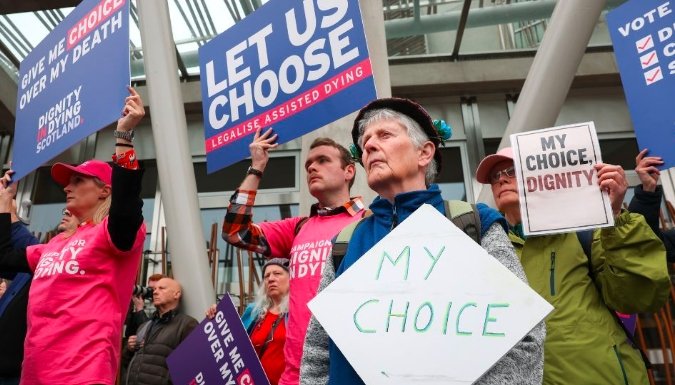
 In a major shift for Scottish law and ethics, the Scottish Parliament has voted in favour of legalising assisted dying for terminally ill adults, marking a significant step in a long-running national debate.
MSPs backed the Assisted Dying for Terminally Ill Adults (Scotland) Bill at stage one by 70 votes to 56—a clear, though not overwhelming, majority. The vote confirms support for the principle of the bill, though further scrutiny and potential amendments will follow at stages two and three.
The bill, introduced by Liam McArthur, Liberal Democrat MSP for Orkney, would allow adults with a terminal diagnosis, who are mentally competent and have lived in Scotland for at least 12 months, to choose a medically assisted death. Two doctors would need to independently verify the diagnosis and decision, with a mandatory two-week reflection period built in.
Originally, the bill proposed an age threshold of 16, in line with Scotland’s voting age. However, in response to feedback from MSPs, medical professionals and the public, it will now be amended to apply only to those aged 18 and over.
A Decade-Long Debate Reaches Holyrood Again
This is not the first time assisted dying legislation has been proposed in Scotland. Previous attempts in 2010 and 2015 failed to win enough parliamentary support. However, public attitudes have shifted significantly.
A 2024 Opinium poll found that 78% of Scots support assisted dying, including 67% of religious respondents. While support among politicians has grown more cautiously, yesterday’s vote reflects a broader movement in Scottish society toward end-of-life choice and autonomy.
Dr Alejandro Sanchez, a spokesperson for the National Secular Society, which backed the bill in last year’s public consultation, described the vote as a “significant step forward for compassion, dignity, and choice at the end of life.”
“Mentally competent, terminally ill adults should be able to make a voluntary and settled decision regarding the time, setting, and manner of their death within a robustly safeguarded legal framework,” Sanchez said.
Faith Communities Divided, But Shifting
The vote comes amid changing attitudes even within Scotland’s major faith groups. While the Catholic Church and Church of Scotland have traditionally opposed any form of assisted dying, a significant shift may be imminent.
Later this month, the Church of Scotland is expected to drop its centuries-old opposition and adopt a neutral stance—a move driven by an internal expert panel. The panel found that Christian theological arguments in favour of assisted dying carry equal moral weight as those against.
The Catholic Church remains firmly opposed, warning that legalisation risks “normalising” suicide and endangering vulnerable people, despite the bill’s built-in safeguards.
Legal and Legislative Context
Though assisted dying is not explicitly outlawed in Scotland, any act that helps a person end their life could currently result in charges such as culpable homicide or reckless endangerment.
This legal ambiguity has created fear among families and doctors, and has led some terminally ill Scots to travel abroad, particularly to Switzerland, to access assisted dying—often alone and at significant personal cost.
The new bill, if passed in full, would establish a regulated and safeguarded pathway for assisted death, potentially making Scotland the first UK nation to legalise the practice domestically.
Isle of Man and Westminster Developments
The Scottish vote follows closely behind a historic move by the Isle of Man, which in March 2025 became the first jurisdiction in the British Isles to legalise assisted dying. That law is expected to come into effect later this year once it receives royal assent.
Meanwhile, in Westminster, MPs will debate amendments to a private member’s bill on assisted dying for England and Wales this Friday. While progress has been slower at the UK level, momentum appears to be building.
What’s in the Scottish Bill?
| Key Safeguards | Details |
|---|---|
| Eligibility | Terminally ill, mentally competent adults aged 18+ |
| Residency Requirement | Must have lived in Scotland for at least one year |
| Medical Approval | Two independent doctors must confirm diagnosis and consent |
| Reflection Period | Minimum of 14 days between request and final approval |
| Voluntariness | Must be a settled and voluntary choice with no coercion |
The stage two debate is expected to begin in the coming months, where committee scrutiny, expert evidence, and amendments will refine the bill’s content.
As the public, religious institutions, and politicians continue to grapple with the ethical, medical, and legal complexities of assisted dying, Scotland appears poised to enter a new era of end-of-life autonomy—though not without controversy.
 WhatsApp Tests ‘After Reading’ Messages Without Screenshot Blocking
  Meta and LinkedIn Layoffs Hit on Same Day as Survivor Anxiety Spreads
  Nifty Pharma Hits 52-Week High as Mankind, Zydus Print Beats
  iPhone 18 Pro Max Preview: 2nm Chip, Iris Camera, India Price
  Wear OS 7 Lands With Gemini, Wear Widgets, and a 10% Battery Bump
  India Weighs $1 Billion EV Aid Plan, JBM Auto and Olectra in Focus