

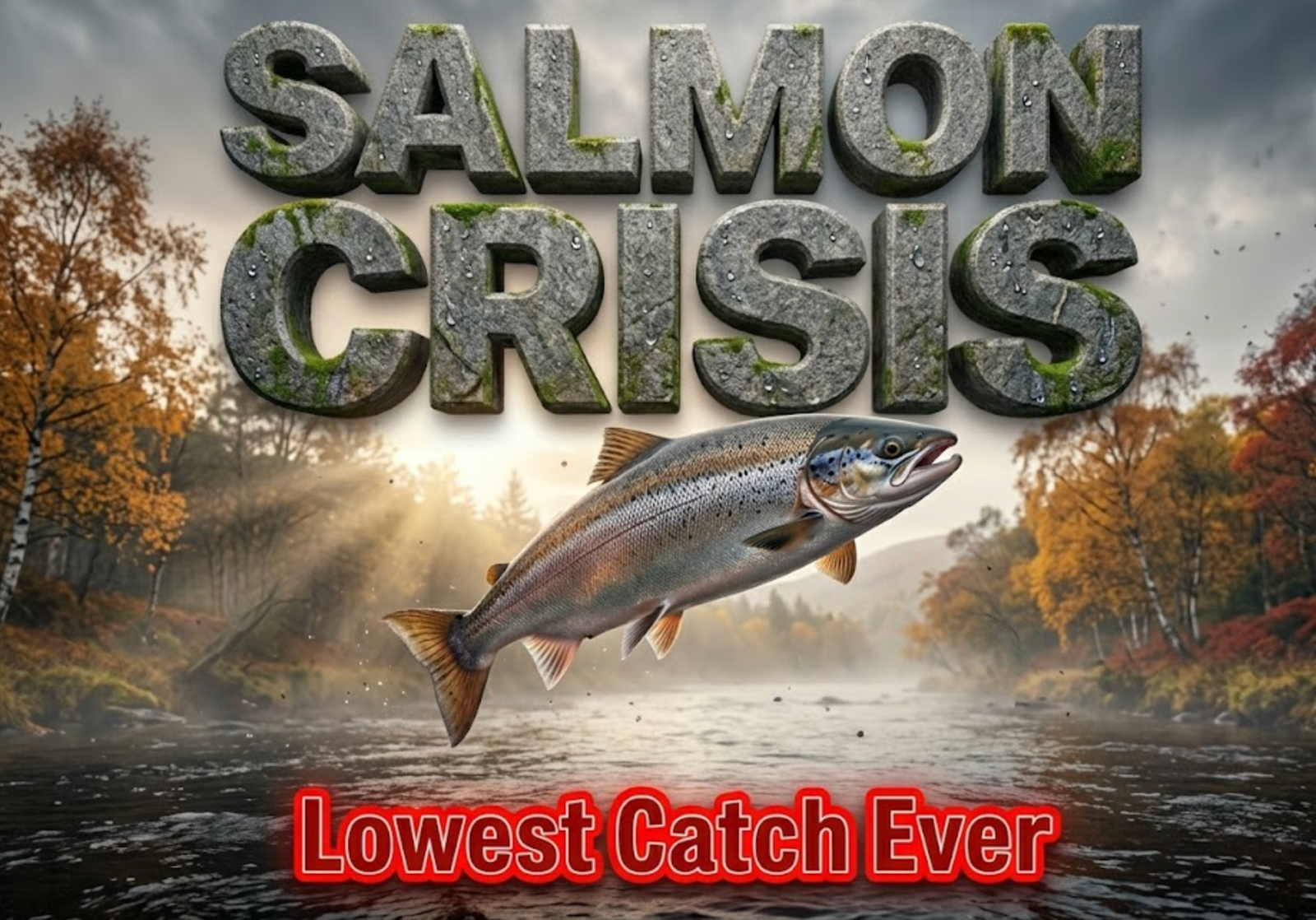
Scotland’s wild Atlantic salmon, the “king of fish” that has drawn anglers from around the world for generations, is vanishing before our eyes. Official figures just released show that only 28,933 salmon were caught in Scottish rivers in 2023, the lowest number since records began in 1952. Experts are now warning the species could disappear completely within decades unless urgent action is taken.
Lowest Catch Ever Recorded
The Scottish Government published its annual salmon and sea trout fishery statistics on 30 April 2024, confirming the devastating collapse.
Just 28,933 wild salmon were reported caught and retained or released in 2023, smashing the previous record low of 35,693 set in 2021.
To put that in perspective:
- In 2010, the catch peaked at 111,405 salmon
- Ten years later, in 2020, it was still over 50,000
- By 2023, numbers have fallen by almost 75% in just 13 years
Dr Alan Wells, chief executive of Fisheries Management Scotland, called the figures “truly catastrophic”. He told reporters: “We are staring at the potential extinction of an iconic species that has defined Scotland for centuries.”
Why Are Salmon Disappearing So Fast?
Scientists point to multiple killers acting at once, creating a perfect storm for the species.
At sea, warming oceans caused by climate change are pushing salmon feeding grounds northward. Fish that once returned fat and strong after two years in the North Atlantic are now coming back skinny, sick, or not at all.
But the biggest single threat comes from Scotland’s own salmon farming industry.
Open-net salmon farms along the west coast and islands act as giant lice factories. Sea lice bred on millions of farmed fish spill into migration routes, eating the flesh off young wild salmon smolts as they head to sea.
Research published in 2023 showed that in some west coast rivers, up to 39% of salmon deaths are directly caused by sea lice from nearby farms.
Add in:
- Predation by seals and sawbill ducks
- Blocked rivers from old hydro dams
- Pollution from agriculture and sewage
- Overfishing in distant Greenland waters
And you have a species being hit from every direction.
Rural Communities Count the Cost
Salmon fishing isn’t just a sport in Scotland, it’s part of the soul of rural life.
The Atlantic Salmon Conservation Trust estimates that salmon angling once pumped £133 million into remote communities every year, supporting hotels, ghillies, tackle shops and restaurants.
In Speyside, the River Spey used to see beats change hands for £1 million. Today many are struggling to fill rods.
One ghillie on the Tweed, who asked not to be named, told us: “I’ve been fishing these rivers for 45 years. We used to catch 20 fish a day in October. Last year our beat managed 11 fish for the entire season. It’s heartbreaking.”
Estate owners are laying off staff. Hotels that once turned away bookings in September now have empty rooms.
Government Action Finally Coming?
Under intense pressure, the Scottish Government has started to move.
In May 2024, rural affairs secretary Mairi Gougeon announced a major review of salmon farming regulations, with sea lice limits to be tightened from 2025.
Several farms have been forced to harvest early this year after exceeding lice limits, and new “closed containment” farm applications are being fast-tracked.
Conservation groups have welcomed the moves but say they are too little, too late.
The Scottish Greens have called for a complete phase-out of open-net salmon farming by 2030, while the SNP government remains more cautious, citing the 8,000 jobs the industry supports.
Meanwhile, rivers trusts are working flat out planting trees to cool water temperatures, removing obsolete dams, and controlling predators.
On the Findhorn, volunteers have built artificial beaver dams to create cold-water refuges for fish during summer heatwaves.
Every salmon counts now.
Scotland’s wild salmon are fighting for survival. These silver tourists have returned to our rivers for 10,000 years, leaping waterfalls their grandparents leapt, guided by earth’s magnetic field and the taste of home water.
If we lose them, we lose something that cannot be replaced. Not just a fish, but a living connection to our wild past.
The numbers don’t lie. The rivers are speaking. The question is whether Scotland is finally ready to listen.
What do you think should be done to save our salmon? Share your thoughts below and join the conversation on social media with #SaveScottishSalmon