

Scotland, a nation that has positioned itself as a climate vanguard on the world stage, is now at the centre of a growing political and environmental storm over plans to build a new gas-fired power station in Peterhead — a move critics say undercuts its net-zero credibility.
Despite branding the project as a “greener” fossil fuel plant, new disclosures reveal it could emit three times the carbon originally claimed — raising urgent questions over public transparency, climate ethics, and the Scottish Government’s long-term energy strategy.
What is the Peterhead power station?
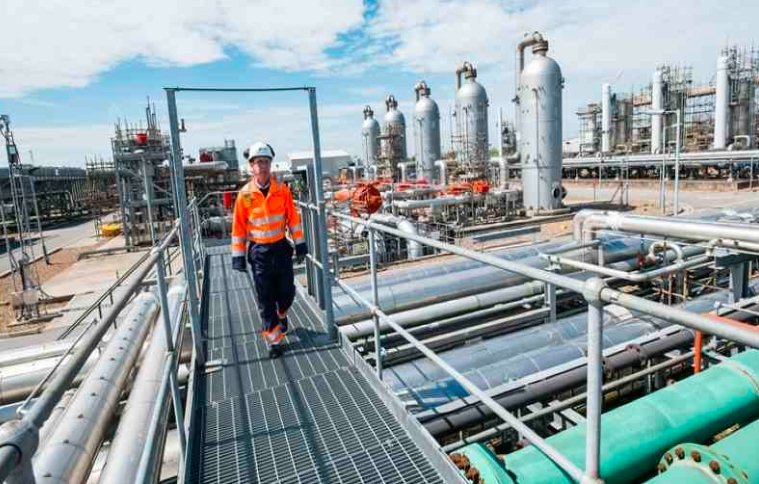
The Peterhead site, located on the northeast coast of Aberdeenshire, is home to Scotland’s only remaining thermal power station.
The proposal, backed by energy giants SSE and Equinor, would see a new gas-burning facility constructed next to the ageing Peterhead station. The project has already received hundreds of millions in public funding promises, contingent on integration with carbon capture and storage (CCS) technology via the Acorn Project.
But the green credentials of the project are now under fire.
Emission projections called into question
Initially billed as a low-carbon backup for Scotland’s renewables-heavy grid, updated assessments show the new Peterhead plant could emit up to 1.2 million tonnes of CO₂ per year — three times higher than early estimates submitted to planners and the public.
By comparison, that would make Peterhead one of the largest single sources of carbon emissions in Scotland — a fact not lost on environmentalists.
“The figures are staggering,” said Jamie Livingstone of Oxfam Scotland. “We are in a climate emergency. There is simply no room for expanding fossil fuel infrastructure at this scale.”
Government accused of ethics breach
The backlash is not only environmental but political.
Calls for an ethics inquiry are mounting over concerns that former First Ministers Humza Yousaf and Nicola Sturgeon may have breached the ministerial code by offering support for the project while in office — despite the climate implications.
At the heart of the matter is whether public comments and internal backing for the scheme properly reflected Scottish Government climate commitments.
Green MSPs, already deeply critical of the SNP’s handling of energy policy, have demanded clarity on how decisions were made and whether full lifecycle emissions were ever honestly presented to the public.
A system under strain: Why gas now?
Supporters of the project argue that Scotland’s electricity grid — which draws roughly 90% of its power from renewables — still requires firm, dispatchable backup during periods of low wind or solar output.
The case for Peterhead is framed around grid stability, particularly in light of:
-
Increased electrification of transport and heating
-
North Sea wind variability
-
The decommissioning of older nuclear and coal units
But experts like Dr. Keith Baker from Glasgow Caledonian University say the government is over-relying on fossil backup, instead of accelerating grid storage, demand flexibility, or green hydrogen.
The Acorn Project: A climate solution or fig leaf?
A key pillar in defending Peterhead has been the Acorn CCS project, also based in Aberdeenshire. It’s meant to capture up to 90% of the CO₂ from the new plant and store it under the North Sea.
But the timeline for Acorn’s readiness remains uncertain, with no firm start date for full-scale operation. Environmental campaigners warn that Peterhead could begin operating years before Acorn is fully functional, undermining the plant’s carbon-reduction promises.
“This is like building a fireplace before you’ve got a chimney,” said Caroline Rance of Friends of the Earth Scotland.
Funding and fallout: Where the money’s going
| Stakeholder | Role | Funding/Involvement |
|---|---|---|
| SSE & Equinor | Developers | Leading construction and operation |
| UK Government | CCS funding via Acorn | £1 billion+ CCS support across UK |
| Scottish Government | Supportive in planning stage | Accused of lacking full transparency |
| Public Funds (UK) | Infrastructure co-funding | Exact allocation undisclosed |
Scotland has long presented itself as a global climate leader, hosting COP26, pledging to hit net zero by 2045, and publishing a high-profile (though now revised) Climate Change Plan.
Yet projects like Peterhead — along with delays in green heat rollouts, underfunding of home insulation, and missed emissions targets — suggest a growing gap between rhetoric and reality.
For Green voices in Holyrood, the contradiction is untenable. “You cannot claim climate leadership while building new fossil fuel infrastructure,” said Green MSP Mark Ruskell.
A decision that could define a decade
The Scottish Government now faces mounting pressure — not only to justify the climate implications of Peterhead, but to clarify the process that led to its backing.
Critics are asking: What was known, when, and by whom?
As climate litigation rises worldwide and Scotland’s own climate goals look increasingly precarious, Peterhead may come to symbolise more than an energy policy decision. It may define how seriously Scotland takes its own net-zero promises — and who, in the end, gets held accountable.