

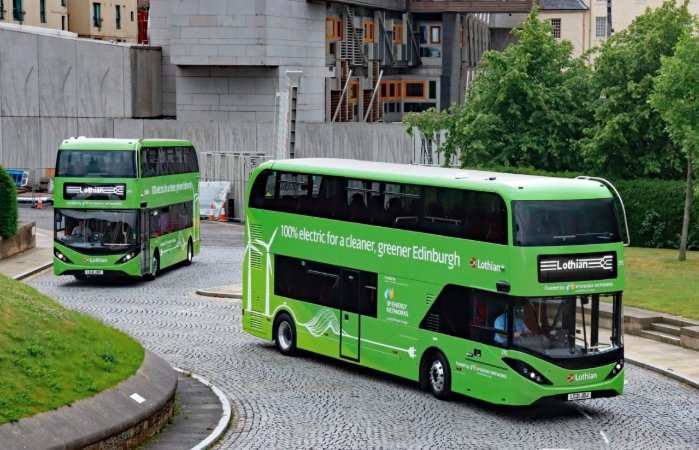
Scotland is putting another £40 million behind its clean transport ambitions, aiming to add as many as 300 zero-emission buses to its public fleet and cut carbon from one of the country’s biggest polluting sectors.
Building on Years of Investment
The money comes through the second round of the Scottish Zero Emission Bus Challenge Fund — known as ScotZEB2 — and marks the final round of major support for large operators transitioning their fleets.
Cabinet Secretary for Transport Fiona Hyslop framed the move as both an environmental and economic opportunity. “Since 2020, we have invested over £154 million in zero-emission buses and infrastructure, and this new funding is aimed at helping more operators to make the switch,” she said.
The government’s target is clear: encourage rapid adoption now, then introduce a regulatory framework from 2030 onwards to keep the transition on track.
From Diesel to Electric — and Fast
Buses might not grab headlines like electric cars, but they’re crucial to Scotland’s transport emissions picture. Heavy-duty vehicles make up a smaller share of the fleet than cars yet contribute a disproportionate amount of CO₂.
Shifting even a few hundred buses to battery or hydrogen power can have an outsized impact on air quality — especially in urban areas where services run from dawn to midnight.
Hyslop stressed the value of shared charging hubs and depots, saying, “By supporting collaborative projects and shared infrastructure, we’re ensuring that the benefits of decarbonisation reach every corner of Scotland, from city centres to rural communities.”
The ScotZEB Track Record
Launched in 2020, ScotZEB has already delivered hundreds of zero-emission buses and coaches to operators across the country. Its funding model mixes public money with private investment, requiring operators to shoulder part of the cost in exchange for government grants.
This second round is designed to do several things at once:
-
Cut greenhouse gas emissions from transport
-
Support jobs in manufacturing and maintenance
-
Encourage more passengers to choose public transport over cars
-
Improve urban air quality, particularly in pollution hotspots
The Scottish Government estimates that the latest £40m could bring 300 new buses into service — a significant jump given the nation’s overall fleet size.
Timeline and Future Rules
Alongside the funding, ministers are exploring a regulatory route to enforce the phase-out of new diesel buses. The earliest such rules could apply would be 2030, giving operators several years to adapt.
Industry insiders say the deadline is ambitious but realistic — provided charging infrastructure keeps pace with vehicle deployment. A mismatch between the two, they warn, could stall momentum.
Environmental and Economic Stakes
Transport is Scotland’s single largest source of greenhouse gas emissions, with buses playing a complicated role. On one hand, they are public, efficient, and capable of moving large numbers of people with fewer emissions per passenger than cars. On the other, when powered by diesel, they’re among the most visible sources of nitrogen dioxide and particulate pollution in city centres.
Replacing them with zero-emission alternatives hits multiple policy goals at once — net zero targets, health improvements, and energy transition jobs.
Hyslop called ScotZEB2 “a programme that is not only reducing emissions — it’s supporting jobs, connecting communities, improving air quality, and continuing to build a cleaner, greener Scotland.”
Who Benefits?
While big operators like Stagecoach and Lothian Buses are expected to secure a large share of the funding, smaller regional operators could also see gains — particularly if they team up on shared infrastructure projects.
The “just transition” element of ScotZEB2 is central to its political framing. The government wants rural and remote communities to benefit as much as Glasgow or Edinburgh, both in cleaner air and in more modern, reliable vehicles.
The Numbers at a Glance
Here’s how the programme’s scale stacks up since its inception:
| Year | Public Funding | Vehicles Delivered | Estimated CO₂ Saved Annually |
|---|---|---|---|
| 2020-2021 | £50m | 120 | 15,000 tonnes |
| 2022 | £64m | 200 | 25,000 tonnes |
| 2023 | £40m | 150 | 18,000 tonnes |
| 2025 (ScotZEB2) | £40m | up to 300 | ~36,000 tonnes* |
*Government estimate, subject to fleet deployment schedules.
Challenges Still Ahead
The shift is not without hurdles. Zero-emission buses remain significantly more expensive upfront than diesel counterparts, even when factoring in lifetime fuel and maintenance savings.
Charging and refuelling infrastructure also needs major expansion — particularly in rural areas where grid capacity can be limited. Operators must also train mechanics and drivers to work with electric drivetrains and high-voltage systems.
Then there’s passenger behaviour. Without increased ridership, even the cleanest buses can end up running under capacity, diluting the environmental benefit.
A Turning Point for Public Transport?
Supporters see this as the start of a new phase in Scotland’s transport policy, one where environmental ambition meets on-the-ground implementation. Critics warn it’s still a long road to an entirely zero-emission fleet.
But the symbolism matters. Investing heavily in green buses signals the government’s intent to make public transport the backbone of Scotland’s low-carbon future — and to do it in a way that blends environmental priorities with job creation and regional equity.
Whether the £40m push will be enough to overcome cost barriers and infrastructure bottlenecks remains to be seen. But for now, the wheels — and the political momentum — are in motion.


