Paul Steele thought breast cancer only happened to women. The 44-year-old joiner from Springboig ignored a growing lump for nine months. By the time he walked into the Beatson clinic in Glasgow, the disease had reached stage three. Now in remission, he has turned his shock into action by creating Scotland’s first dedicated support network for men with breast cancer.
The father of two wants every man to know: this can happen to you too.
The Lump He Tried to Ignore
Summer 2024 started normally for Paul. He was busy on building sites, lifting timber, and joking with the boys. Then he noticed something odd on the left side of his chest.
A hard lump appeared under the skin. His nipple began to flatten and crack. Like many tradesmen, he shrugged it off.
“I just slapped Sudocrem on it and kept working,” Paul told the Daily Record. “Blokes don’t get breast cancer. That’s what we all think.”
He carried on for nine months. The lump grew. The skin started to dimple. Only when the pain became constant did he finally book a GP appointment in early 2025.
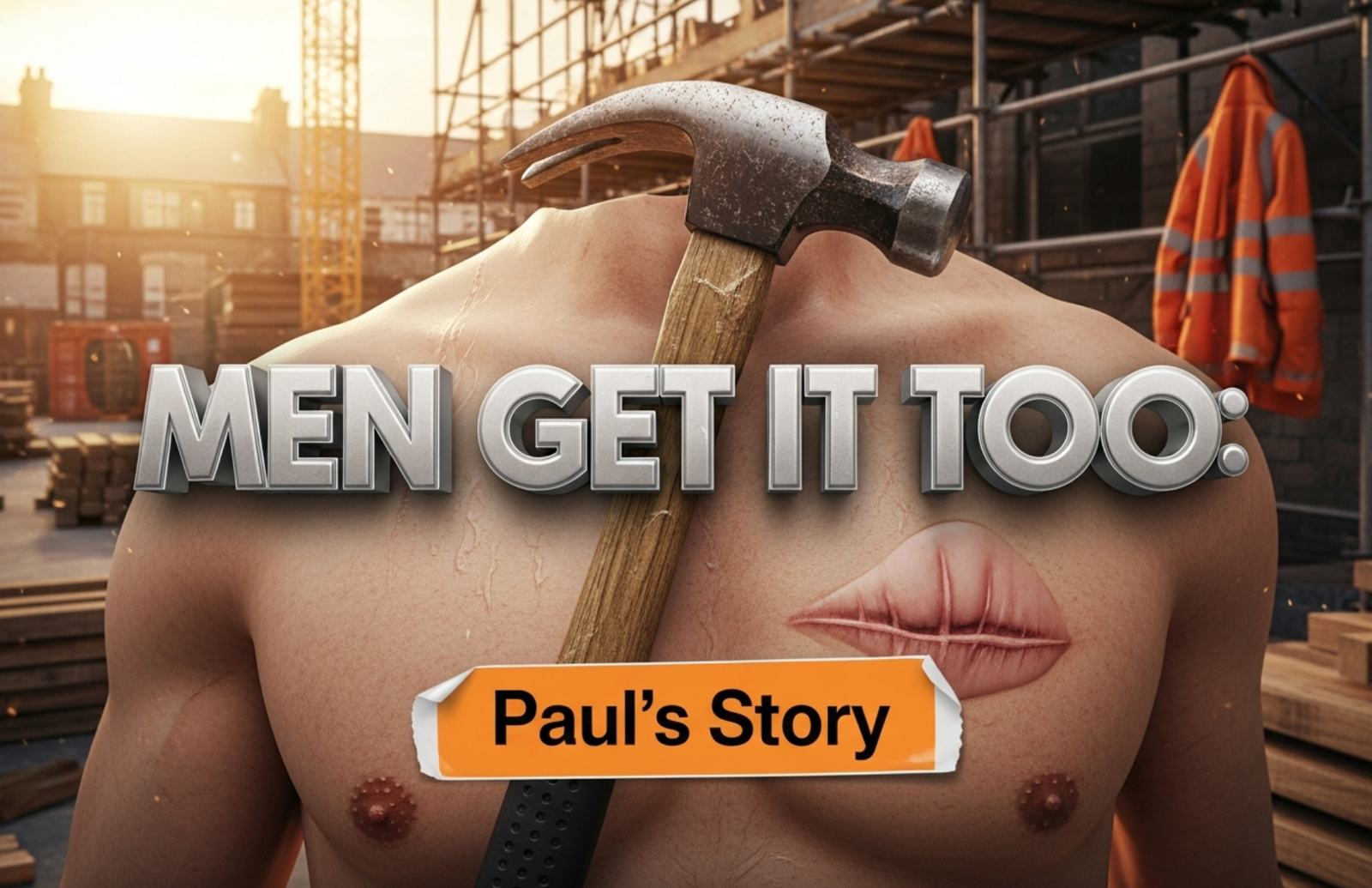
“Paul, You Have Breast Cancer”
In March 2025, Paul sat in the Beatson Breast Cancer Clinic at Gartnavel General Hospital. The consultant took his hand and delivered the news gently.
“I laughed at first,” Paul remembers. “I actually said, ‘But guys don’t get breast cancer.’ She just looked at me and said, ‘Yes, they do. And you have it.'”
A biopsy and urgent CT scan confirmed stage three invasive ductal carcinoma. The cancer had spread to several lymph nodes but, crucially, not to distant organs.
Within weeks Paul underwent a full left-side mastectomy in April 2025. He then faced 16 weeks of chemotherapy, 15 rounds of radiotherapy, and began a five-year course of tamoxifen.
Today he is in remission and back swinging a hammer on site.
Men Are Diagnosed Too – Just Rarely
Breast cancer in men is rare but real. In the UK, around 400 men receive the diagnosis each year, compared to 55,000 women (Breast Cancer Now figures, 2025).
Because it is so uncommon, men are often diagnosed later. Many, like Paul, dismiss changes as “nothing serious” or feel embarrassed to seek help.
Common signs in men include:
- A hard lump beneath the nipple area
- Nipple discharge, sometimes bloody
- Inverted or cracked nipple
- Skin dimpling or redness
- Swollen lymph nodes under the arm
Experts stress that early detection saves lives. Yet only 44% of male cases are caught at stage one, compared to 62% in women (Cancer Research UK, 2025 data).
From Patient to Pioneer
While sitting in the chemo ward, Paul noticed something missing: no other men.
“There were pink ribbons everywhere, support groups for women, posters of female survivors. Nothing for blokes,” he said.
He decided to change that.
In late 2025 Paul launched the Men’s Breast Cancer Support Group Glasgow, meeting monthly at the Beatson and online via Zoom. The first session drew seven men from across Scotland, some still in treatment, others years into recovery.
Members share practical advice on everything from chest wall exercises after mastectomy to dealing with hot flushes from hormone therapy, side effects most GPs have never seen in male patients.
“The difference it makes is massive,” says member David, 52, from Edinburgh. “You walk in thinking you’re the only man on earth this has happened to. Then you see six other guys just like you.”
The group has already partnered with Breast Cancer Now and Maggie’s Centres to expand across Scotland in 2026.
A Message Every Man Needs to Hear
Paul’s story has reached building sites, rugby clubs, and barbershops across Glasgow. He now speaks at trade unions and colleges, showing his mastectomy scar without shame.
“I lost my breast, but I gained a purpose,” he says. “If one joiner, one plumber, one dad spots a lump because of me and gets checked earlier, then everything I went through was worth it.”
Male breast cancer is rare, but it is 100% fatal if ignored.
Paul Steele refused to become a statistic. Instead he became a lifeline for hundreds of men who will face the same shock in years to come.
What do you think about Paul’s bravery in speaking out? Have you or someone you know ignored a health worry because “it only happens to women”? Drop your thoughts below, and if you’re sharing on social media use #MenGetBreastCancerToo so more people see the message.