
 Ishan Crawford
 Bakkafrost, a major salmon farming company, reported significant financial hits from a disease outbreak in its Scottish operations during the fourth quarter of 2025. The Pasteurella bacteria caused high mortality at the Portree site, leading to incident-based costs of about 58 million Danish kroner, or roughly 9 million dollars, as detailed in their latest trading update released on January 6, 2026.
Outbreak Details and Immediate Impacts
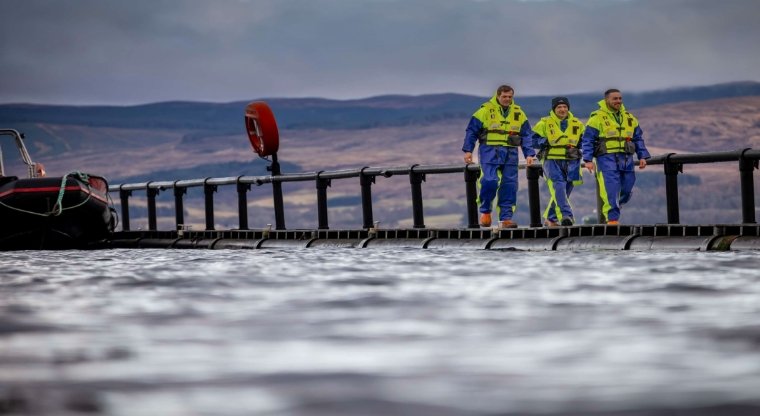
The Pasteurella outbreak struck Bakkafrost’s Portree and Portree Outer farms on the Isle of Skye, resulting in monthly mortality rates as high as 33.6 percent in October 2025. This forced the company to harvest out the affected sites early, which lowered the average harvest weight in Scotland to 4.1 kilograms for the quarter.
Company officials noted that the disease led to the culling of fish and disrupted normal operations. This event follows a pattern of biological challenges in Scottish salmon farming, where issues like bacterial infections have risen due to denser farming practices and changing water conditions.
In response, Bakkafrost accelerated harvesting to contain the spread, but this decision cut into expected yields. Experts in aquaculture point out that such outbreaks often stem from stress on fish in crowded pens, combined with environmental factors like warmer waters that favor bacterial growth.
Harvest Volumes and Regional Performance
Bakkafrost’s overall harvest for the fourth quarter reached 27,900 tonnes of gutted weight salmon. The Faroe Islands operations performed strongly, contributing 23,300 tonnes with an average weight of 5.6 kilograms per fish.
In contrast, Scotland only managed 4,600 tonnes for the same period. This brought the full-year totals to 83,600 tonnes from the Faroes and 23,200 tonnes from Scotland.
Monthly breakdowns show steady output in the Faroes, with 9,500 tonnes in October, 7,600 in November, and 6,200 in December. Scottish figures were dragged down by the outbreak, especially in October when average weights dropped to just 2.8 kilograms.
The company also released smolts, young salmon, into farms: 5.3 million in the Faroes and 2.2 million in Scotland during the quarter. Full-year smolt transfers hit 18.7 million in the Faroes and 7.3 million in Scotland.
Here is a quick comparison of key harvest metrics:
| Region | Q4 Harvest (Tonnes) | Average Weight (kg) | Full-Year Harvest (Tonnes) |
|---|---|---|---|
| Faroe Islands | 23,300 | 5.6 | 83,600 |
| Scotland | 4,600 | 4.1 | 23,200 |
| Total | 27,900 | N/A | 106,800 |
Financial Toll and Broader Implications
The financial burden from the outbreak was clear in the incident-based mortality costs, which totaled 58 million Danish kroner in Scotland for the quarter. Nearly half of this amount directly tied to the Pasteurella issues at Portree, building on similar costs from the third quarter.
No such costs appeared in the Faroe Islands farming or freshwater segments, highlighting regional differences in disease management. Additional minor costs of 2 million Danish kroner came from culling at the Couldoran hatchery in Scotland.
This outbreak adds to ongoing concerns in the salmon industry, where mortality events have spiked. For instance, Scottish salmon farms reported over a million fish deaths in a single incident in 2024, pointing to systemic risks. Analysts estimate that such biological hits could cost the sector billions annually if not addressed through better biosecurity and site selection.
Bakkafrost’s feed and related segments showed mixed results. They sourced 39,800 tonnes of marine raw materials and sold 44,700 tonnes of feed, but fish oil sales were zero for the quarter.
Industry Context and Future Outlook
Salmon farming in Scotland has faced scrutiny for high mortality rates, with recent reports showing millions of fish lost to diseases and unknown causes. Campaigners have highlighted welfare issues, including the use of cleaner fish to combat lice, where estimates suggest seven million such fish died on farms since 2020.
Bakkafrost plans to release its full fourth-quarter report on February 9, 2026, which may provide more details on recovery strategies. Industry experts recommend investing in new high-energy sites to reduce density and improve fish health, as seen in calls from other farmers like Scottish Sea Farms.
Looking ahead, Bakkafrost aims to boost production while tackling these challenges. The company has invested in vaccines and monitoring tech to prevent future outbreaks, drawing lessons from similar events in Norway and Chile.
Factors contributing to such outbreaks include:
- Warmer ocean temperatures that promote bacterial growth.
- High stocking densities in farms that stress fish and spread disease.
- Limited access to new farming sites due to regulatory hurdles.
Response from Stakeholders and Experts
Environmental groups have raised alarms over the outbreak, calling for stricter regulations on farm densities and chemical use. One local campaigner described the situation as a colossal waste of life, urging a shift away from intensive methods.
Investors are watching closely, as Bakkafrost’s stock has fluctuated with these reports. The company’s strong performance in the Faroes offers some buffer, but persistent issues in Scotland could pressure overall profits.
Experts advise diversification and innovation, such as land-based farming, to mitigate sea-based risks. Recent events, like the 2024 mass die-off at another major farm, underscore the need for industry-wide changes.
What do you think about the challenges in salmon farming? Share your thoughts in the comments below and spread the word by sharing this article with others interested in food production and environmental issues.
 Coal India, BEL Miss Estimates as India’s Mid-Caps Surge Ahead
  HCLTech’s Neo.AI Unit Chases the Business Its Mid-Tier Rivals Built
  Nvidia in Talks to Guarantee $250 Billion for OpenAI’s Data Hub
  HDFC Bank Fines CEO and CFO, Refers MSRDC Case to RBI
  Hyderabad Gold Rate Rises as India’s New 15% Duty Bites
  Maruti Brezza Facelift Prices Fall Thanks to a Tax Rule