
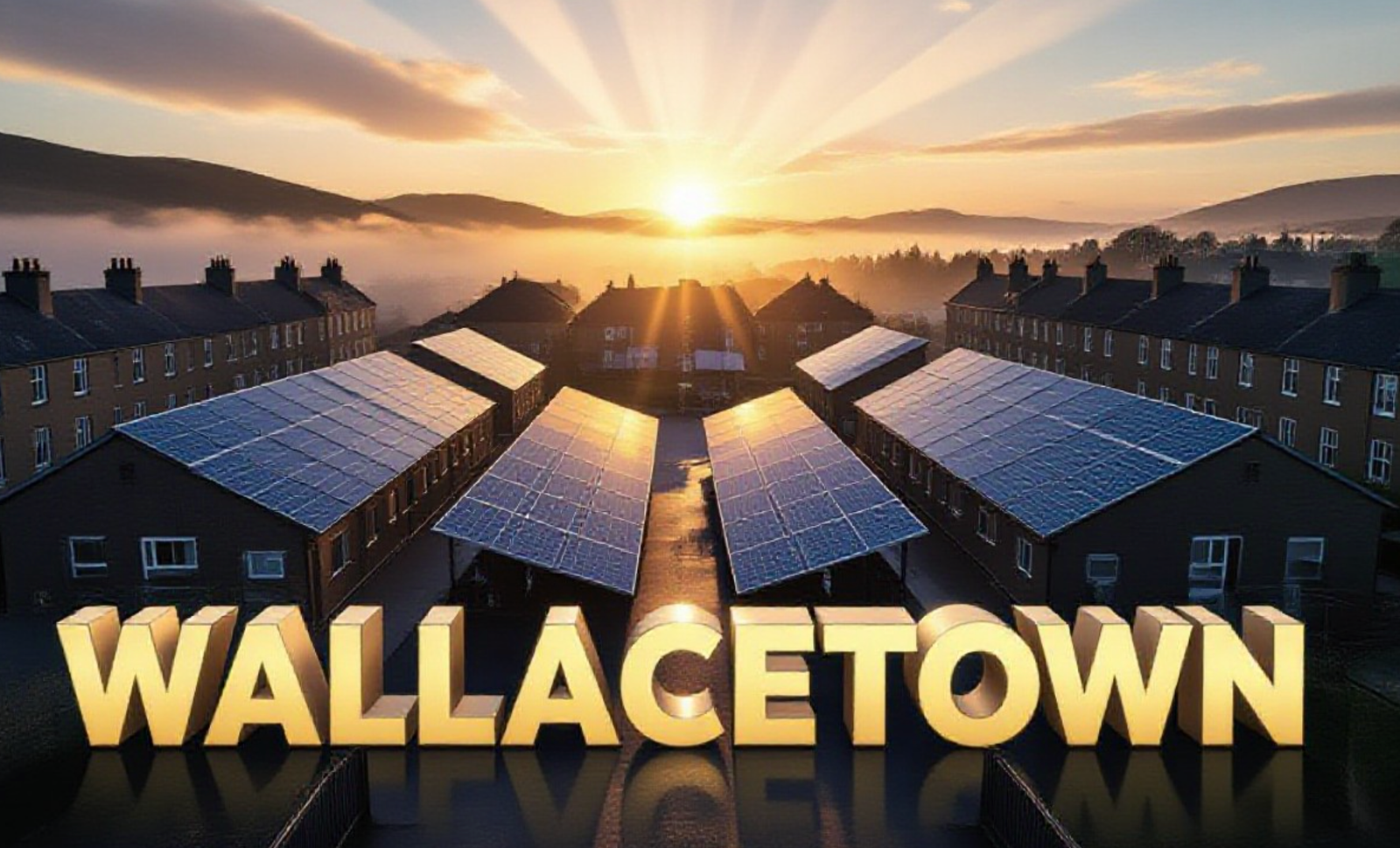
Wallacetown in Ayr just pulled off something remarkable. Residents in one of Scotland’s most deprived areas have taken ownership of three school roofs and turned them into money-making solar farms that will pump £1 million straight back into their streets over the next 25 years.
This is not a council handout or a distant charity. This is locals saying “enough” and building their own future, one panel at a time.
Wallacetown: Where Hope Usually Runs Out Fast
Walk through Wallacetown and the struggle hits you immediately. Empty shops, boarded windows, and far too many people battling addiction and poverty.
The area sits in the bottom 5% of Scotland’s most deprived zones. Drug deaths, youth unemployment, and anti-social behavior have crushed spirits for years.
Denise Sommerville has lived here her whole life. Five years ago she stood up at a community council meeting and refused to accept another lost generation.
“People want to live here, not leave here,” she told the room. That night changed everything.
One Lecturer’s Idea That Caught Fire
Local engineering lecturer Alan Roseweir heard Denise and proposed something simple yet bold: put solar panels on public buildings and let the community own them.
The electricity would be used by the schools first, cutting their bills. Any surplus would be sold to the grid. Every penny of profit would stay in Wallacetown.
No one believed it could happen. They were wrong.
After years of meetings, grant applications, and sheer stubborn determination, the panels went up over summer 2024 on Wallacetown Early Years Centre, St John’s Primary, and Newton Primary.
The community now owns £320,000 worth of solar infrastructure. That is power in every sense of the word.
How the Money Actually Stays Local
The numbers are straightforward and life-changing:
- 25-year projected income: £1 million
- Annual community fund: starts at £30,000–£40,000 and grows
- Schools save £10,000–£15,000 per year on energy bills
- Zero cost to the public purse long-term
Scottish Government and ScottishPower Energy Networks covered the upfront £320,000 installation. From day one, the panels belong to Wallacetown residents through their community benefit society.
Denise calls it “our own bank account.” Locals will decide together how to spend every pound: youth clubs, street clean-ups, addiction support, play parks, whatever the neighborhood needs most.
Early Wins Are Already Showing
Just weeks after the switch-on, the mood has shifted.
Kids at Newton Primary now point at “their” panels on the roof and talk about green energy. Parents who felt powerless suddenly have a seat at the table deciding real money.
One resident told BBC Scotland: “For the first time in years, we feel like something is being built here instead of taken away.”
The project has also created training opportunities. Young people who left school with few options are now learning solar installation skills alongside professionals.
This Is Only the Beginning
Wallacetown’s success has already caught Holyrood’s attention. Ministers want to copy the model across Scotland’s forgotten communities.
The new UK Labour government has promised fresh support for community energy schemes, and Wallacetown is now the poster child.
Denise Sommerville no longer talks about people wanting to leave. She talks about people wanting to come back.
In a neighborhood where hope usually arrives in a police van or an ambulance, the sight of gleaming solar panels on school roofs has become the most powerful symbol yet that change is possible when ordinary people take control.
The sun now rises over Wallacetown and pays the bills. That is not poetry. That is the new reality.
What do you think: can community-owned solar really turn deprived areas around? Drop your thoughts below and share this story if it moved you.