
Gayle Ritchie braved thick fog last week to finally locate Rohallion Castle, known as Scotland’s smallest castle, perched on Birnam Hill near Dunkeld in Perthshire. Her determined hike through misty woodlands revealed the tiny 16th century ruins and sparked fresh interest in their quirky 1970s rebuild.
The Foggy Quest Up Birnam Hill
Ritchie’s adventure started from a layby at the old Birnam Quarry, just off the A9 on the B867 road. She passed under the railway line and followed a track before veering left onto a steep path that wound through dense woodland. The poor visibility made every step a challenge, turning the search into what she called an Indiana Jones style escapade.
Despite the conditions, Ritchie pushed on, driven by a previous failed attempt due to time constraints. The path climbed steadily, with the mist clinging to the trees like a shroud. After what felt like an eternity, she spotted the faint outline of the castle ruins emerging from the undergrowth. This hidden gem, often overlooked by casual visitors, rewards those who persist with its unique story and stunning location high above the River Tay.
The hike itself covers about 3.1 miles in a circular route that includes Birnam Hill’s summit, offering panoramic views on clearer days. But for Ritchie, the thrill came from the discovery amid the gloom, highlighting how weather can add drama to exploring Scotland’s ancient sites.
Uncovering the History of Rohallion Castle
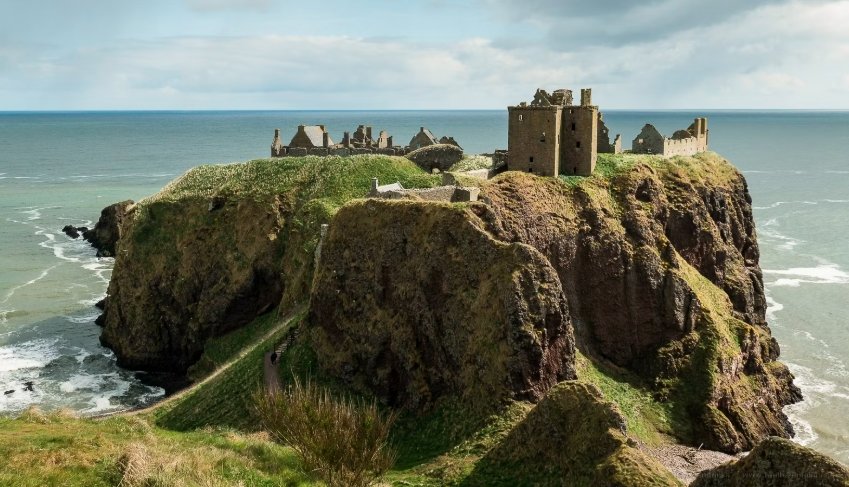
Rohallion Castle dates back to the 16th century, built in a distinctive Z plan design that was popular for Scottish strongholds of the time. This layout featured a central tower with two smaller towers at opposite corners, providing strong defensive angles. The castle sits in a hollow on the southeast slopes of Birnam Hill, strategically positioned yet somewhat concealed from distant views.
Records show the Ruthven family likely constructed it during a turbulent period following the Reformation in the 1560s. The site gained notoriety as a hiding place for William Ruthven, the 1st Earl of Gowrie, after the Raid of Ruthven in 1582. This political uprising against King James VI led to Ruthven’s eventual execution for treason in 1584, after which the castle and other Ruthven lands were forfeited to the crown.
By the late 19th century, the structure had fallen into disuse, with the last known occupation linked to the post Reformation era. Over centuries, it crumbled to just a few feet high, buried under bracken and forgotten by many. Today, it stands as a testament to Scotland’s rich feudal past, tied to the royal forests of Birnam made famous in Shakespeare’s Macbeth.
Local lore connects the area to broader Perthshire history, including nearby Murthly Castle and the strategic Pass of Birnam, a key entry point to the Highlands. Explorers often combine visits with hikes to nearby sites like Dunkeld’s old castles, creating a full day of historical immersion.
The Mystery of the 1970s Rebuild
What makes Rohallion Castle truly intriguing is its partial reconstruction in the 1970s. Before then, the walls barely rose above two or three feet, making it hard to even recognize as a castle. A dedicated local resident, described as an amateur archaeologist, took matters into his own hands and rebuilt sections of the walls, breathing new life into the ruins.
This unsolicited effort raised eyebrows among heritage experts at the time. While it preserved the structure from further decay, it also altered the original footprint, sparking debates about authenticity in historical preservation. The rebuild used local stone and aimed to show the Z plan more clearly, but it was done without official oversight, adding to the site’s curious charm.
In the context of 1970s Scotland, this act mirrored a growing interest in heritage amid the heritage movement that curbed demolitions of old buildings. Similar stories emerged across the country, like restorations at other small ruins, but Rohallion’s scale made it stand out. Recent analyses suggest the work stabilized the site, allowing it to withstand weather better, though purists argue for more scientific approaches today.
This rebuild ties into broader trends in Scottish archaeology, where community involvement has preserved sites like the nearby Buffalo Hut, built in the 1840s for Native American visitors to Murthly Castle. It reminds us how personal passion can keep history alive, even if imperfectly.
Why Rohallion Stands Out Among Scotland’s Castles
Scotland boasts over 3,000 castles, from grand fortresses to modest towers, but Rohallion claims the title of the smallest due to its compact size, measuring just about 10 meters across. Its Z plan, though tiny, follows the same defensive principles as larger ones like Dirleton Castle, once owned by the Ruthvens.
To put it in perspective, here’s a quick comparison of some of Scotland’s smallest castles:
| Castle Name | Location | Approximate Size | Key Feature |
|---|---|---|---|
| Rohallion Castle | Birnam Hill, Perthshire | 10m x 10m | Z-plan ruins, 1970s rebuild |
| Hermit’s Castle | Near Loch Ness | Tiny single room | Modern build, not ancient |
| Smailholm Tower | Borders | Small tower | Watchtower design |
| Castle Campbell | Clackmannanshire | Compact keep | Hilltop position |
This table shows how Rohallion’s uniqueness lies in its ancient origins and hidden spot, unlike more modern or larger small castles. Visitors appreciate its intimacy, offering a personal connection to history without crowds.
Factors like its elevation and woodland setting add to the allure, making it a favorite for hikers seeking off the beaten path experiences. In 2025, with rising interest in sustainable tourism, sites like this promote low impact exploration, aligning with Scotland’s push for eco friendly heritage visits.
Tips for Your Own Rohallion Adventure
Planning a trip to Rohallion Castle requires preparation, especially given the terrain and variable weather. Start early to avoid afternoon mists, and check forecasts for Birnam Hill.
Here are some essential tips:
- Wear sturdy boots for the steep, uneven paths through woodland and moorland.
- Bring a map or GPS app, as signage is minimal beyond the main trail.
- Visit in spring or autumn to dodge summer bracken that can obscure the ruins.
- Combine with a stop at nearby Dunkeld Cathedral for a full historical day.
- Pack water and snacks, as the 1,082 foot elevation gain can be tiring.
The route from the quarry car park takes about 1.5 to 2 hours round trip, suitable for moderate hikers. Families with older kids enjoy the adventure, but it’s not ideal for very young children due to the climb. Always follow the Scottish Outdoor Access Code to respect the site and wildlife.
As interest in hidden Scottish gems grows in 2025, Rohallion offers a perfect blend of history and nature, especially with recent stories like Ritchie’s drawing more attention.
If this tale of tiny treasures inspires you, share your own castle hunting stories in the comments below and spread the word to fellow explorers.