
 Dayna Bass
 Scotland has officially become the first nation in the United Kingdom to legalise water cremation, marking the most significant shift in funeral laws in over a century. This landmark decision introduces a sustainable alternative to traditional burial and flame cremation, responding to growing public demand for greener end-of-life choices.
From Monday, March 2, the process known scientifically as alkaline hydrolysis is permitted under new regulations passed by the Scottish Parliament. While the legal framework is now active, actual services are expected to commence later this summer once facilities are constructed and approved, offering bereaved families a new way to say goodbye that aligns with modern environmental values.
A Historic Shift in Funeral Laws
The introduction of water cremation represents the first major change to Scottish burial regulation since the legalization of flame cremation in 1902. The move follows a 2023 government consultation which revealed that 84% of the public supported the introduction of the practice. For many, this offers a necessary third option that sits between the land use issues of burial and the carbon emissions associated with fire.
Public Health Minister Jenni Minto championed the legislation, emphasising the importance of personal choice during difficult times. She noted that decisions about remains are deeply personal and shaped by individual values.
“Hydrolysis offers a new, environmentally friendly alternative to burial or cremation,” Minto stated. “The process will be subject to the same assurances and regulatory requirements as existing methods, giving bereaved families confidence that their loved ones are treated with care, dignity and respect.”
This legislative update places Scotland ahead of England, Wales, and Northern Ireland, joining a global list of jurisdictions including Ireland, Canada, South Africa, and 28 US states where the practice is already established.
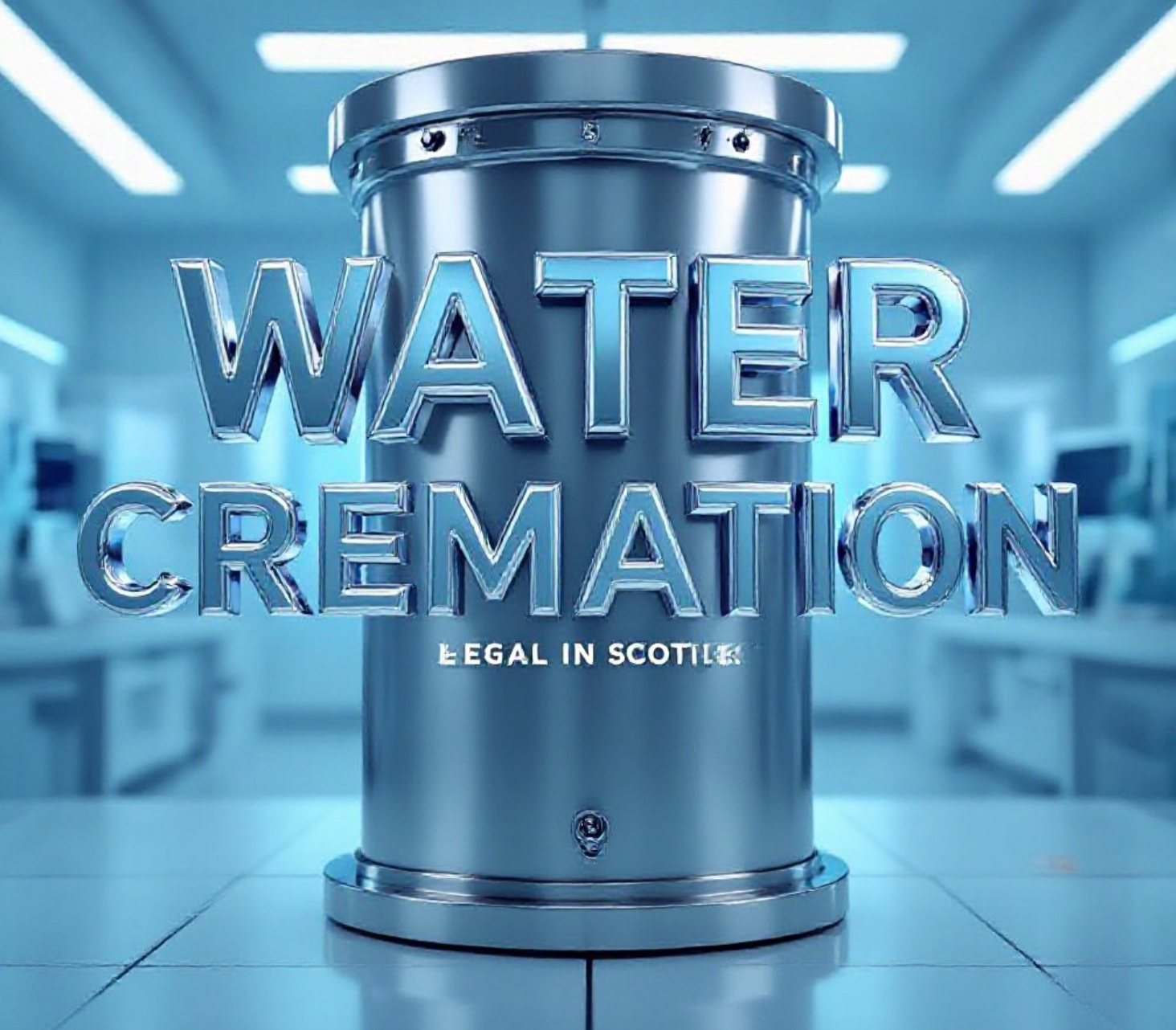
Understanding the Science of Alkaline Hydrolysis
Alkaline hydrolysis is often described by proponents as a “gentler” process than flame cremation. It uses a combination of water, alkaline chemicals, and heat to accelerate the natural decomposition that would occur during a burial, but within a fraction of the time.
The technical procedure is precise and strictly regulated:
- The body is wrapped in a biodegradable shroud, typically made of silk or wool.
- It is placed inside a pressurised stainless-steel chamber.
- A mixture of water and potassium hydroxide is introduced.
- The solution is heated to approximately 150°C (300°F) for three to four hours.
Because the chamber is pressurised, the water never boils. Instead, the solution gently dissolves body tissues, leaving behind only the bones. These bone fragments are then rinsed, dried, and pulverised into a pure white powder. The final result is returned to the family in an urn, indistinguishable from traditional ash, though often whiter and finer in texture.
The remaining liquid is sterile and contains no DNA. It is treated and released into the water cycle, a step that industry experts compare to the treatment of water in other industries.
The Environmental Case for Water Cremation
The primary driver behind this legislative change is the urgent need to reduce the carbon footprint of the funeral industry. Traditional flame cremation requires temperatures of up to 1150°C and consumes significant amounts of natural gas.
Comparison of Environmental Impact:
| Feature | Flame Cremation | Water Cremation |
|---|---|---|
| Carbon Footprint | ~242 kg CO2 per body | ~35-50 kg CO2 per body |
| Energy Use | High natural gas consumption | ~90% less energy used |
| Emissions | Releases mercury (from fillings) | Zero airborne mercury emissions |
| Remains | Coarse grey ash | Fine white powder |
Environmental campaigners have long argued that the release of carbon dioxide and vaporised mercury from dental amalgam during flame cremation is unsustainable. Water cremation eliminates these airborne pollutants entirely.
Archbishop Desmond Tutu, the anti-apartheid hero who died in 2021, famously chose this method for his own funeral to encourage eco-friendly practices. His choice sparked global interest and highlighted the potential for “green cremations” to become a mainstream preference.
Industry Readiness and Future Outlook
While the law has changed, families will need to wait a few months before the service is widely available. Providers must now install the specialised equipment and obtain planning permission and trade effluent consents from Scottish Water.
Kindly Earth, a company holding exclusive rights to manufacture the technology in the UK, has been preparing for this moment for years. General Manager Hannah Chandler expressed that while this is a massive step forward, they do not expect an overnight revolution.
“We know that not everyone will choose hydrolysis, and that is the point,” Chandler explained. “It is about giving families more choice. Some people, particularly those planning ahead for their own funeral, are looking for options that feel more aligned to their own preferences.”
Cost is also a major factor for families. Industry estimates suggest that water cremation will be priced similarly to traditional cremation, likely falling between £4,000 for a full service and £1,000 for a direct option.
As Scotland leads the way, pressure is likely to mount on the rest of the UK to follow suit. The Law Commission in England and Wales is currently reviewing funeral laws, and the successful implementation north of the border could serve as the blueprint for a nationwide shift toward sustainable funerals.
 Coal India, BEL Miss Estimates as India’s Mid-Caps Surge Ahead
  HCLTech’s Neo.AI Unit Chases the Business Its Mid-Tier Rivals Built
  Nvidia in Talks to Guarantee $250 Billion for OpenAI’s Data Hub
  HDFC Bank Fines CEO and CFO, Refers MSRDC Case to RBI
  Hyderabad Gold Rate Rises as India’s New 15% Duty Bites
  Maruti Brezza Facelift Prices Fall Thanks to a Tax Rule