
 Zane Lee
 A groundbreaking Scottish study has exposed why thousands of food delivery couriers are breaking the law by tampering with e-bikes, and the findings are now shaping policy at Westminster.
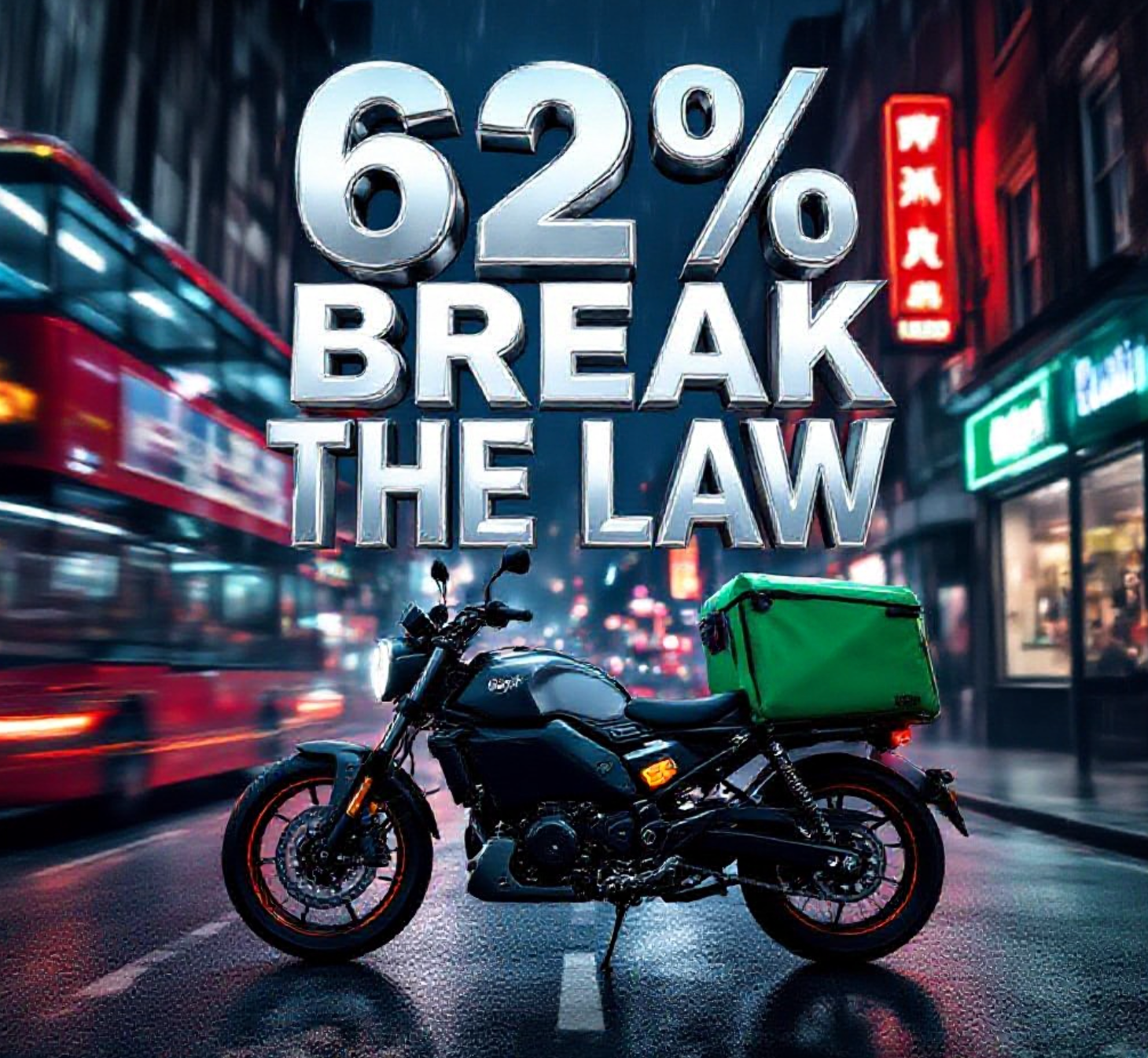
Researchers found 62% of riders have removed speed limiters to earn more money under brutal per-delivery pay systems. The report, led by Dr Pedro Mendonça at Heriot-Watt University, was submitted to the All-Party Parliamentary Group for Cycling and Walking in its inquiry into illegal e-bikes launched in October 2024.
Riders Admit Breaking the Law Just to Eat
The Fair Gig Work Scotland project surveyed hundreds of couriers in Edinburgh, Glasgow and beyond.
The numbers are grim.
Eighty-two percent admitted regular risky road behaviour.
Forty percent work more than 40 hours a week on the apps.
Sixty-two percent are unhappy with their current pay.
One rider told researchers: “If I don’t hit ten drops an hour, I can’t pay rent. Simple as that.”
Most modifications involve bypassing the legal 15.5 mph (25 km/h) limit or fitting more powerful motors. Some bikes now reach 40 mph while carrying heavy insulated bags, turning them into silent missiles on cycle paths.
Per-Drop Pay Turns Every Minute into Money
The core problem is simple. Riders are not paid by the hour. They are paid by the drop.
When platforms cut the fee per delivery (some riders report drops from £4.50 to £2.80 in two years), the only way to maintain income is to complete more orders. That means going faster.
Dr Mendonça explained it clearly: “The algorithm rewards speed and availability. It punishes anyone who obeys the speed limit when customer demand is high. Riders are rational economic actors in an irrational system.”
His research shows riders paid per drop are twice as likely to modify their bikes compared to those on hourly contracts.
Parliament Finally Listens
The All-Party Parliamentary Group inquiry received the Fair Gig Work evidence in late 2024 and early 2025. Witnesses described delivery riders weaving through red lights, riding on pavements, and using bikes with no brakes or lights.
Ruth Cadbury MP, co-chair of the group, said during a January 2025 session: “We keep talking about rogue e-bikes, but we rarely talk about the rogue business model that forces people to ride them.”
Separate police data from London shows officers seized more than 500 illegal e-bikes used for delivery in 2024 alone, with most belonging to Uber Eats, Deliveroo and Just Eat riders.
Platforms Push Back, Riders Pay the Price
Delivery companies insist they ban modified bikes and deactivate dangerous riders. Yet internal messages leaked to BBC Scotland in December 2024 showed supervisors telling couriers to “hustle harder” during bad weather to hit bonuses.
Meanwhile, insurance companies now refuse coverage for many delivery riders, leaving them personally liable if they injure someone.
What Needs to Change Now
Experts and campaigners want four immediate actions.
- Force platforms to switch at least some riders to hourly minimum wage contracts.
- Make platforms jointly liable for road traffic offences committed during deliveries.
- Ban the sale of speed-limiter removal kits and throttle conversion sets (many are openly sold on Amazon and eBay).
- Give local councils power to license commercial e-bikes used for delivery.
Scotland is already moving faster than Westminster. The Scottish Government announced in February 2025 that it will consult on giving delivery riders employment rights, which would automatically trigger minimum wage protection.
One Edinburgh rider spoke for many when he said: “I don’t want to ride a death trap. I want to go home to my kids at night. Fix the pay and I’ll fix the bike tomorrow.”
The choice is stark. Britain can keep blaming desperate workers for dangerous bikes, or it can finally fix the system that makes danger the only way to earn a living.
What do you think should happen? Should delivery giants be forced to pay riders properly, or is the crackdown on illegal bikes enough? Drop your thoughts below.
 Windows 11 KB5095093 Lands With Point-in-Time Restore and 35-Day Pause
  Meta Cuts Smart Glasses to $299 to Outflank Snap and Apple
  Messi Leads the 2026 World Cup Golden Boot Race After Two Matches
  Australia March On as Athapaththu Ton Lights Up T20 World Cup
  Galaxy Z Fold 8 Leak Reveals Colors, Storage, and a New Ultra Variant
  Ronaldo’s Six-World-Cup Record Leads a Matchday Full of Milestones