
 Ishan Crawford
 A federal jury in Oakland needed less than two hours on Monday to dismiss Elon Musk’s lawsuit against OpenAI, finding that the world’s richest person filed his claims too late under California’s three-year statute of limitations on breach of charitable trust. The verdict, accepted on the spot by US District Judge Yvonne Gonzalez Rogers, leaves untouched the substance of Musk’s central allegation: that Sam Altman and Greg Brockman betrayed OpenAI’s founding promise as a nonprofit when they engineered a pivot to a for-profit structure now valued near $852 billion.
The verdict capped a three-week trial that drew Altman, Brockman, Microsoft executives and Shivon Zilis (a former OpenAI board member and the mother of four of Musk’s children) to the witness stand. With the suit gone, CFO Sarah Friar’s plan to file an S-1 in the second half of 2026, alongside joint lead underwriters Goldman Sachs, JPMorgan and Morgan Stanley, loses its last serious legal obstacle.
Two Hours, Three Defendants, One Statute
Jurors concluded that every claim against Altman, Brockman, the OpenAI Foundation and Microsoft was barred by California’s three-year window on breach of charitable trust. The decision was advisory, because the underlying claims sound in equity rather than law, but Judge Gonzalez Rogers adopted it from the bench the same afternoon. Musk’s last documented donation to OpenAI landed in September 2020 and his lawsuit was filed in February 2024, a gap roughly a year longer than the statute allows.
Outside the courthouse, OpenAI’s lead attorney William Savitt offered reporters a single sentence on the win.
The finding of the jury confirms that this lawsuit was a hypocritical attempt to sabotage a competitor.
OpenAI’s defense team had spent much of the trial pointing out that Musk himself proposed several variations of a for-profit structure in OpenAI’s earliest years, undercutting the premise that the pivot violated a promise he had ever agreed to.
The IPO Runway That Just Got Repaved
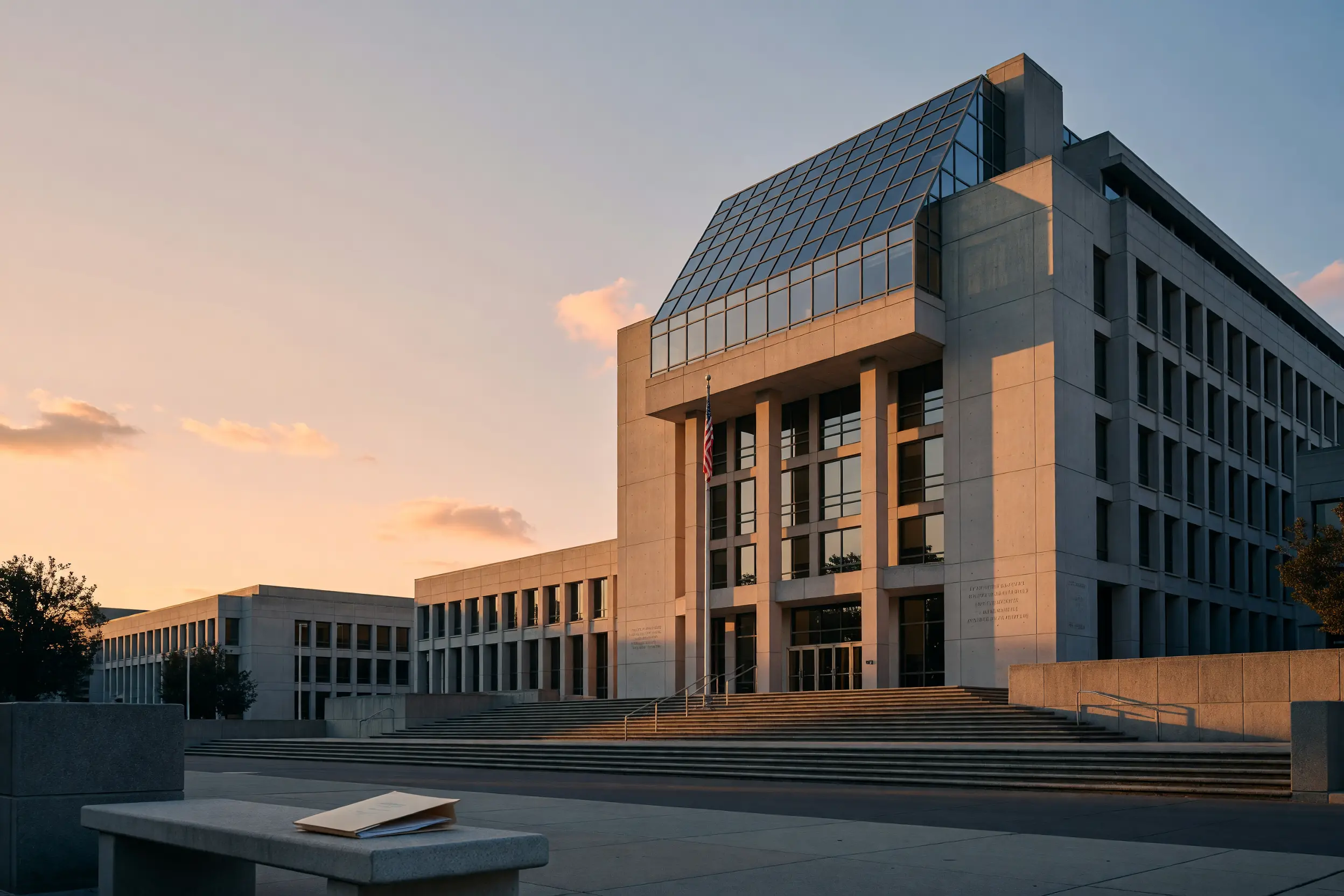
The post-money valuation of $852 billion depends entirely on the for-profit structure surviving legal challenge. Had Musk prevailed, the company could in theory have been forced back into nonprofit form, voiding the equity Microsoft, SoftBank, Nvidia and other backers now carry on their balance sheets at the mark set in OpenAI’s March 2026 funding round.
That risk is now gone. The OpenAI Group PBC corporate framework, finalized on October 28, 2025 after roughly a year of negotiation with the California and Delaware attorneys general, survives the strongest doctrinal attack it was likely to face.
Microsoft sits as the largest commercial investor with about 27% of the new entity. The OpenAI Foundation, the nonprofit parent, holds equity in the for-profit valued at roughly $130 billion, an endowment that ranks among the largest charitable holdings in the United States by stated value.
Wall Street had already begun pricing the verdict before the gavel fell. Wedbush Securities analyst Dan Ives told AFP the decision “clears the path for an IPO by removing this black cloud,” characterizing the suit as “more of a soap opera than a long-term negative for OpenAI.” Friar’s stated target is a regulatory filing in the second half of 2026 with a potential listing in early 2027.
Why the Calendar Killed the Case
California Civil Code section 343 caps actions for breach of charitable trust at three years from the date the claimant knew or should have known of the breach. Musk’s legal team argued the clock should not have started in 2019, when OpenAI created its capped-profit subsidiary, nor in 2020, when Microsoft made its first billion-dollar investment, but rather in 2023, when the company’s commercial trajectory became unmistakable.
Jurors rejected that framing. Musk had publicly criticized OpenAI’s direction since at least 2019, including interviews where he distanced himself from Altman’s strategy and complained about the for-profit pivot. His own statements demonstrated that he knew, or should have known, the alleged breach was underway.
That made the February 2024 filing date roughly 12 months late by the panel’s reading. Musk’s $38 million in donations between 2015 and 2020 sat in the record, alongside email threads in which Altman and Brockman discussed governance, but none of it mattered once the threshold question of timing was resolved.
The jury never reached the substantive question of whether a charitable trust existed at all, or whether the for-profit pivot violated one. Court instructions narrowed deliberation to threshold issues; the merits of breach were not before the panel.
On the same statutory grounds, jurors also rejected Musk’s aiding-and-abetting claim against Microsoft. The derivative count was tied to the same accrual date as the underlying claim, and once that claim was time-barred, the secondary claim collapsed alongside it.
Witnesses Who Could Not Bridge the Gap
The witness list read like an industry directory. Across three weeks, jurors heard from current and former OpenAI executives, board members, donors and Musk himself, who drew criticism mid-trial for traveling to China during proceedings, prompting his own attorney to apologize on the record for the absence. Three figures anchored OpenAI’s defense:
- Sam Altman, OpenAI’s chief executive, testified that the for-profit structure had been discussed openly with Musk in 2017 and 2018, and that Musk himself had proposed taking majority control at one point.
- Greg Brockman, OpenAI’s president, walked jurors through correspondence showing Musk’s repeated interest in folding OpenAI’s research arm into Tesla.
- Shivon Zilis, the former OpenAI board member and mother of four of Musk’s children, conceded under cross-examination that the company’s corporate structure had been “debated ad nauseam,” including for-profit variants Musk had endorsed.
OpenAI counsel Sarah Eddy told jurors during closing arguments that “even the people who work for him, even the mother of his children can’t back his story.” The line was widely reported and apparently landed; the panel returned its verdict the following Monday.
Microsoft’s $13 Billion, Now Looking Like a Generational Bet
Microsoft committed roughly $13 billion to OpenAI between 2019 and 2023, structured initially as Azure compute credits and capped-profit equity. The October 2025 recapitalization announcement from OpenAI’s foundation converted that exposure into a 26.79% stake in OpenAI Group PBC. At the post-money mark set in the March 2026 funding round, the stake is worth roughly $228 billion on paper, a return north of 17 times the cash actually deployed.
The accounting flowed through to Microsoft’s most recent quarterly filings. In the nine months ending March 31, 2026, the company booked $5.9 billion in net gains from its OpenAI position, a swing of roughly $8.6 billion from the $2.7 billion in net losses recorded in the same period a year earlier. The dilution gain triggered by the PBC conversion sat at the center of that swing.
| Element | Before October 2025 | After October 2025 |
|---|---|---|
| Corporate form | Nonprofit OpenAI Inc. controlling capped-profit LLC | OpenAI Foundation controls OpenAI Group PBC |
| Microsoft economic exposure | Capped profit-share contract | About 27% common equity |
| Foundation’s equity value | None directly held | About $130 billion |
| Cloud commitments | $13 billion cumulative Microsoft outlay | $250 billion incremental Azure purchase agreement |
Of all the recapitalization’s components, the $250 billion Azure commitment was the most directly threatened by an adverse Musk verdict. OpenAI agreed to spend that sum on Microsoft cloud capacity over the next several years; the obligation is embedded in the PBC’s foundational documents. A forced unwinding of the corporate structure would have placed those agreements in immediate question, with consequences flowing both ways across the partnership.
Amazon and SoftBank, which contributed smaller but still significant tranches in OpenAI’s 2025 and 2026 funding rounds, also benefit from the cleared structure. Both invested into the new PBC after recapitalization, and their stakes hinge on the same survival of the for-profit form that Musk had hoped to dissolve.
The 9th Circuit Appeal and Its Limits
Musk announced on X within hours of the verdict that he would appeal to the 9th Circuit US Court of Appeals. His legal team has signaled the appeal will lean on the continuing violation doctrine, which can extend statutes of limitations when a defendant engages in a sustained pattern of wrongful conduct rather than a single act. In a since-deleted post, Musk accused Judge Gonzalez Rogers of being an “activist judge” who used the jury as a “fig leaf” for a ruling she could have made herself.
The procedural reality is less dramatic. 9th Circuit appeals on commercial matters routinely take 12 to 24 months from notice of appeal to oral argument. OpenAI’s planned regulatory filing is expected within seven months. Even if the appellate court eventually accepts the continuing violation argument and remands for a new trial, the remand returns the case to the same district court for full merits proceedings, where OpenAI’s evidence that Musk endorsed for-profit conversion is now part of the record.
OpenAI’s IPO calendar does not wait for the appeal. If the regulatory filing lands in the fourth quarter as planned, the prospectus reaches the Securities and Exchange Commission while the appellate court is still in early briefing on whether to hear the continuing violation argument at all. Wall Street’s pricing of the company will likely settle the question of its public-market value long before any appeals panel rules on the question of its charter.
 moto g77 POWER Launches in India at Rs 23,999 With 7,000mAh Battery
  Beats Power Pink Woven Cables: Specs, Price, and Color Match Play
  Redmi Note 17 Series Confirmed for July 14 China Launch
  Meta’s Glasses Update Guards the Camera, Not the Bystander
  India’s Retail GCC Hub Now Outscales Five Peers Combined
  Dundee to Host First Scotland StreetCar Festival Alongside Eco Rally