
 Chris Muir
 Two astonishing 1,800-year-old stone altars dedicated to the god Mithras, unearthed near Edinburgh and hailed as the only ones ever found in Scotland, will make their public debut next year at the National Museum of Scotland.
The fragile monuments, shattered into pieces by centuries underground, have been painstakingly rebuilt and will star in a major new exhibition opening in November 2026.
The Discovery That Rewrote Scottish Roman History
Archaeologists digging at Inveresk, East Lothian, in 2010 could hardly believe their eyes when fragments of two elaborately carved altars emerged from the soil.
The site sits beside the River Esk, once home to a Roman fort on the empire’s northern frontier during the reign of Emperor Antoninus Pius around AD 140-165.
These are the northernmost known altars to Mithras ever discovered anywhere in the Roman world.
Dr Fraser Hunter, Principal Curator of Prehistoric and Roman Archaeology at National Museums Scotland, described the moment as “one of those heart-stopping finds that happens once in a career.”
The altars had been deliberately buried when the Romans abandoned the Antonine Wall and pulled back south, a common ritual to protect sacred objects from enemy hands.
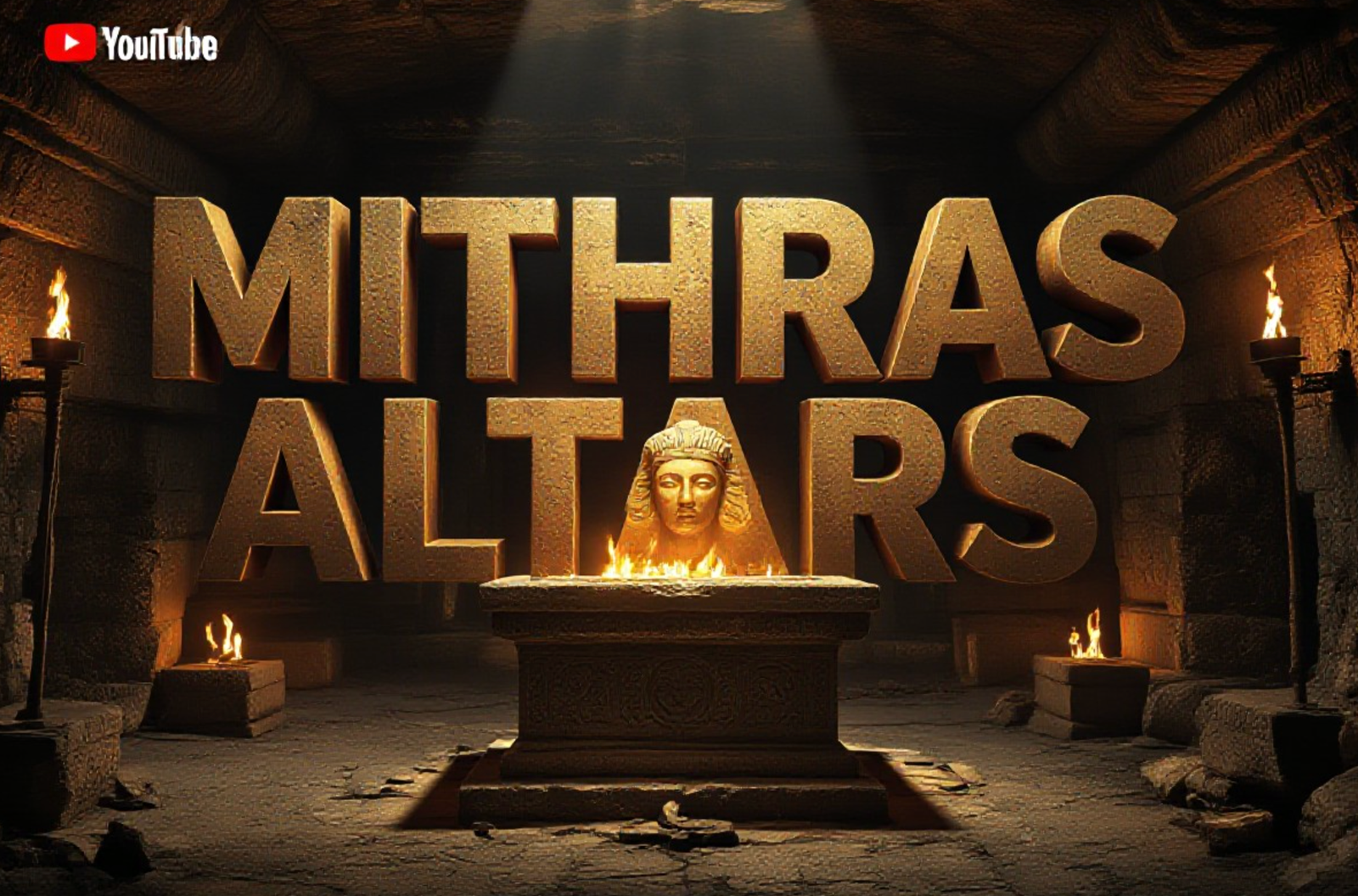
Inside the Secret World of Mithras Worship
Mithras was the god of an exclusive, men-only mystery cult that swept through the Roman army like wildfire in the 2nd and 3rd centuries AD.
Soldiers far from home, posted to cold, wet frontiers like Scotland, found deep comfort in its promise that light would always defeat darkness.
Worship happened in underground temples called Mithraea. Initiates progressed through seven grades of secrecy, each with its own terrifying oaths and rituals.
The Inveresk temple is only the third confirmed Mithraeum in Scotland and by far the most important.
Its altars would have been lit by flickering oil lamps, faces of gods glowing dramatically in the gloom as soldiers knelt in prayer before deployment or battle.
The Altars Themselves Are Works of Art
The larger altar honors Sol, the sun god, whose face was carved so light could shine from behind, making his crown blaze like real fire in the dark temple.
Four female figures representing the seasons surround him, a reminder that Mithras controlled time itself and the turning of the year.
The second altar is dedicated directly to Mithras by a centurion named Gaius Cassius Fla(vianus), whose abbreviated name G.CAS.FLA appears in crisp Latin letters.
It features:
- A griffin, mythical guardian of treasure
- A krater (wine-mixing bowl) symbolizing sacred banquets
- Symbols of Apollo and other light gods
Both stones show the incredible skill of frontier craftsmen working hundreds of miles from Rome.
Years of Secret Conservation Work
National Museums Scotland quietly acquired the altars in 2016 through a private sale, with support from the National Fund for Acquisitions and The Art Fund.
Conservators spent years piecing together hundreds of fragments, some no bigger than a fingernail.
They used reversible techniques so future generations can study the stones safely.
Dr Hunter says the altars were “absolutely central” to the soldiers’ spiritual lives, giving men stationed in a hostile land a sense of purpose and belonging.
Why This Matters Today
These two stones do something remarkable.
They humanize the Roman army.
Behind the helmets and shields were homesick men who needed faith, brotherhood, and hope just like anyone else.
One centurion, Gaius Cassius Fla, stood in that dark temple almost 2,000 years ago and poured wine on these very stones, praying his god would watch over him in the Scottish rain.
Now, for the first time, we can stand in front of the same altars and feel that connection across centuries.
The exhibition Roman Scotland: Life on the Edge of Empire runs from 14 November 2026 to 28 April 2027 at the National Museum of Scotland in Edinburgh.
These fragile, beautiful objects survived burial, plough damage, and the passage of millennia to reach us.
They remind us that even on the coldest, furthest edge of a vast empire, people still reached for light.
Come see them while you can.
What do you feel when you look at something a Roman soldier prayed to 1,800 years ago? Drop your thoughts below, and if you’re sharing on social media, use #MithrasScotland so we can all find each other.
 ONGC licence frees Venezuela cash and operatorship talks
  Anthropic Hits $65 Billion Run Rate and Flips the AI Cash Test
  Supreme Court grounds the fare free-for-all with three-week clock
  Gold Nears $4400 as Soft Data Meets Oil Inflation Risk
  Nifty Slips as Zaggle Circuits and Dhoot Debuts Big
  Diesel Crack Tops $100 as Iran Rhetoric Lifts Crude